
2Pcs Nano V3.0 Board ATmega328P/CH340G Chip Microcontroller Kit Compatible with Arduino IDE/PWM/SPI 5V 16M(USB C Port with 2Pcs USB Cable)
4.5Editor score
Includes two boards
USB-C power socket
CH340G chip support
Compare the top 10 Arduino Nano Board options for beginners and pros to find the best microcontroller for your next project.
The Arduino Nano Board is a compact microcontroller perfect for prototyping and embedded projects. Its small size and powerful features make it ideal for wearables, robotics, and IoT devices.
We compared ten popular Nano boards based on performance, compatibility, connectivity options, and value. Each model offers unique benefits depending on your skill level and project needs.
Each pick highlights key strengths like processor speed, port types, and build quality. Keep in mind that prices and availability change frequently, so check current listings before purchasing.
4.5Editor score
![Arduino Nano [A000005] - Compact ATmega328P Microcontroller with 22 Digital I/O Pins, 8 Analog Inputs, USB Connectivity, and Arduino IDE Compatibility for Prototyping and DIY Projects](https://m.media-amazon.com/images/I/61R1A7CuHTL._AC_SL1200_.jpg)
4.6Editor score
![Arduino Nano R4 with Headers [ABX00143] - Compact Renesas RA4M1 Microcontroller Board, Pre-Soldered for Breadboarding, Qwiic Connector, Programmable RGB LED, Compatible IDE](https://m.media-amazon.com/images/I/616G-wS5P4L._AC_SL1200_.jpg)
4.5Editor score
Here is a side-by-side comparison of all ten Nano boards to help you decide which model fits your project requirements best.


![Arduino Nano Every (Single Board) [ABX00028-A] - ATmega4809 Microcontroller, 48KB Flash, 6KB SRAM, 20 Digital I/O Pins, 8 Analog Inputs, USB-C, Compatible with Arduino IDE for Embedded Projects](https://m.media-amazon.com/images/I/615ixkAzhBL._AC_SL1200_.jpg)
![Arduino Nano ESP32 with Headers [ABX00083] - ESP32-S3, USB-C, Wi-Fi, Bluetooth, HID Support, MicroPython Compatible for IoT & Embedded Projects](https://m.media-amazon.com/images/I/61rzqtm-p%2BL._AC_SL1200_.jpg)

![Arduino Nano R4 [ABX00142] Headers Not Mounted (Loose Pins Included), Compact Renesas RA4M1 Microcontroller Board, Qwiic Connector, Programmable RGB LED, Compatible IDE](https://m.media-amazon.com/images/I/61PMSktRUZL._AC_SL1200_.jpg)
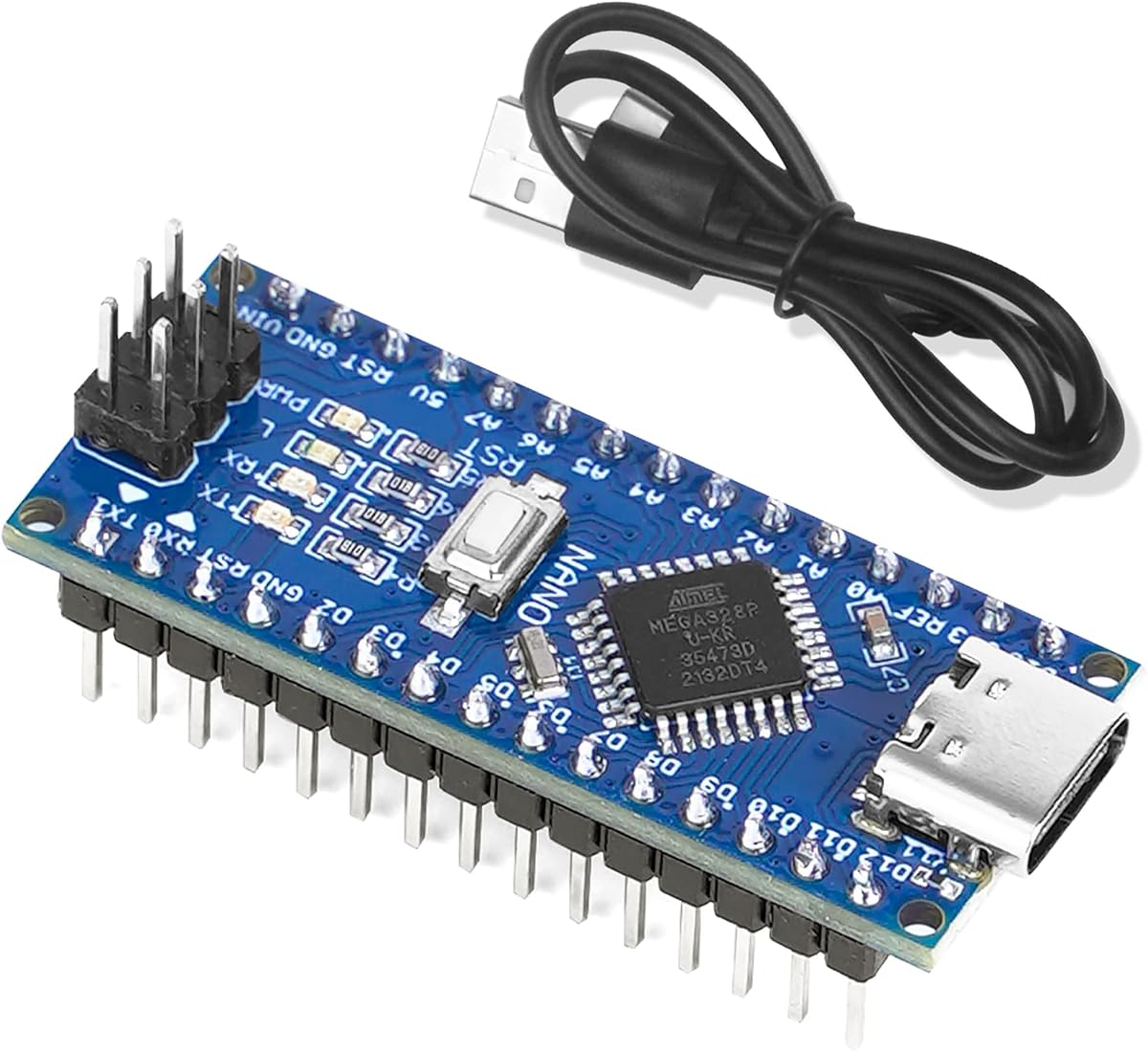
This three-pack of Nano V3.0 boards offers excellent value for hobbyists and educators. With a 4.6 rating, it is a trusted choice for budget-conscious builders needing multiple units for classroom or group projects.
We may earn a commission when you buy through this link, at no additional cost to you.
Each board uses the ATmega328P MCU with a CH340G chip for USB communication. It works seamlessly with the Arduino IDE and runs the same as original Nano boards, making code migration simple.
The main trade-off is that it is not an official Arduino product. While quality is generally consistent, some users report needing to install drivers manually on certain operating systems.
If you need several boards for testing, teaching, or robotics classes, this kit is the most cost-effective option available today. Just ensure you have the correct drivers ready before starting.
Having three boards means you can test code on one while building circuits on another without swapping cables constantly.
The CH340G chip is widely supported, but you may need to download the driver once for initial setup on your computer.
We may earn a commission when you buy through this link, at no additional cost to you.
The official Arduino Nano remains the gold standard for beginners and professionals alike. Its 4.6 rating reflects consistent quality, reliability, and widespread acceptance in the maker community.
We may earn a commission when you buy through this link, at no additional cost to you.
Built on the ATmega328P, it offers 14 digital I/O pins and 8 analog inputs. The mini-USB port provides both power and data connectivity, simplifying prototyping without extra components.
The higher price compared to clones is the main downside, but you pay for genuine hardware and reliable support. Also, the mini-USB port is less common on modern computers.
Choose this board if you want guaranteed compatibility and official backing. It is ideal for school labs, professional prototyping, or when documentation and support are critical.
Official boards undergo stricter quality control, ensuring better longevity and performance for sensitive electronics or long-term deployments.
Most tutorials, libraries, and shields are designed with the official Nano in mind, reducing troubleshooting time during development.
We may earn a commission when you buy through this link, at no additional cost to you.
ELEGOO offers a practical three-pack of presoldered Nano boards with modern USB-C connectors. This saves time on soldering and provides a cleaner connection for modern laptops and devices.
We may earn a commission when you buy through this link, at no additional cost to you.
The ATmega328P handles classic Arduino sketches well, and the presoldered headers save space on breadboards. This is perfect for quick prototyping where you need multiple units.
These boards do not include wireless features like Wi-Fi or Bluetooth, which may be limiting for IoT projects. Also, standard 5V/16MHz speed may not suffice for heavy computation.
For classroom or hobby use, this kit balances convenience and cost effectively. It is especially useful if you want to avoid soldering headers before starting your first project.
USB-C is faster and more durable than older USB types, making it ideal for today's laptops and charging habits.
Pre-soldered headers mean you can plug directly into breadboards without tools, speeding up your prototyping process significantly.
We may earn a commission when you buy through this link, at no additional cost to you.
The Arduino Nano Every brings performance improvements to the classic form factor. With an ATmega4809, it offers double the memory and more pins than standard Nano models.
We may earn a commission when you buy through this link, at no additional cost to you.
Its 48KB flash and 6KB SRAM allow for more complex programs without external memory. The USB-C port modernizes connectivity, while full IDE compatibility ensures an easy transition.
While powerful, it costs more than budget clones and ships as a single unit. The lack of wireless features may also limit advanced IoT applications unless combined with shields.
This board is best for projects needing more code space or processing power. It suits advanced makers who want Arduino reliability with better specs and modern connectors.
The larger flash allows storing more code and libraries, useful for complex automation or data logging tasks.
USB-C allows faster data transfer and is compatible with modern cables, reducing friction in your setup.
We may earn a commission when you buy through this link, at no additional cost to you.
The Arduino Nano ESP32 integrates powerful wireless capabilities into the Nano form factor. Its ESP32-S3 chip runs at 240MHz and supports both Wi-Fi and Bluetooth for IoT projects.
We may earn a commission when you buy through this link, at no additional cost to you.
You can write code in C/C++ or MicroPython, offering flexibility for rapid prototyping. The USB-C port and HID support allow for versatile device interactions and programming.
The main trade-off is architectural difference from ATmega boards. If you rely heavily on existing libraries, some adaptation may be needed for compatibility with ESP32 systems.
Choose this for smart home, sensor networks, or projects requiring wireless connectivity. It is ideal when you need speed and internet access in a small package.
Built-in Wi-Fi and Bluetooth eliminate the need for external modules, saving space and simplifying circuit design.
MicroPython lets you code in a familiar language, speeding up development and easing the learning curve for beginners.
We may earn a commission when you buy through this link, at no additional cost to you.
This budget-friendly two-pack provides essential Nano features at an affordable price. It features USB-C connectivity and auto power switching for flexibility in various setups.
We may earn a commission when you buy through this link, at no additional cost to you.
The CH340G chip ensures reliable USB communication, while the ATmega328P runs standard sketches. It is designed for beginners needing reliable performance without premium costs.
Since it is a third-party board, consistency may vary slightly between units. Also, initial setup might require driver installation on some operating systems.
For classroom kits or hobbyists on a tight budget, this pack offers excellent value. It is practical for simple electronics projects where wireless features are unnecessary.
Buying two boards together reduces cost per unit, making it easy to spare one for testing or backup.
The board automatically selects the best power source without manual jumpers, simplifying connection during experiments.
We may earn a commission when you buy through this link, at no additional cost to you.
This three-pack provides a reliable set of boards with cables included. It is suitable for group projects, testing, or building multiple identical devices for deployment.
We may earn a commission when you buy through this link, at no additional cost to you.
Each board uses the ATmega328P-AU microcontroller with USB-C connectivity. Power auto-switching ensures you do not need to toggle jumpers for different supply sources.
The main risk is inconsistent quality control typical of generic boards. You may need to test all units before deployment to ensure uniform performance across your kit.
For large-scale teaching or prototyping needs, this three-pack is cost-effective. It delivers basic Nano functionality with modern ports and included accessories.
Having cables with the boards saves extra purchases and ensures compatibility with the USB-C ports.
Auto-selecting power sources allows easy switching between USB and external adapters without manual intervention.
We may earn a commission when you buy through this link, at no additional cost to you.
The Arduino Nano R4 brings a modern Renesas RA4M1 microcontroller to the classic Nano form. Its high memory and Qwiic connector make it ideal for complex sensor-based applications.
We may earn a commission when you buy through this link, at no additional cost to you.
Pre-soldered headers ensure ready-to-use functionality, while the programmable RGB LED aids debugging. It retains Arduino IDE compatibility for easy migration.
Cost is higher than previous versions, and switching from ATmega may require code changes. However, the improved specs justify the investment for advanced tasks.
Choose this for professional or educational settings needing modern features. It is perfect when you want extra memory and plug-and-play peripheral support.
The Qwiic connector allows easy connection to sensors and displays without complex wiring, saving time and space.
With 256KB flash, you can store larger programs and libraries, enabling more advanced projects on a single board.
We may earn a commission when you buy through this link, at no additional cost to you.
This version of the R4 comes without pre-soldered headers, providing flexibility for custom PCB integration. It is ideal for projects where space and direct connections matter most.
We may earn a commission when you buy through this link, at no additional cost to you.
You can solder headers for breadboarding or use castellated edges for direct board mounting. The Renesas chip still offers 256KB flash and Qwiic connectivity for peripherals.
The requirement to solder headers may deter beginners or those needing immediate use. Additionally, this specific SKU has slightly lower user ratings than the soldered version.
Choose this if you design custom electronics or embed the board directly. It suits advanced builders who value compact integration over plug-and-play convenience.
Castellated edges allow direct soldering onto custom PCBs, enabling professional product design and tighter integration.
Including loose pins lets you decide how to mount the board, adapting it to different project requirements.
We may earn a commission when you buy through this link, at no additional cost to you.
This single-board bundle is a convenient replacement option for existing Nano projects. It includes cables and supports USB-C power for modern compatibility.
We may earn a commission when you buy through this link, at no additional cost to you.
The ATmega328P-AU ensures standard performance, while the CH340 provides USB communication. It is breadboard-friendly and works well with Windows, Mac, and Linux.
Being a third-party module, quality can vary. The single-board limit also means you get no backups for testing or spare usage compared to bundles.
For replacing a lost or damaged Nano, this is a solid choice. It offers the essentials with modern connectors and included accessories at a fair price.
Included cables save time and ensure you have compatible connectors right out of the box for immediate use.
No soldering required for headers, making it simple to connect to breadboards and start coding quickly.
We may earn a commission when you buy through this link, at no additional cost to you.
Choosing the right Nano board depends on your project needs, technical requirements, and budget. Here are the main factors to consider before buying.
Most classic Nano boards use the ATmega328P, which is reliable and supported by thousands of libraries. Newer models like Nano Every and Nano R4 use ATmega4809 or Renesas RA4M1 chips that offer more memory and processing power.
If you are running simple sketches or using existing code, stick with ATmega328P boards. For more complex projects, choose models with upgraded MCUs for better performance.
Older boards use mini-USB ports that are becoming rare on modern computers. Newer models feature USB-C connectors that support faster data transfer and are compatible with current charging standards.
Choose USB-C boards for better future compatibility and ease of connection. Mini-USB may require adapters for modern laptops.
Standard Nano boards do not include built-in Wi-Fi or Bluetooth. The Nano ESP32 is designed specifically for IoT projects requiring wireless connectivity without extra modules.
If your project needs internet access or remote control, opt for a wireless-enabled model. Otherwise, a standard Nano keeps costs lower and is simpler to use.
Classic Nanos have 32KB flash and 2KB SRAM, which is sufficient for many projects. Upgraded models offer significantly more memory for storing complex code and data.
Choose models with more memory if you plan to run large libraries or data logging tasks. For basic LED or sensor projects, standard memory works fine.
Official Arduino boards guarantee quality and support but cost more. Third-party clones are cheaper but may vary in component quality and driver compatibility.
For professional or educational settings, official boards ensure reliability. For hobbyist projects, reputable clones provide good value with similar performance.
Single boards are ideal for simple projects. Multipacks of two or three boards are cost-effective for classrooms, testing, or building multiple devices.
Consider bundles if you need spares or plan to distribute boards. They reduce cost per unit but may lack premium features found in single official units.
Most boards come with pre-soldered headers for breadboard use. Some models offer unsoldered headers for custom PCB embedding or compact installations.
Choose pre-soldered headers for quick setup. Unsoldered options are best when integrating the board directly into a permanent device design.
Modern boards support USB power and external power supplies. Features like auto-switching eliminate manual jumpers, making it easy to change power sources.
Look for boards with flexible power input if you plan to use external batteries or adapters. Auto-switching saves setup time and avoids errors.
Connect your Nano board to your computer using a compatible USB cable. Ensure the correct driver is installed so your system recognizes the device for uploading code.
Upload sketches through the Arduino IDE by selecting the correct board and port. Test basic programs like blinking an LED before moving to complex circuit setups.
Keep the board in a dry environment and avoid overloading input pins. Use external power sources for motors to prevent voltage drops affecting the microcontroller.
Yes, most third-party Nano boards are safe and reliable for hobbyist projects. They use similar chips and are compatible with standard Arduino IDE code. Just ensure you install the correct drivers for USB communication on your computer.
The Nano Every uses an ATmega4809 microcontroller with more memory and faster processing than the classic Nano. It also features a USB-C port instead of mini-USB, providing better connectivity for modern computers.
It depends on the board. Older models use mini-USB cables, while newer ones use USB-C. Check your board's port type before buying a cable to ensure proper data and power transfer.
Standard Nano boards do not have built-in Wi-Fi. For wireless connectivity, you need to add external modules or use the Arduino Nano ESP32, which includes Wi-Fi and Bluetooth features on board.
Many Nano boards use CH340 chips that require driver installation on Windows. Download the driver from the manufacturer's site, then restart your computer. macOS and Linux usually detect them automatically.
Yes, the Nano is widely used in robotics due to its compact size and many I/O pins. It can control motors, sensors, and servos when combined with appropriate motor driver shields.
We reviewed ten top Arduino Nano boards ranging from budget bundles to premium modern models. Each offers unique features tailored to different project needs and skill levels.
Consider your connectivity, memory, and wireless requirements before choosing. Official boards provide reliability, while third-party bundles offer cost savings for classrooms.
Prices and availability change often so always verify current listings before purchasing. Select the model that best fits your project goals and budget.