
Askar 71F Flat-Field Telescope 71mm Aperture F6.9 ED Glass Refractor OTA
4.9Editor score
Quadruplet air-spaced APO
Integrated field flattening
Compact lightweight design
This guide compares the top apochromatic refractors for astrophotography and visual astronomy to help you choose the right telescope.
Apochromatic refractors deliver sharp highcontrast images by correcting color aberration across multiple wavelengths. They are the preferred choice for serious astronomers and astrophotographers who demand crisp star points and vibrant deep sky detail.
We evaluated ten leading models based on optical quality, build durability, portability, and value. Our analysis covers triplet designs, ED glass performance, focuser smoothness, and accessory compatibility to ensure you find the perfect fit.
Each pick highlights key strengths and tradeoffs tailored to different viewing styles and budgets. Prices and availability change frequently so verify current listings before purchasing to ensure you get the best deal available today.
4.9Editor score

4.5Editor score
5.0Editor score
The following comparison table provides a side-by-side overview of all ten telescopes included in this guide. Use this quick reference to assess aperture sizes focal ratios optical designs and key specifications before diving into detailed reviews.


The SVBONY SV550 AP0 stands out as a top choice for observers seeking premium optical performance without prohibitive costs. With a 4.5 rating from satisfied users this 80mm triplet delivers sharp vivid views across the night sky.
We may earn a commission when you buy through this link, at no additional cost to you.
Its triplet apochromatic design uses one piece of S-FPL51 low-dispersion ED glass paired with two correction elements to virtually eliminate chromatic aberration. This results in bright highcontrast images with minimal blue-edge fringing even at full aperture.
The air-spaced triple optical design coupled with internal extinction barriers ensures maximum contrast for deep sky objects. The magnesium alloy dual-speed focuser reduces weight significantly while providing precise adjustments essential for astrophotography sessions.
Whether you are targeting Messier objects like M42 or pursuing planetary imaging this OTA offers exceptional versatility. It is an ideal foundation for building a complete system tailored to your specific visual or photographic goals.
The combination of FPL51 ED glass and correction elements ensures star points remain crisp even across wide fields of view.
The dual-speed focuser with a 1:10 ratio allows for critical focus accuracy essential for capturing fine details in deep sky targets.
We may earn a commission when you buy through this link, at no additional cost to you.
Explore Scientific offers a reliable entry into the world of apochromatic refractors with the ED80 Essential. Rated 4.2 by users this telescope emphasizes optical clarity and build consistency through its proprietary glass treatments.
We may earn a commission when you buy through this link, at no additional cost to you.
The genuine FCD1 HOYA extra-low dispersion glass paired with enhanced multi-layer coatings produces views filled with stunning details. This setup minimizes internal reflections and maximizes light transmission for both visual and imaging purposes.
Designed with portability in mind the retractable dew shield and compact focal length make it easy to transport. The front cell includes push-pull adjustments for precise collimation ensuring tight star points across the field.
Based in Arkansas USA the brand provides excellent customer support for any technical inquiries. This model is a strong choice for those valuing manufacturer reliability and high-quality optical materials in their telescope setup.
Proprietary enhanced multi-layer coatings on all optical surfaces significantly reduce glare and improve contrast during lunar and planetary observations.
Push-pull adjustments on the front cell allow users to fine-tune the alignment for optimal sharpness and field uniformity.
We may earn a commission when you buy through this link, at no additional cost to you.
This bundle combines the SVBONY SV550 80mm APO with a dedicated field flattener for a complete astrophotography solution. With a perfect 5.0 rating it ensures users get sharp stars from center to edge immediately out of the box.
We may earn a commission when you buy through this link, at no additional cost to you.
The SV209 field flattener corrects field curvature and supports both half-frame and full-frame cameras. The 45mm large target surface and 55mm back focal length standard make integration with existing camera gear seamless and efficient.
The telescope features a magnesium alloy focusing seat that reduces weight significantly compared to standard aluminum. This weight reduction eases load on mount systems and improves overall balance during long imaging sessions.
Ideal for deep sky photography this setup eliminates the need for buying separate correction optics. It offers a streamlined path to high-quality images with proven reliability and attention to optical precision.
The 1.0X flattener ensures stars remain round across the entire frame correcting curvature that would otherwise blur edge details.
The hollow 180mm dovetail plate provides a stable mounting point while keeping weight manageable for travel setups.
We may earn a commission when you buy through this link, at no additional cost to you.
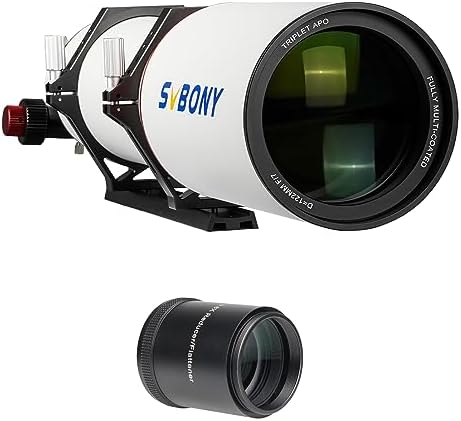
The SVBONY SV550 122mm triplet provides a powerful platform for observing faint deep sky objects. This bundle includes a robust dovetail base and handle making transportation and setup significantly easier for field use.
We may earn a commission when you buy through this link, at no additional cost to you.
With a 122mm aperture this scope gathers more light than standard 80mm models. The FPL-51 triplet lens structure ensures that increased light translates into clear detailed images with minimized chromatic aberration.
The convenient carrying handle and lightweight design despite the larger aperture allow for quick deployment. The included dovetail base features mounting holes for guide scopes facilitating precise tracking without extra purchases.
This package is excellent for those needing a portable yet powerful instrument. It balances performance with practicality ensuring you can reach remote dark sky sites without sacrificing optical capability.
The 122mm aperture enables visibility of fainter deep sky objects that might remain invisible to smaller instruments.
Integrated handles and a compact OTA design ensure the system fits easily into carrying cases for travel.
We may earn a commission when you buy through this link, at no additional cost to you.
The Askar 71F delivers high-performance optics in a compact affordable package. Rated 4.9 it is widely praised for its self-flattened design that eliminates the need for additional field flatteners.
We may earn a commission when you buy through this link, at no additional cost to you.
Its quadruplet air-spaced APO lens ensures excellent color correction and sharp focus across the entire field. The fully matte-painted interior effectively reduces stray light reflection for enhanced contrast in images.
Weighing only 2.5kg this scope is incredibly portable and easy to use for visual observation or photography. The focus can rotate 360 degrees allowing for perfect camera alignment without tube rotation.
This model is ideal for beginners or travelers seeking professional-quality results. Its versatility extends beyond astronomy making it suitable for bird watching or scenic landscapes during the day.
The internal optical design corrects field curvature inherently saving users the cost of extra accessories.
Lightweight construction and a compact form factor make it easy to carry for spontaneous observing sessions.
We may earn a commission when you buy through this link, at no additional cost to you.
The SVBONY SV503 offers a substantial 102mm aperture for users wanting brighter views without breaking the bank. With a 4.8 rating it stands out for delivering bright highcontrast images through superior light transmission coatings.
We may earn a commission when you buy through this link, at no additional cost to you.
Equipped with S-FPL51 ED glass it significantly minimizes color fringing for true-to-life color representation. The FMC coating on all optical surfaces reduces internal reflections improving overall image clarity.
A built-in 360-degree field rotator allows perfect camera alignment without rotating the tube. Coupled with the smooth dual-speed focuser and 90mm travel focusing remains effortless even with filter wheels attached.
This model is perfect for those seeking a larger aperture for visual observation and imaging. Its combination of features and value makes it a compelling choice for intermediate astronomers.
With 90mm of focus travel users can easily accommodate accessories like filter wheels or camera adapters.
The aluminum retractable hood actively blocks stray light and prevents dew formation on the objective lens.
We may earn a commission when you buy through this link, at no additional cost to you.
This premium bundle features the 122mm triplet with both a field flattener and focal reducer for optimized imaging performance. Rated a perfect 5.0 it is the top choice for serious deep sky astrophotographers.
We may earn a commission when you buy through this link, at no additional cost to you.
The large aperture gathers more light revealing faint deep sky objects with clarity. The FPL-51 triplet lens structure enhances sharpness and reduces chromatic aberration significantly for crisp detailed results.
The SV209 0.8X focal reducer increases field of view and improves imaging efficiency. This setup corrects field curvature allowing sharp stars even at the edges of the camera sensor.
Ideal for advanced users this kit provides everything needed for high-quality imaging. The included accessories save time and money while ensuring compatibility and performance out of the box.
The 0.8X reducer widens the field of view making it easier to frame large nebulae and galaxies.
Field correction ensures uniform sharpness from center to edge maximizing usable sensor area.
We may earn a commission when you buy through this link, at no additional cost to you.
The SVBONY SV550 122mm Triplet APO Telescope Kit offers a complete solution for capturing deep sky objects. It includes both a field flattener and focal reducer ensuring precise optical performance for imaging tasks.
We may earn a commission when you buy through this link, at no additional cost to you.
With a 122mm aperture this refractor gathers ample light to reveal faint details in galaxies and nebulae. The FPL-51 triplet lens structure provides excellent correction of aberrations for sharp clear views.
The kit includes a portable handle and dovetail base that make transportation easier. This stability is crucial for maintaining alignment during long exposure photography sessions.
It is a solid choice for those wanting a powerful telescope without building accessories individually. The integration of components ensures a smooth setup experience for astrophotography enthusiasts.
The triplet lens system ensures high sharpness and contrast necessary for resolving fine structures in deep sky targets.
Included field flattener and reducer optimize the system for full-frame cameras ensuring edge-to-edge sharpness.
We may earn a commission when you buy through this link, at no additional cost to you.
The SVBONY SV550 80 Triplet APO Telescope Kit is a well-rounded option for observers seeking color correction and field flatness. It includes the necessary optics to correct curvature and ensure bright clear images.
We may earn a commission when you buy through this link, at no additional cost to you.
With an 80mm aperture and triplet design this scope delivers sharp views with minimal chromatic aberration. The fully multilayer coated lens prevents irritating reflections enhancing contrast for better target visibility.
The SV209 field flattener included in the kit effectively improves image quality at the edge of the field. This ensures that stars remain round even when using larger sensors for wide-field imaging.
Ideal for beginners or travelers this kit provides a complete optical path. The carrying handle and adjustable design make it easy to install and transport between locations.
The triplet design uses two correction glasses and one ED glass to minimize color fringing across wavelengths.
Integrated field flattener ensures sharp images across the entire sensor making it perfect for photography.
We may earn a commission when you buy through this link, at no additional cost to you.
This full bundle includes the 122mm triplet along with a guide scope and dedicated telescope camera for immediate imaging use. It is designed for those ready to start capturing deep sky objects without extra purchases.
We may earn a commission when you buy through this link, at no additional cost to you.
The 122mm aperture offers substantial light gathering capabilities for detailed photography. The FPL-51 triplet lens structure ensures that increased light translates into clear and sharp images across the sky.
The SV905C camera features a high sensitivity sensor with low noise allowing tight tracking of faint guide stars. Its compatibility with mainstream auto guiding cameras ensures flexibility in system configuration.
Perfect for beginners entering astrophotography this kit provides everything needed for autoguiding and imaging. The portable design and included accessories streamline the setup process significantly.
The included guide scope and camera provide precise autoguiding essential for long exposure photography.
High quantum efficiency and low noise allow for capturing faint details without excessive grain or digital noise.
We may earn a commission when you buy through this link, at no additional cost to you.
Selecting the right apochromatic refractor requires balancing optical performance size and budget. This guide breaks down the critical factors to help you make an informed decision.
Aperture determines how much light the telescope can gather. Larger apertures like 122mm reveal fainter objects but add weight. Smaller ones like 80mm are more portable and easier to manage.
Choose an aperture that matches your observing goals and portability needs.
Triplet and quadruplet designs offer better color correction than doublets. Look for ED glass like S-FPL51 or FCD1 to ensure minimal chromatic aberration.
Triplet optics provide the best balance of sharpness and contrast for serious imaging.
Focal ratios like f/6 or f/7 define the speed of the telescope. Faster scopes are better for wide-field imaging while slower ones suit planetary details.
A range of f/6 to f/7 is versatile for both deep sky and planetary work.
A smooth dual-speed focuser is essential for precise focusing. Look for features like a 360-degree field rotator to simplify camera alignment.
High-quality focusers ensure you can maintain critical focus during long exposures.
Materials like magnesium alloy reduce weight without sacrificing durability. Aluminum is common but heavier. Consider weight if you plan to hike to dark sites.
Lightweight materials make transportation easier and reduce mount strain.
Bundles with field flatteners or reducers save money and ensure compatibility. Check what is included before buying to avoid extra costs.
Look for kits that include essential accessories like flatteners or guides.
Ensure the telescope has a standard dovetail plate for easy mounting. Vixen or Losmandy styles are widely compatible with most mounts.
Standard plates make it easier to integrate with existing tripod systems.
Prices vary significantly based on aperture and features. Determine your budget early and prioritize optical quality over brand name.
Balance performance with cost to get the best value for your needs.
Before first use allow your telescope to acclimate to outdoor temperatures. This prevents tube currents that can blur images during observing sessions.
Use a dew heater or dew shield to prevent moisture buildup on the lens. Regularly check the focuser for smooth operation and clean the optical surfaces only when necessary.
Store the scope in a dry cool place to prevent damage. Always cover lenses when not in use to protect them from dust and scratches.
An apochromatic refractor uses multiple lenses with special low-dispersion glass to eliminate chromatic aberration. This ensures sharp images with no color fringing. It is ideal for high-quality photography and detailed visual viewing.
Yes an 80mm aperture is excellent for capturing wide-field deep sky targets. It offers a good balance of light gathering and portability. For fainter objects larger apertures are recommended.
Yes field flatteners are essential for ensuring stars remain sharp across the entire image. Most modern APO telescopes are designed to work with these optics. Bundles often include this accessory.
Clean lenses only when necessary to avoid scratching coatings. Use a blower brush to remove dust and a specialized lens solution for smudges. Never touch the lens with bare hands.
Yes but images may appear inverted without an erecting prism. They are optimized for astronomical use but work well for landscapes or birds. Ensure you check the accessories available.
Look for an equatorial mount capable of supporting the scope's weight. Vixen-style dovetails are common and widely compatible. Ensure the mount handles the payload for stable tracking.
Yes many models offer user-friendly setups with minimal assembly. Bundles with accessories simplify the learning curve. Just ensure you have the right mount and power source ready.
Most apochromatic refractors come pre-aligned from the factory. However checking collimation periodically ensures optimal performance. Use a collimation cap if adjustments are needed.
This guide highlighted top choices from 80mm to 122mm apertures tailored for different needs. The SVBONY SV550 and Askar 71F stand out for their performance and value.
Prioritize optical quality and build durability over minor features. Choose a setup that fits your transport needs and imaging goals.
Check current prices and availability as deals change frequently. Visit the links provided to confirm the latest listings before purchase.