
D-FantiX Battery Tester
4.5Editor score
No battery needed for operation
Analog needle display
Works with all sizes
Discover the best battery tester for household batteries with our expert guide comparing top models for accuracy, compatibility, and ease of use in 2026.
Finding the right tool to check your home's power sources is essential for efficiency. A good battery tester quickly identifies weak cells without wasting good ones. It ensures your remotes and toys work when needed most.
We compared ten leading models based on compatibility, display clarity, and build quality. Our analysis covers digital and analog options suitable for AA, AAA, C, D, and 9V types. Each product offers unique features for different user needs.
Every pick highlights specific strengths like magnetic tips or universal slots. Prices fluctuate often so check current listings before buying. These tools help you save money by preventing unnecessary replacements of still-functional cells.
4.5Editor score

4.5Editor score

4.2Editor score
This side-by-side comparison evaluates all ten selected models based on their core specifications and user feedback to help you choose the perfect device for your home.

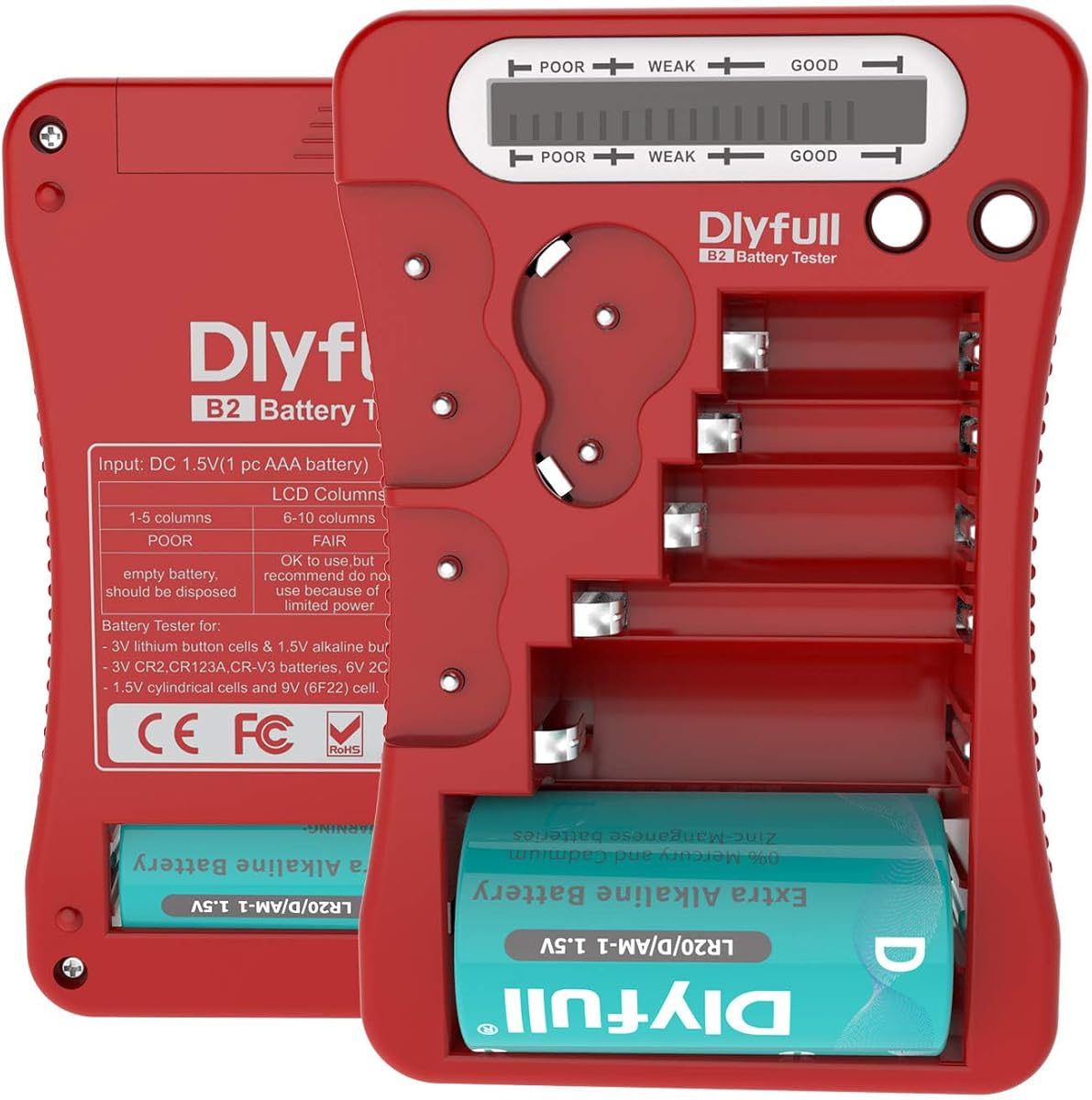


This Dlyfull model earns our top spot for its perfect balance of price and performance. It holds a solid 4.5-star rating from users who appreciate its simplicity. The device quickly tests AA, AAA, C, D, 9V and button cells with reliable accuracy.
We may earn a commission when you buy through this link, at no additional cost to you.
The crisp LCD screen is a standout feature showing clear bars for good weak or poor status. Its compact chassis fits easily in pockets or toolboxes thanks to the anti-slip finish. The quick results help you avoid unnecessary recharges on dying batteries.
One trade-off is that it does not test rechargeable batteries so you must use a separate tool for those. However for most households this covers the vast majority of daily needs. The included AAA battery ensures you can start testing immediately.
Choose this if you want a dependable universal checker that saves money and time. It is ideal for families with many electronics that use standard alkaline cells. The warranty and customer service add extra peace of mind for your purchase.
The LCD shows precise voltage and status bars so you never guess battery health.
Its small size allows you to carry it anywhere for quick checks on the go.
We may earn a commission when you buy through this link, at no additional cost to you.
This model stands out for its incredibly fast 0.1-second reading speed which saves time when testing multiple units. It holds a 4.4 rating from users who value precision and speed. The device supports a wide range including rechargeable AA and AAA options.
We may earn a commission when you buy through this link, at no additional cost to you.
Real-load testing with specific discharge resistors ensures accurate power level detection under load. The smart detection system prevents incorrect testing which protects both the device and your batteries. The compact design fits well in drawers or bags.
The lack of a backlit screen might be a limitation in dim lighting but the readability remains good in normal conditions. You will need to supply your own AAA battery which is not included. The warranty pending status adds slight uncertainty.
This is the best choice if speed and rechargeable support are your top priorities. It suits users who test many batteries regularly and need reliable quick results. The accuracy under load makes it a strong contender for serious home users.
Get accurate voltage readings in just 0.1 seconds for rapid battery sorting.
Uniquely tests 1.2V rechargeable AA AAA and AAAA batteries with smart detection.
We may earn a commission when you buy through this link, at no additional cost to you.
This Dlyfull variant impresses with a 4.6 rating from satisfied customers who love its portability. It shares many features with the top pick but shines in its compact lightweight design. The device tests cylindrical and button cells with consistent results.
We may earn a commission when you buy through this link, at no additional cost to you.
The high compatibility covers AA AAA C D 9V and various button cells making it a versatile home tool. Results are shown quickly through clear bars on the LCD screen. The anti-slip finish ensures a firm grip during testing sessions.
It does not test rechargeable batteries which limits its use for users with Ni-MH cells. However for standard household needs it performs flawlessly. The included AAA battery and warranty add value to the affordable price point.
Pick this if you need a tiny reliable tester that fits in any drawer or pocket. It is perfect for quick checks on remotes toys and other common gadgets. The high rating confirms its reliability for everyday home use.
Supports a broad range of cylindrical and button cells for most household needs.
The anti-slip finish ensures the device stays secure in your hand during testing.
We may earn a commission when you buy through this link, at no additional cost to you.
This analog tester proves you do not need a high price for effective testing. With a 4.5 rating it is a favorite for budget-conscious buyers who value simplicity. The device is activated by the battery being tested requiring no external power source.
We may earn a commission when you buy through this link, at no additional cost to you.
The color-coded analog scale shows green yellow and red to indicate good low or replace status clearly. It works with standard and rechargeable household batteries including AA AAA C D and 9V types. The compact design makes it easy to carry anywhere.
While it lacks a digital readout the analog scale is sufficient for general household needs. It might not offer the same precision as digital models but it saves money and battery waste. The simplicity ensures anyone can use it without learning curves.
Choose this if you want a basic reliable tool that costs little and needs no batteries. It is ideal for casual users who test batteries occasionally. The value proposition is unmatched for simple accurate testing at home.
The device operates purely from the battery energy so you never need extra batteries.
A clear analog needle with color codes makes results instantly understandable at a glance.
We may earn a commission when you buy through this link, at no additional cost to you.
La Crosse is a trusted brand and this model maintains that reputation with a 4.6 rating. It simplifies testing with three easy steps and a pull-out tray that secures batteries perfectly. The LED display shows voltage and strength levels clearly for quick decisions.
We may earn a commission when you buy through this link, at no additional cost to you.
Users can select between 1.5V 1.2V or 3V ranges to match their specific battery type. This flexibility allows testing of both standard and rechargeable batteries including lithium ion button cells. The process is designed to minimize errors for beginners.
The device does not cover every niche type but covers the most common household needs effectively. The tray mechanism is intuitive and prevents incorrect insertion which protects battery contacts. The compact design fits easily into toolboxes or storage drawers.
This is perfect for users who prioritize ease of use and brand trust. It suits households with mixed battery types including rechargeables and lithium cells. The reliable performance ensures you get consistent results every time you test.
A pull-out tray ensures correct battery orientation for safe and accurate testing every time.
Select the right voltage range to test different battery chemistries accurately and safely.
We may earn a commission when you buy through this link, at no additional cost to you.
This option offers exceptional value by including two testers in one package for a low cost. It holds a 4.4 rating from users who appreciate the convenience of having a spare on hand. The devices work without external power making them always ready to use.
We may earn a commission when you buy through this link, at no additional cost to you.
Simply place the battery in the correct slot and read the indicator bars for accurate power levels. They support AA AAA C D 9V and button cells covering most household needs. The lightweight design fits easily into pockets or bags for on-the-go checks.
The build is basic but functional for everyday tasks without adding unnecessary bulk or cost. Having two units means one can stay in a toolbox while the other stays in a kitchen drawer. This convenience reduces the hassle of hunting for a tool.
Buy this if you need multiple testers for different locations at the best price. It is ideal for families who need quick access to battery testing tools. The value and simplicity make it a strong practical choice for homes.
Receive two independent testers in one package for flexible placement around your home.
No batteries are required to operate the testers so they are always ready when needed.
We may earn a commission when you buy through this link, at no additional cost to you.
Tenergy is known for electronics accessories and this tester reflects that quality with a 4.6 rating. It tests twelve different battery sizes making it versatile for various gadgets and electronics. The small unit is lightweight and easy to store in any drawer.
We may earn a commission when you buy through this link, at no additional cost to you.
The LCD display shows status clearly and the included AAA battery means you can start testing right away. It handles AA AAA C D 9V and specialized types like CR123A and CR2 which expands its utility beyond basic household items. The design focuses on convenience and clarity.
The main limitation is the small size which might feel tight for those with larger hands. However it is still functional and delivers consistent results for most users. The included battery helps avoid the initial inconvenience of sourcing power.
Choose this if you need a compact tester that handles specialized battery types too. It suits tech enthusiasts who have cameras or devices using CR123A cells. The reliability and battery support make it a solid practical option.
Tests unique sizes like CR123A and CR2 that many standard testers overlook.
Includes an AAA battery so you can start testing immediately without extra purchases.
We may earn a commission when you buy through this link, at no additional cost to you.
Gardner Bender offers a professional-grade analog tester with a strong 4.6 rating for accuracy. It features 14 battery ranges including lantern and 12V types that most small devices miss. The included test leads allow you to connect directly to battery terminals for precise checks.
We may earn a commission when you buy through this link, at no additional cost to you.
This device is built with a durable black casing that withstands drops and rough handling in workshop environments. The analog dial gives immediate feedback on charge status without needing to interpret digital numbers. It is ideal for tools and heavy equipment maintenance.
The manual connection using leads takes a bit more time than slot-in testers but offers more versatility. It is not the most portable choice due to its size and lead wires. However the range of supported batteries makes it a unique utility tool.
Select this if you work with larger or less common battery types regularly. It is perfect for garage or workshop use where durability and range matter most. The professional build ensures it lasts for years of heavy duty testing.
Included leads enable direct terminal connections for testing batteries that lack standard slots.
Supports 14 battery ranges including lantern and 12V options for heavy equipment needs.
We may earn a commission when you buy through this link, at no additional cost to you.
This tester introduces an advanced magnetic design that holds batteries securely for stable measurements. It has a 4.6 rating from users who value the precision and ease of the magnetic tip. The analog display provides clear immediate results for everyday household testing needs.
We may earn a commission when you buy through this link, at no additional cost to you.
The one-step process means you just place the battery and read the result without fiddling with slots. The magnetic tip ensures good contact which improves accuracy compared to loose spring contacts. It works with common sizes like AA AAA C D 9V and buttons.
While the display is analog the clarity remains high enough for most general users. The portable build fits easily in pockets but might be small for holding large D cells comfortably. The engineering focuses on stability and simplicity for consistent results.
Pick this if you want an innovative tool that simplifies the testing process. It suits users who need quick accurate checks for remotes toys and everyday gadgets. The magnetic feature sets it apart as a unique and practical solution.
The built-in magnetic tip holds batteries firmly for stable and accurate measurements.
Results are available instantly after placement making testing effortless and quick.
We may earn a commission when you buy through this link, at no additional cost to you.
This model takes the premium spot with a sophisticated LCD display showing voltage percentage and bar. It has a 4.2 rating from users who appreciate the advanced details it provides. The device supports 12 battery types including advanced chemistries for comprehensive home use.
We may earn a commission when you buy through this link, at no additional cost to you.
The percentage display helps you make better decisions about replacing batteries before they die completely. A self-test button lets you verify the device is working correctly which adds confidence in readings. It is cylindrical and weighs less than 0.36 pounds for easy portability.
The higher price reflects the extra features and support which may not be needed for basic users. It requires 1.5V AAA batteries to power the digital functions adding a small recurring cost. The lifetime support offers long-term value despite the cost.
Choose this if you want the most detailed battery health data available. It suits tech-savvy users who prefer precise percentages over simple bars. The comprehensive support makes it a top pick for advanced household battery management.
See exact battery percentage levels to plan replacements before your devices fail.
Hold the check button for three seconds to verify the tester is working properly.
We may earn a commission when you buy through this link, at no additional cost to you.
Selecting the right tester involves considering your specific battery types and how much precision you need. This guide covers key factors to ensure you find a tool that works for your home.
Ensure the tester supports the sizes you use most such as AA AAA C D 9V or button cells. Some models specialize in rechargeables while others focus on standard alkaline. Check the product specs to confirm it covers your daily needs.
Aim for a model that tests at least the six most common sizes to avoid multiple tools.
Digital LCD screens provide precise voltage readings and percentage levels for detailed insights. Analog displays use a needle and color scale which are simpler but less precise. Choose digital if you want exact numbers or analog for quick visual status.
Digital displays offer more data while analog ones are easier to read in low light.
Some testers run on the battery itself needing no external power source for operation. Others require an internal AAA or CR2032 cell to function which adds to the cost. Consider which option suits your preference for convenience and maintenance.
Models without power sources save money but require more careful insertion of batteries.
Look for devices that show results within seconds to save time when testing multiple units. Real-load testing under a resistor offers more accurate health data than voltage only checks. High accuracy prevents discarding good batteries prematurely.
Faster speeds help when sorting large batches but accuracy ensures reliable long-term results.
Choose durable materials like reinforced plastic or metal casings to withstand drops in drawers. Compact sizes fit easily into toolboxes pockets or kitchen cabinets for ready access. Good ergonomics like anti-slip grips make testing comfortable.
Sturdy and small designs ensure the tool stays handy and lasts longer for regular use.
Simple slot-in designs without buttons or switches reduce learning curves for all family members. Clear indicators with bars or colors make results easy to understand at a glance. Instructions should be straightforward and warranty support helpful.
User-friendly interfaces mean you test batteries often rather than leaving them in the drawer.
Prices range from budget-friendly analog units to more expensive digital precision tools. A good warranty period such as 18 months or more shows manufacturer confidence in quality. Calculate the cost per use over the expected lifespan of the device.
Invest slightly more for durability and support to avoid replacing cheap units frequently.
Advanced features like magnetic tips or self-test buttons add convenience and precision. Some models include extra accessories like carrying cases or spare batteries for immediate use. Consider if these extras justify a higher price for your specific needs.
Specialized features can make a significant difference in daily workflow efficiency.
Always clean the contacts on the tester before use with a dry cloth to remove dust and debris. Ensure you insert the battery in the correct orientation matching positive and negative marks for accurate readings.
For analog testers allow the needle to settle before reading to avoid parallax errors from the side. For digital models wait for the screen to stabilize which usually takes only a second or two.
Store the device in a cool dry place away from moisture and extreme temperatures. Remove batteries from any power-dependent units if storing for long periods to prevent leakage and damage to the contacts.
Most standard testers measure voltage which is similar for both types but some models specifically support rechargeable Ni-MH batteries with correct ranges. Always check the product specs to see if it explicitly lists 1.2V rechargeable support for safety.
Yes testing standard household batteries is completely safe with a dedicated tester. Just avoid testing damaged or leaking batteries which could expose you to harmful chemicals. Keep the device away from heat sources during operation.
Digital models often provide precise voltage readings while analog ones show a relative position on a scale. The difference can also come from whether the device tests under load or just open voltage.
It is best to test batteries every few months or when a device stops working unexpectedly. Regular checks help prevent leakage from old batteries and ensure you always have fresh power available.
Many universal testers include specific slots for 9V batteries so a separate unit is not necessary. Just ensure your chosen model explicitly lists 9V compatibility in its supported types to avoid issues.
Yes most universal testers have dedicated small slots for button cells like CR2032 and LR44. Always verify that the specific model you choose lists the button cell types you need in its specs.
First check if the internal battery in the tester is dead and replace it if needed. If it still fails contact the manufacturer support for warranty claims before disposing of the unit.
They are worth it if you use rechargeables frequently as they offer more precise voltage detection. For occasional users a standard universal tester usually provides enough information to manage batteries effectively.
The top picks cover a wide range of needs from budget analog tools to advanced digital meters. Our guide helps you select a device that matches your specific battery types and preferences.
Prioritize compatibility and display clarity to ensure the tool delivers reliable results quickly. Consider how often you test to decide between simple slot-in designs or advanced digital features.
Remember that prices and models may change so verify current listings before making a purchase. Use this guide to find a tester that will help you save money and keep your devices running smoothly.