
6-22v 200W DC Planet Gear Motor 90kg.cm High Torque Mini Metal Geared Motor for DIY Robot Rotating Table Door Lock Curtain Machine
4.6Editor score
Up to 22V Operation
90kg.cm High Torque Output
Metal Gear Reduction System
This guide compares ten top-rated DC motors for robots based on torque, voltage, gear ratio, and build quality to help you select the right motor for your next
Selecting the right DC motors for robots is crucial for ensuring reliable movement and precise control in your automation projects. Whether you are building a smart car or a complex industrial arm, the motor choice dictates performance.
We evaluated ten popular options based on torque output, voltage compatibility, gear reduction ratios, and durability. Our analysis focuses on real-world applications to help you find a motor that matches your specific needs.
Each pick below highlights key features and potential trade-offs so you can make an informed decision. Please note that prices and availability change frequently, so verify current listings before purchasing your components.
4.6Editor score

4.6Editor score
4.5Editor score
The following table provides a side-by-side comparison of all ten selected DC motors for robots. Review voltage ranges, torque specs, and included accessories to find the best fit for your build.



The Acxico N20 gear motor set is a reliable choice for beginners and experienced builders alike. Rated 4.6 stars, it offers a full metal gearbox that ensures longevity in demanding environments.
We may earn a commission when you buy through this link, at no additional cost to you.
Its slow speed output is ideal for applications requiring precision over raw power. The 3mm D-type shaft allows for secure wheel attachments without slipping during operation.
While it lacks advanced features like encoders, the simplicity makes it easy to integrate into basic robot chassis. The voltage range of 3V to 6V limits high-power use but suits battery projects.
Buy this if you need multiple motors for a multi-wheeled robot on a budget. It provides excellent value for educational kits and simple automation tasks where cost is a priority.
The low speed and metal construction make this motor safe and durable for classroom use where durability matters.
Its small footprint allows designers to fit multiple units into tight spaces without compromising structural integrity.
We may earn a commission when you buy through this link, at no additional cost to you.
This motor stands out for its massive torque output, making it perfect for heavy-duty robot applications. With a rating of 4.6 stars, it handles loads that standard hobby motors cannot.
We may earn a commission when you buy through this link, at no additional cost to you.
The planetary gear system ensures efficient power transfer and minimal energy loss. This makes it suitable for rotating tables or automated doors that require significant force.
Users must ensure their power supply matches the voltage requirements up to 22V. The 8mm shaft provides a strong connection point for larger mechanical components.
Choose this motor if you are building a robot that needs to lift or push heavy objects. It bridges the gap between hobbyist kits and industrial machinery needs.
The 90kg.cm torque ensures that the motor does not stall even under significant resistance or friction.
Operating across 6V to 22V allows users to tune speed and torque by adjusting the input voltage supply.
We may earn a commission when you buy through this link, at no additional cost to you.
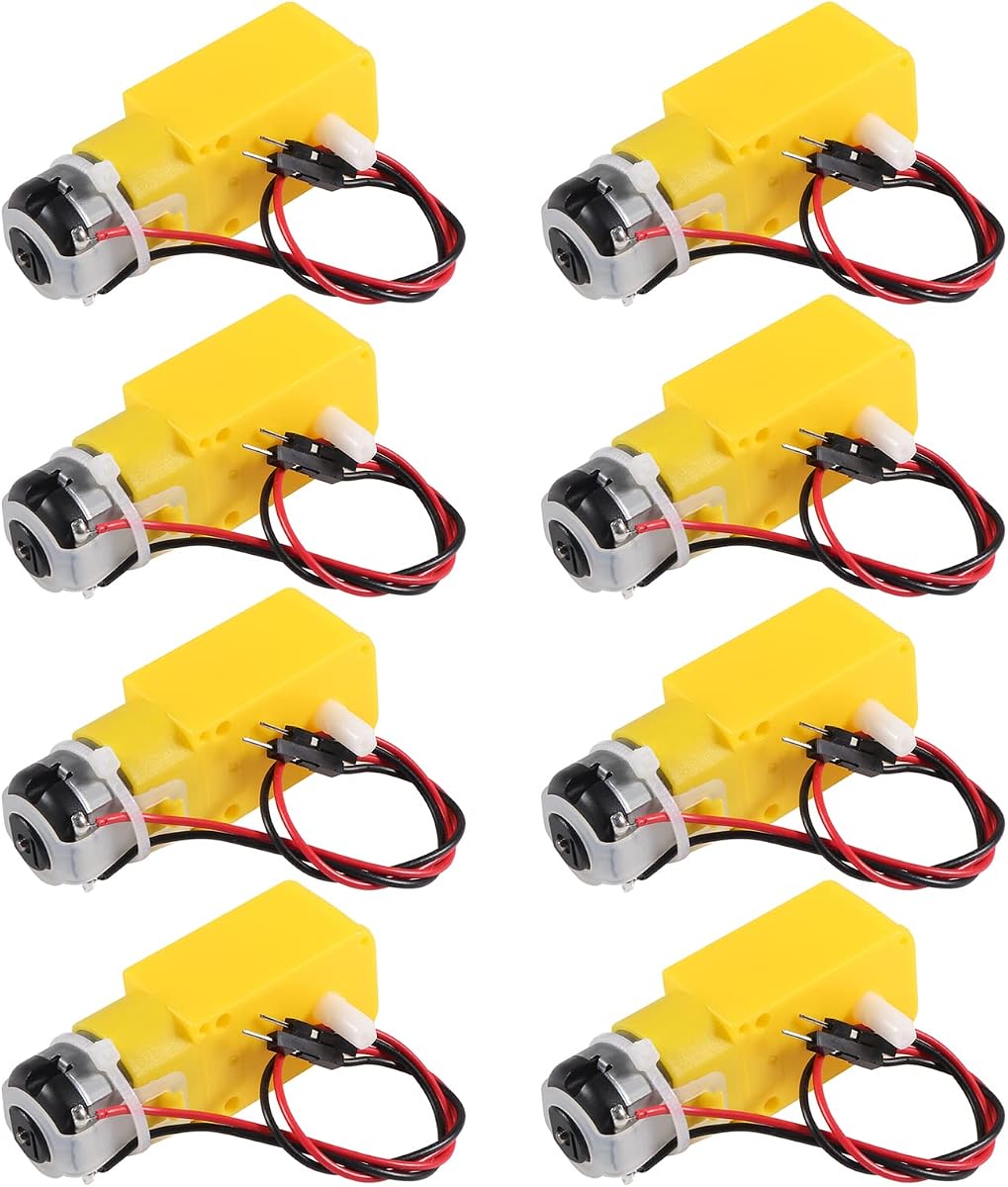
This eight-pack is the most cost-effective solution for projects requiring multiple motors. Rated 4.5 stars, it delivers consistent performance for standard robotics tasks.
We may earn a commission when you buy through this link, at no additional cost to you.
The 1:48 gear ratio provides excellent torque for a low price point. It is specifically designed for easy integration with Arduino projects using standard headers.
While the gearbox is not as robust as metal versions, it suffices for light-duty educational robots. The included wheels save additional costs for basic builds.
Buy this if you are teaching robotics or building a fleet of small vehicles. The value proposition is unmatched when you need volume over individual performance.
Having eight units ready to go eliminates downtime and ensures all robots in a class or fleet have matching specs.
The 2.54mm connectors plug directly into breadboards and terminal blocks for rapid prototyping sessions.
We may earn a commission when you buy through this link, at no additional cost to you.
This motor features a fully enclosed structure that enhances durability and protects internal components. Rated 4.4 stars, it is built for long-term use in smart cars.
We may earn a commission when you buy through this link, at no additional cost to you.
The full metal gears ensure smooth operation with reduced noise levels. Pure copper coils contribute to low resistance and efficient energy usage over time.
The mounting bracket simplifies installation into custom frames, saving fabrication time. However, it operates best at 12V so voltage compatibility is key.
Select this motor when you need a robust drive system for a medium-sized robot. The included wheels make it a ready-to-go solution for DIY models.
The pure copper design reduces heat buildup during extended operation, protecting the motor from overheating.
The included bracket ensures the motor stays securely in place even during vibration or impact events.
We may earn a commission when you buy through this link, at no additional cost to you.
This two-pack upgrades standard TT motors with all-metal components and precise encoders. With a 4.7 rating, it offers the best performance for advanced motion control.
We may earn a commission when you buy through this link, at no additional cost to you.
The Hall encoder allows for real-time speed and position measurement. This is crucial for balancing robots or precise navigation systems requiring feedback loops.
The 1:90 ratio provides significant torque for its size. While it costs more, the accuracy gained justifies the investment for serious robotics projects.
Buy this when your robot needs accurate movement tracking. The LED indicator and anti-reverse interface simplify integration into complex electronics.
The quadrature sine wave output from the encoder enables smooth and precise speed regulation.
The 1.8 kg*cm stall torque ensures the motor can handle demanding loads without overheating or stalling.
We may earn a commission when you buy through this link, at no additional cost to you.
This motor is designed for medium-duty applications requiring reliability and strength. Rated 4.6 stars, it offers a robust metal construction that resists wear.
We may earn a commission when you buy through this link, at no additional cost to you.
The 70:1 reduction ratio balances speed and torque effectively. It is perfect for balancing cars or smart home appliances needing steady movement.
The long shaft provides better support for wheels preventing bending under load. However, users must plan for the physical dimensions in their design.
Choose this motor for robots needing steady performance without excessive power. The included bracket makes mounting easy on standard aluminum profiles.
The 16mm shaft length distributes weight evenly reducing wobble during high-torque operation.
Supporting both 6V and 12V allows users to choose between speed and power based on their supply.
We may earn a commission when you buy through this link, at no additional cost to you.
With a perfect 5.0 rating, this motor delivers powerful quiet performance ideal for RC cars and DIY toys. It focuses on efficiency and reliability.
We may earn a commission when you buy through this link, at no additional cost to you.
The pure copper winding increases torque by 30 percent improving responsiveness. The all-metal gears ensure the motor withstands heavy usage over time.
The double-shaft design offers flexibility for connecting components on both ends. This is useful for complex transmission setups or dual drive systems.
Select this if you need quiet operation with solid torque. The compact size allows for installation in tight spaces on vehicle chassis.
The pure copper rotor minimizes energy loss turning more power into actual movement for better battery life.
The 4mm D-shaped shaft ensures wheels stay locked in place even under aggressive acceleration forces.
We may earn a commission when you buy through this link, at no additional cost to you.
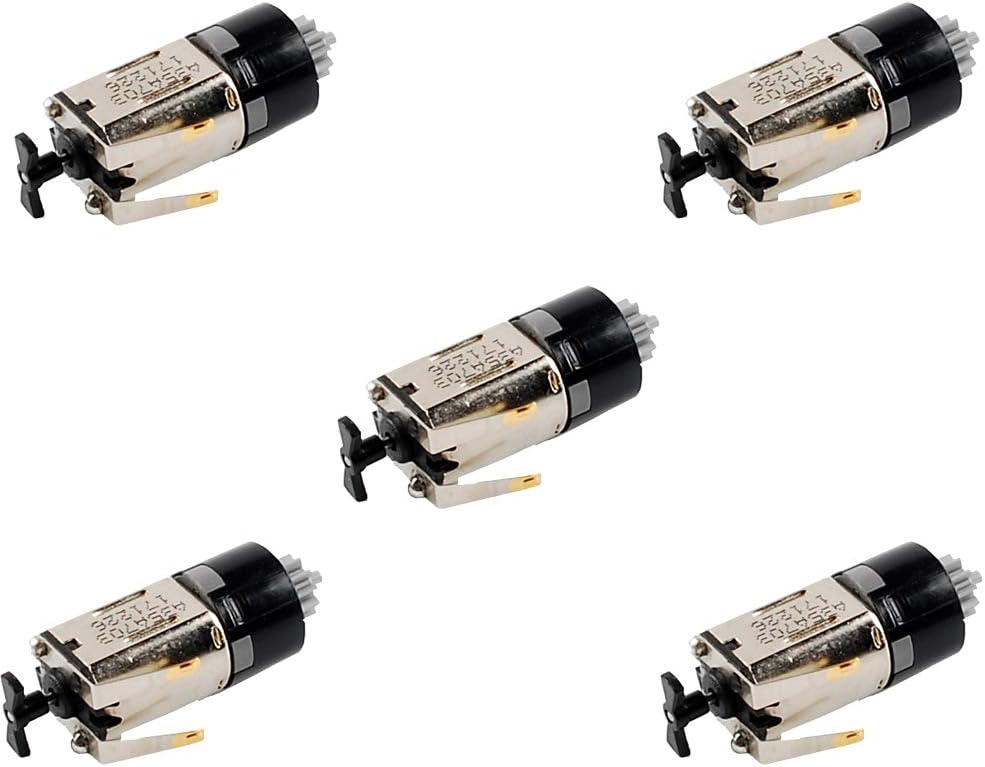
These miniature motors are perfect for small projects needing high speed. Rated 4.2 stars, they are small and powerful for their size.
We may earn a commission when you buy through this link, at no additional cost to you.
With 16000 RPM at 3V they are great for fans or brush-bots. The compact 15mm diameter allows integration into very tight designs.
Torque is limited so they are not suitable for heavy driving. However for sensing or ventilation tasks they perform exceptionally well.
Buy this for projects like small drones or fans. The included wire leads simplify connection without needing soldering tools.
The high RPM rating makes these motors suitable for creating airflow or rapid movement in small mechanisms.
Their tiny size ensures minimal weight impact on portable battery-powered robotic builds.
We may earn a commission when you buy through this link, at no additional cost to you.
This motor uses a planetary reducer to increase torque in a tiny package. Rated 4.4 stars, it is ideal for space-constrained robot designs.
We may earn a commission when you buy through this link, at no additional cost to you.
Operating at low speeds between 110 and 180 RPM it provides controlled movement. The low current draw is perfect for battery efficiency.
The compact design is great for micro-robots where space is limited. Ensure your power supply matches the 3V to 5V requirement.
Choose this for projects needing quiet and steady movement. The planetary system offers better reliability than standard spur gears.
The micro footprint allows designers to maximize internal space for sensors or batteries.
Low current consumption extends battery life making it ideal for autonomous portable robots.
We may earn a commission when you buy through this link, at no additional cost to you.
This is a practical replacement motor for various small RC and DIY projects. Rated 4.4 stars, it offers reliable performance for upgrades.
We may earn a commission when you buy through this link, at no additional cost to you.
With a max speed of 12000 RPM it provides quick movement for lightweight builds. The brushed design keeps costs low for hobbyists.
The small shaft diameter requires compatible gears or couplers. Always check your existing hardware before ordering to ensure a fit.
Select this for simple toy car replacements or small drills. It offers a good balance of speed and cost for general tasks.
Its standard dimensions make it a drop-in option for upgrading old toys to better performance.
The motor operates quietly which is beneficial for indoor robots or quiet environments.
We may earn a commission when you buy through this link, at no additional cost to you.
Choosing the right motor requires balancing speed, torque, and voltage needs. This guide outlines the key factors to consider before purchasing.
Ensure the motor's operating voltage matches your power source. Mismatched voltage can lead to poor performance or damage. Most motors work between 3V and 24V.
Always check the rated voltage and current draw to size your battery correctly.
Torque determines how much load the motor can move. Heavier robots need higher torque to avoid stalling. Check the stall torque rating for your specific use case.
Select a motor with enough torque to handle your robot's weight plus a safety margin.
Gear reduction affects speed and torque. Higher ratios give more torque but less speed. Choose based on whether you need movement power or raw velocity.
Match the gear ratio to your wheel size for optimal ground speed.
The shaft must fit your wheels or couplers. D-shaped shafts prevent slipping better than round ones. Measure your components to ensure a secure fit.
Standard sizes like 2.3mm or 3mm are common but verify before buying.
Metal gears last longer than plastic. For heavy use, choose all-metal constructions to prevent wear. This reduces long-term maintenance needs.
Look for durable housings that protect internal parts from dust and vibration.
Encoders provide feedback on speed and position. Robots needing precise control require encoders. This adds complexity but improves stability.
Decide if your project needs feedback or simple open-loop control.
Space is limited on robot chassis. Measure the motor's diameter and length before purchasing. Ensure it fits your frame and mounting points.
Compact motors are better for small projects while larger ones suit industrial builds.
Prices vary based on quality and features. Hobby motors are cheaper but lack durability. Industrial options cost more but perform better over time.
Balance cost with expected lifespan and performance needs for your project.
Connect the motor to a stable power source matching its voltage rating. Use proper connectors to avoid loose contacts that cause resistance.
Mount the motor securely using brackets or screws to prevent vibration damage. Ensure shafts align perfectly with wheels to reduce strain.
Regularly inspect gears and shafts for wear. Clean dust from the housing and lubricate if recommended by the manufacturer for longevity.
Most DC motors for robots operate between 3V and 24V. Check the specific product rating to ensure compatibility with your battery or power supply. Using the wrong voltage can damage the motor.
Use a motor with a higher gear ratio or a motor rated for more torque. Planetary gears are efficient for this purpose. Ensure your power supply can handle the increased current draw.
Yes, you need a motor controller to adjust speed and direction. PWM controllers are common for hobby robots. Make sure the controller supports the motor's voltage and current specs.
Metal gears offer higher durability and better torque handling. They are ideal for heavy-duty applications. Plastic gears are lighter and quieter but may wear out faster under stress.
Calculate the required torque based on wheel size and robot weight. Compare this to the motor's stall torque rating. Add a 20 percent safety margin for reliable operation.
A D-shaped shaft has a flat side to prevent wheels from slipping. This design secures the wheel firmly during rotation. It is common in robotics to ensure traction.
Not all motors include wheels. Some are sold as bare motors while others come with kits. Check the product details to see what is included before purchasing.
Connect positive and negative wires to the correct terminals. Use soldering or screw terminals for secure connections. Ensure the wire insulation is rated for your voltage.
We reviewed ten reliable options ranging from budget TT motors to high-torque planetary units. Each offers unique benefits for different robot sizes and tasks.
Prioritize torque and voltage compatibility for your specific build needs. Consider whether you need encoders or just simple rotation capabilities.
Prices vary significantly between models so check current listings before finalizing your purchase. This ensures you get the best value for your robotics project.