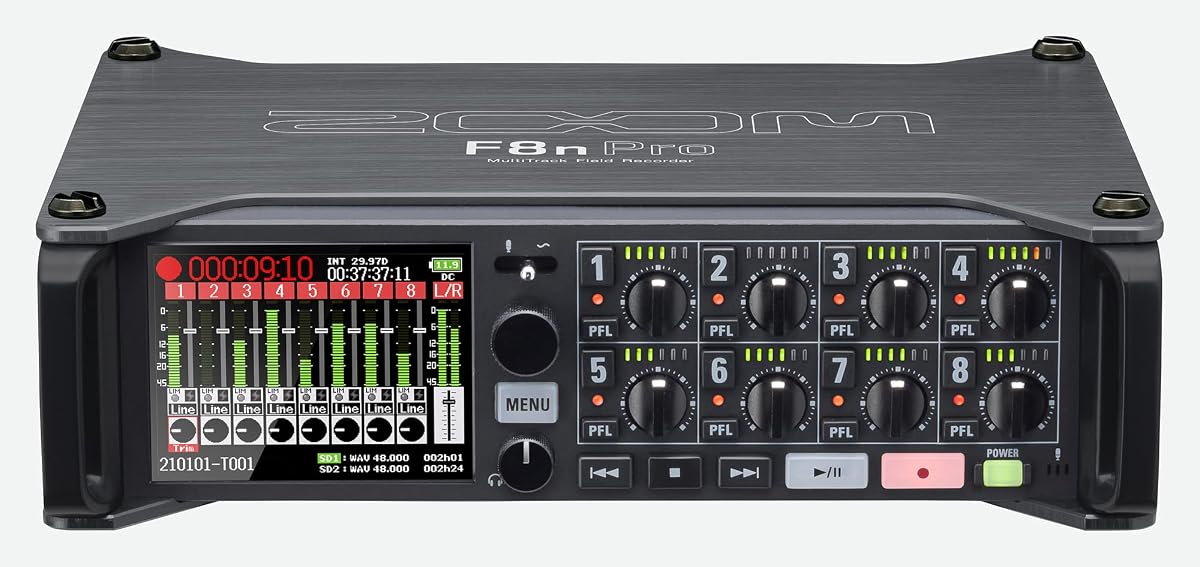
Zoom F8n Pro Field Recorder
4.6Editor score
8-channel recording capacity
Dual SD card slots
High gain preamps
Discover the top audio field recorders for film production compared by experts. This guide reviews features, sound quality, and workflow tools for filmmakers.
Choosing the right audio field recorder is critical for capturing clean dialogue and ambient sound on set. Modern devices offer 32-bit float recording to prevent clipping and ensure flexibility during post-production workflows.
We evaluated ten top models based on input channels, timecode support, portability, and audio fidelity. Each selection balances professional features with practical usability for independent filmmakers and larger crews.
Every pick highlights key strengths and ideal use cases to help you decide. Prices fluctuate often, so verify current offers before purchasing to ensure you get the best value available today.
4.6Editor score

4.7Editor score

4.6Editor score
This side-by-side comparison highlights the key specifications and capabilities of each model to help you find the perfect fit for your production needs.



The Zoom F6 stands out as a top-tier solution for serious filmmakers needing reliable audio capture. With a high user rating and advanced features, it ensures you never lose a take due to clipping or sync issues.
We may earn a commission when you buy through this link, at no additional cost to you.
Its 32-bit float recording captures everything from whispers to explosions without distortion. Six XLR inputs allow simultaneous recording of multiple mics, while timecode I/O keeps audio perfectly aligned with video frames.
While it has a steeper learning curve than simpler recorders, the flexibility it offers is unmatched. The rugged build handles location stress well, though the price reflects its professional-grade capabilities.
Filmmakers working on complex productions will find the F6 indispensable for maintaining high audio standards. It balances portability with power, making it the ultimate choice for versatile field recording needs.
32-bit float recording eliminates the need for careful gain staging by capturing a massive range of sound levels safely.
Timecode I/O ensures frame-accurate synchronization with cameras and other devices, streamlining the post-production editing process significantly.
We may earn a commission when you buy through this link, at no additional cost to you.
The Zoom F8n Pro is engineered for high-end film production where channel count and reliability are paramount. Its robust feature set ensures that even the most demanding shoots maintain pristine audio quality throughout.
We may earn a commission when you buy through this link, at no additional cost to you.
With eight inputs and ten tracks, you can record multiple microphones simultaneously without compromise. The preamps deliver exceptional clarity, and dual SD slots provide redundant backups to prevent data loss during critical moments.
However, its size and weight make it less ideal for quick run-and-gun scenarios. The advanced features require time to master, but the investment pays off in professional results and workflow efficiency.
Production teams needing maximum channel capacity will appreciate the F8n Pro's capabilities. It remains a gold standard for field audio where versatility and dependability are non-negotiable requirements.
Eight inputs let you record complex setups like ADR, boom, and ambient mics simultaneously for total control over the soundscape.
Dual SD card slots enable redundant recording, ensuring you have a backup copy if one card fails during an important take.
We may earn a commission when you buy through this link, at no additional cost to you.
The Zoom F3 brings professional-grade 32-bit float recording to a smaller, more affordable package. It is trusted by professionals for its ability to handle unexpected sound spikes without needing constant adjustment.
We may earn a commission when you buy through this link, at no additional cost to you.
Its ultra-low-noise preamps ensure clean audio even in unpredictable environments. Dual locking XLR inputs keep connections secure, while flexible power options let you record for long days without interruption.
While it only has two inputs and lacks advanced timecode features, it excels as a lightweight backup or primary unit for solo filmmakers. The trade-off in features is acceptable for the significant price savings.
Anyone seeking professional audio quality on a budget will find the F3 perfect for run-and-gun shooting. It proves you do not need expensive gear to achieve broadcast-quality results in the field.
32-bit float technology automatically manages levels so you can focus on capturing the scene rather than fiddling with gain knobs.
Dual locking XLR inputs prevent accidental cable disconnection when the recorder is mounted on a rig or hidden in a set.
We may earn a commission when you buy through this link, at no additional cost to you.
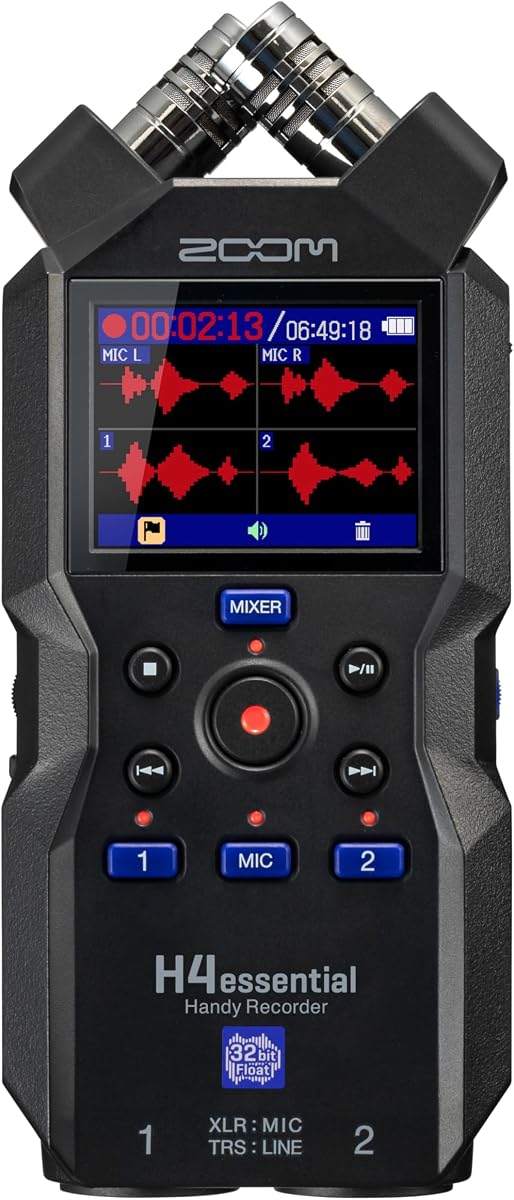
The Zoom H4 Essential offers a user-friendly approach to recording audio for video projects. It balances ease of use with professional features like external mic inputs and SD card saving for peace of mind.
We may earn a commission when you buy through this link, at no additional cost to you.
Its built-in stereo microphones capture clear sound for interviews and ambience without extra gear. You can also connect external mics or plug into a mixer using XLR/TRS inputs for greater flexibility.
While not as rugged as dedicated field units, it handles most creative work well. Spoken menu guidance makes it accessible for all users, though those needing precise sync might find it limited.
Podcasters and independent filmmakers needing a simple, reliable tool will appreciate this recorder. It ensures you capture big projects with confidence without worrying about distorted takes or complex setups.
Spoken menu guidance helps visually impaired users and simplifies navigation for anyone wanting a more guided recording experience.
Connect via USB-C for direct streaming or recording to your device while also saving a backup file to an SD card securely.
We may earn a commission when you buy through this link, at no additional cost to you.
The Zoom H1 XLR provides a streamlined entry point for professional-quality audio capture. It simplifies setup while delivering 32-bit/96kHz audio clarity suitable for interviews and field recordings alike.
We may earn a commission when you buy through this link, at no additional cost to you.
Its OLED waveform display lets you monitor levels at a glance to ensure clean recordings. Two XLR/TRS inputs allow versatile setups with mics or instruments, while 3.5mm ports add extra connectivity options.
It lacks advanced features like timecode but excels in core recording quality and simplicity. The support for large SDXC cards means you can record for extended sessions without changing media.
Content creators needing straightforward recording quality will find this unit sufficient for most needs. It ensures clear, detailed sound without the complexity of larger, more expensive systems.
The OLED waveform display shows audio levels in real time, making it easy to adjust inputs before issues occur.
Two combo inputs let you connect microphones or instruments easily, providing flexibility for different recording scenarios.
We may earn a commission when you buy through this link, at no additional cost to you.
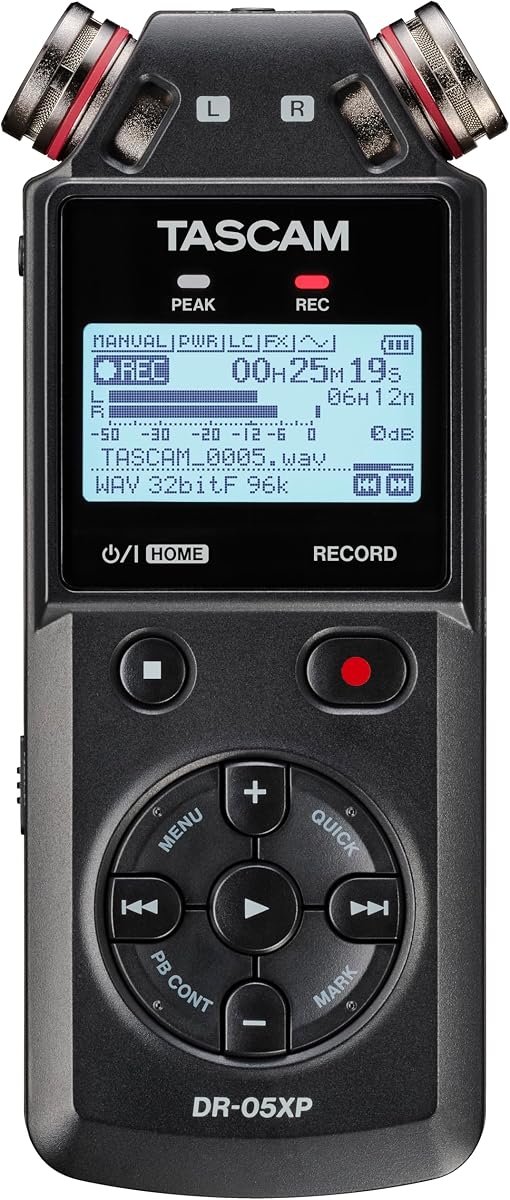
The TASCAM DR-05XP makes it easy to capture pro-quality recordings for video meetings and sound. It handles loud environments with its omnidirectional microphones and supports 32-bit float for safety.
We may earn a commission when you buy through this link, at no additional cost to you.
It doubles as a USB-C audio interface for recording directly to a computer, adding value for streamers. The battery lasts up to 17.5 hours on AA cells, ensuring long operation without frequent changes.
Its flexibility in recording modes like MP3 or high-resolution WAV suits various needs. However, the lack of directional mics may limit precision in noisy locations compared to more specialized gear.
Travelers and quick-documentation users will appreciate its portability and simplicity. It offers a reliable way to capture audio without needing heavy gear or complex configuration steps.
Using standard AA batteries, this unit runs for extended periods, ensuring you stay powered during long shooting days.
Supports multiple recording formats including MP3 and high-resolution WAV to suit different storage and quality requirements.
We may earn a commission when you buy through this link, at no additional cost to you.
The Zoom H5 offers a unique modular system where input capsules can be swapped like camera lenses. This adaptability allows filmmakers to choose the best mic configuration for every specific scene.
We may earn a commission when you buy through this link, at no additional cost to you.
It includes an X/Y capsule for stereo capture and has two mic/line inputs with phantom power for external mics. Four-track recording ensures you capture multiple sources simultaneously with clear separation.
While it lacks 32-bit float technology found in newer models, its audio safety net helps protect recordings by keeping a lower-level backup track. The USB interface connects seamlessly to PCs and Macs for direct transfers.
Users valuing flexibility and legacy reliability will enjoy the H5. It remains a strong choice for those who need customizable inputs without breaking the bank.
Swap capsules easily to match your audio needs whether you need stereo ambient or focused directional capture.
Record a backup track at lower gain to ensure you never lose audio if levels clip during unexpected loud moments.
We may earn a commission when you buy through this link, at no additional cost to you.
The TASCAM DR-10L Pro is designed for capturing superior personal audio effortlessly. It includes a matched lavalier microphone and supports 32-bit float recording to handle dynamic vocal ranges.
We may earn a commission when you buy through this link, at no additional cost to you.
With firmware updates supporting LTC Jam Sync, it integrates smoothly into multi-device workflows for seamless synchronization. It can control up to five simultaneous recordings via its app, offering great workflow potential.
While it is limited to a single channel, it delivers clear, lifelike audio even in busy settings. The support for 512GB cards means you can shoot for hours without changing media during events.
Interviewers and wedding videographers will find it perfect for discreet, reliable vocal capture. It ensures your audio remains clean and synced without bulky external boxes or wires.
The included TM-10L mic is perfectly matched to the recorder for consistent and clear audio across various environments.
Take command of multiple units via the CONNECT App to manage recordings and settings remotely for large events.
We may earn a commission when you buy through this link, at no additional cost to you.
The Zoom H1 Essential helps creators capture clear stereo audio for videos without needing complex gear. It is designed to be ready when inspiration hits, whether for tutorials or live music.
We may earn a commission when you buy through this link, at no additional cost to you.
You can connect via USB-C to use it as a microphone for livestreams or remote meetings. Its compact form makes it ideal for capturing real-world sound or room tone without bulk or weight.
While it lacks external inputs, the built-in mics provide natural stereo sound for interviews. It simplifies the recording process so you can focus on content rather than technical adjustments.
New creators and casual users will appreciate its straightforward approach. It provides polished sound that elevates content quality without demanding professional knowledge.
Plug into your computer to use as a direct microphone for calls or livestreams for improved audio quality.
Its small size lets you carry it everywhere ensuring you are ready to capture sound whenever ideas occur.
We may earn a commission when you buy through this link, at no additional cost to you.
The Zoom F2 is the smallest 32-bit float recorder you can wear discreetly during filming. It captures clip-free audio at any volume level without needing to adjust gain constantly.
We may earn a commission when you buy through this link, at no additional cost to you.
It includes a Lavalier mic with a screw-lock connector for secure placement. Running on just two AAA batteries, it offers 15 hours of operation, making it efficient for long shoots.
The precision internal clock ensures perfect audio and video sync for professional production. However, it lacks external inputs so it is best suited for solo recording scenarios only.
Journalists and vloggers will find this device convenient for hands-free audio. It ensures focus remains on content creation while audio quality stays consistent and reliable.
Its tiny size lets you clip it to a belt or pocket for unobtrusive audio capture during interviews or vlogs.
Running on standard AAA batteries for 15 hours means fewer battery changes and longer recording sessions.
We may earn a commission when you buy through this link, at no additional cost to you.
Selecting the right recorder depends on your specific needs such as channel count, timecode support, and portability requirements.
The number of inputs determines how many microphones you can record simultaneously. For complex shoots with multiple boom or lav mics, models like the F8n Pro offer eight inputs. Solo filmmakers may only need two inputs found on the F3 or H1 XLR.
Ensure your unit has enough inputs to handle your largest expected production needs without requiring additional mixers.
32-bit float recording captures a massive range of sound levels without clipping. This ensures that sudden loud noises do not distort audio and quieter dialogue remains audible. It removes the need for precise gain staging during shoots.
Prioritize models with 32-bit float support to guarantee safe audio levels in unpredictable environments.
Timecode synchronization ensures audio stays perfectly aligned with video frames during editing. Professional units have dedicated timecode I/O ports for linking with cameras. This is essential for multi-camera shoots or separate audio recording setups.
Check if the device supports timecode input and output to streamline your post-production workflow effectively.
Field recorders come in various sizes from handheld pocket units to benchtop devices. Compact recorders like the H1 or F2 are easy to carry but may lack advanced features. Larger units offer more channels but can be heavier to hold.
Choose a size that balances the features you need with the ease of carrying it on location.
High-quality preamps ensure clean and clear audio without unwanted noise or hiss. Look for specifications like high gain and low EIN values which indicate better noise performance. Good preamps allow you to record quiet voices clearly even in noisy settings.
Invest in units known for high gain and low noise performance to maintain professional sound quality.
Connectivity determines how easily you can transfer files or power the device. USB-C ports allow direct connection to computers for file transfers and streaming. XLR inputs connect to professional microphones while 3.5mm jacks may be used for consumer gear.
Verify the ports match your existing microphone and computer setups to avoid needing extra adapters.
Recording duration depends on the type of SD card supported and the bit rate. Look for support of high-capacity SDXC cards to allow for long sessions without frequent changes. Some units offer dual slots for redundant backup of files.
Ensure the recorder supports the storage capacity you need for extended shoots and file backups.
Battery life affects how long you can record without power interruption. Some models run on standard AA or AAA batteries for flexibility while others use internal lithium. Long operation is vital for shoots without easy access to mains power.
Check power options and estimated run times to ensure your recorder lasts through your entire production day.
Always check your levels and batteries before a shoot begins. Even with float recording, monitoring levels ensures you have a good signal to work with. Use the waveform display if available to visualize audio in real time.
Store your recorder in a protective case to prevent damage from bumps or moisture. Clean the inputs with a soft brush regularly to remove dust and debris. Proper care extends the life of your device significantly.
After a shoot, back up your audio files immediately to a computer or external drive. Verify the files are readable and complete before formatting any memory cards. This simple step prevents potential data loss during critical projects.
32-bit float recording captures audio with a massive dynamic range that prevents clipping regardless of input levels. It allows you to adjust gain in post-production without distortion. This technology ensures no audio is lost even if levels spike unexpectedly.
Timecode is essential for professional productions with separate audio and video recording. It ensures perfect synchronization during editing. For simple vlogs or solo work, it may not be necessary as most cameras can sync audio internally.
Yes most field recorders accept wireless receiver outputs via XLR or 3.5mm inputs. Ensure the receiver output matches the input requirements of your recorder. This allows seamless integration with wireless systems on set.
Most units support standard SD and SDXC cards up to 1TB capacity. Check the manual for specific supported speed classes to ensure reliable recording. Using high-speed cards prevents dropouts during high bitrate recordings.
Battery life varies from 5 to over 15 hours depending on the model and usage. Some run on AA batteries for easy replacement while others use rechargeable internals. Carry extras for all-day shoots to avoid unexpected power loss.
All featured recorders include headphone jacks for real-time monitoring. This allows you to check audio quality and levels during a take. Monitoring is vital for catching issues before the take is completed.
The Zoom F6 and F8n Pro lead for professional needs with advanced features like timecode and multiple inputs. The F3 offers a great entry into 32-bit float recording at a lower price point.
Prioritize features like timecode and channel count if you work on large productions. For solo projects, portability and ease of use should guide your decision more than raw power.
Prices and availability change often so verify current offers before finalizing your purchase. Investing in the right tool ensures your audio captures every moment clearly for production success.