
ESP8266 ESP-01S
4.4Editor score
Affordable Wireless Transceiver
4MB Flash Memory
Strong Signal Strength
This expert guide compares the top Arduino WiFi Module options including ESP8266 ESP32 and official boards to help you choose the right wireless connectivity
Selecting the right Arduino WiFi Module is crucial for any embedded project requiring network connectivity. Whether you are building a smart home device or a remote sensor, the module you choose defines the communication capabilities and project potential available to you effectively.
We compared ten leading options based on performance compatibility ease of use and community support. Our analysis covers everything from budget friendly transceivers to official boards with integrated wireless features ensuring you find the perfect match for your specific technical requirements.
Each pick highlights unique strengths such as dual core processing or built in Bluetooth. Keep in mind that prices change frequently so verify current listings before purchasing. This guide provides the detailed specifications needed to make an informed decision confidently.
4.4Editor score

4.7Editor score

4.7Editor score
This side-by-side comparison outlines the key technical specifications of ten top wireless modules to help you evaluate their differences in processing power memory and connectivity features efficiently.



The Arduino UNO R4 WiFi stands out as the premium choice for developers needing robust wireless capabilities without external modules. Rated highly by users this board combines dual-core processing with seamless Wi-Fi and Bluetooth connectivity making it a powerhouse for complex IoT tasks.
We may earn a commission when you buy through this link, at no additional cost to you.
Its standout features include a built-in 12×8 LED matrix for immediate visual feedback and a 12-bit DAC for precise analog output. The inclusion of CAN bus support and Qwiic connectors simplifies wiring for industrial or robotic applications requiring reliable real-time communication.
While the price is higher than basic modules the value comes from eliminating the need for extra breakout boards. The modern USB-C connection also reduces friction during programming and power delivery ensuring a smoother workflow for professional and hobbyist projects alike.
You should buy this if you are building advanced smart home hubs or data-intensive sensor networks. The UNO R4 WiFi offers the most complete onboard ecosystem for serious Arduino WiFi Module development in 2026.
Separating the microcontroller from the wireless chip allows the RA4M1 to handle logic while the ESP32-S3 manages connectivity without lag.
The integrated LED matrix removes the need for external displays allowing you to prototype status indicators directly on the board.
We may earn a commission when you buy through this link, at no additional cost to you.
The HiLetgo ESP8266 ESP-01 offers a straightforward approach to adding Wi-Fi to Arduino projects. This three-pack provides excellent value for prototyping multiple devices or replacing failed units without breaking the bank on expensive hardware components.
We may earn a commission when you buy through this link, at no additional cost to you.
It relies on the well-documented ESP8266 chip which supports both Access Point and Station modes. While it lacks a direct USB interface making programming slightly more complex it delivers stable connectivity for lightweight data transmission tasks effectively.
The trade-off is that you must manage power carefully as the module requires a clean 3.3V supply to function correctly. This makes it ideal for permanent installations rather than quick breadboard prototypes where stability is key.
Buy this if you need a simple cheap way to connect sensors to the cloud. It is a classic solution that has powered countless Arduino WiFi Module setups over the years.
Supporting both AP and STA modes lets the module act as a network hotspot or connect to existing routers seamlessly.
Its tiny size makes it perfect for embedding into small enclosures where space is at a premium.
We may earn a commission when you buy through this link, at no additional cost to you.
The ESP8266 ESP-01S is the most cost-effective solution for standard Wi-Fi connectivity. With 4MB of flash memory this version upgrades the original design to store more code and data making it versatile for various project sizes and requirements.
We may earn a commission when you buy through this link, at no additional cost to you.
Users appreciate the stronger signal strength which improves range in challenging environments. It works well with the Arduino IDE when you select the generic board setting ensuring you can upload sketches without specialized hardware tools.
One limitation is that it does not support USB directly requiring a USB-to-serial adapter for programming. This extra step is a minor hurdle for those seeking the lowest entry price into wireless Arduino projects.
Choose this for simple home automation or sensor tracking where budget matters most. It remains a staple for beginners learning how to use an Arduino WiFi Module effectively.
The 4MB flash allows for storing larger libraries and more complex logic without running out of space quickly.
The enhanced RF design ensures more stable connections compared to older ESP versions in congested networks.
We may earn a commission when you buy through this link, at no additional cost to you.
The Aitrip five-pack delivers a solid option for projects needing multiple wireless units. These modules support AT commands and work seamlessly with NodeMCU environments offering flexibility for developers who prefer command-line interfaces over code sketches.
We may earn a commission when you buy through this link, at no additional cost to you.
Designed for industrial control and smart grids they offer stable performance under continuous operation. The voltage range allows for some tolerance but careful power management remains essential to prevent damage during programming phases.
The small footprint makes them suitable for dense circuit boards where space is limited. You will need to handle them carefully during soldering due to the compact pin layout and sensitive components.
This pack is ideal for batch production or classroom kits where students need individual units. It provides a practical entry point for Arduino WiFi Module integration at scale.
Direct command support allows for quick configuration changes without compiling new firmware constantly.
The 3.0V-3.6V input range offers some flexibility but requires a stable regulator to ensure longevity.
We may earn a commission when you buy through this link, at no additional cost to you.
ELEGOO offers a three-pack of ESP32 Dev Boards that bring dual-core processing to your projects. With support for both Wi-Fi and Bluetooth this platform handles complex tasks like sensor fusion and data logging with impressive speed and efficiency.
We may earn a commission when you buy through this link, at no additional cost to you.
The built-in low-power modes are essential for battery-operated devices allowing long runtimes without frequent charging. Over-the-air updates further simplify maintenance since you can patch firmware remotely via Wi-Fi instead of physical connections.
While the initial cost is higher the feature set justifies the investment for serious developers. The USB-C connection provides modern power delivery but note that the cable itself is not included in the box.
Select these for projects requiring Bluetooth pairing or heavy computation like machine learning at the edge. This is the best premium Arduino WiFi Module choice for scalable IoT systems.
Dynamic clock scaling reduces energy use allowing devices to last months on a single charge.
Remote firmware upgrades save time by eliminating the need to reprogram boards manually after deployment.
We may earn a commission when you buy through this link, at no additional cost to you.
The Arduino Nano ESP32 brings a modern compact design with powerful ESP32-S3 processing. It supports MicroPython for rapid prototyping and includes HID profiles allowing you to build custom keyboards or mice directly from the board.
We may earn a commission when you buy through this link, at no additional cost to you.
Bluetooth 5.0 connectivity ensures fast low-latency wireless communication for interactive devices. The USB-C port simplifies connections and power delivery making it easier to work with compared to older micro-USB boards in tight spaces.
Headers are not included meaning you must purchase them separately if you want to plug the board into breadboards easily. This keeps the base price lower but adds a step for users who prefer soldering.
Buy this for wearables or custom input devices where space is limited. It is a versatile Arduino WiFi Module that bridges traditional C++ coding with accessible Python scripting.
MicroPython compatibility lowers the learning curve for beginners by allowing interactive code testing and debugging.
Built-in HID support enables the board to function as a USB keyboard or mouse without extra libraries.
We may earn a commission when you buy through this link, at no additional cost to you.
This four-pack of ESP8266 ESP-01S modules is optimized for scenarios like wearable electronics and wireless location sensing. The RF design is self-calibrated to ensure optimal performance across different environmental conditions.
We may earn a commission when you buy through this link, at no additional cost to you.
Built from reusable materials these units can be salvaged and repurposed for multiple projects. They are compact enough to fit inside wristbands or small enclosures making them perfect for portable sensor networks.
While effective for basic tasks they lack the advanced features of newer chips like Bluetooth or higher processing power. You will need external power regulation and careful soldering to use them effectively in complex designs.
Ideal for hobbyists needing bulk units for classroom or testing purposes. This Arduino WiFi Module pack is practical for distributed sensor projects on a budget.
Factory calibration ensures consistent signal quality reducing the need for complex manual tuning.
The small size makes it suitable for integration into wearable devices where bulk is a constraint.
We may earn a commission when you buy through this link, at no additional cost to you.
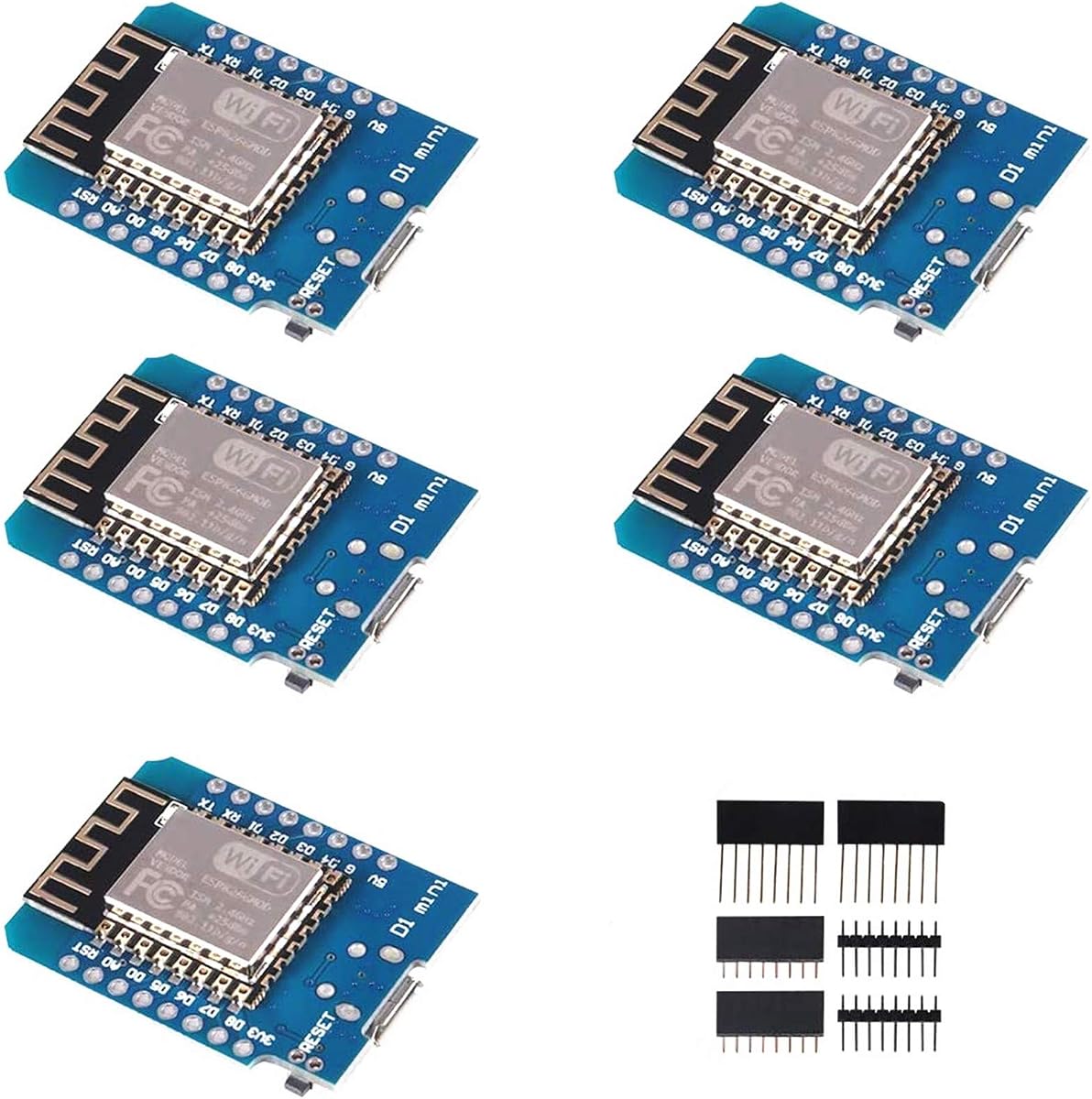
The five-pack of ESP8266 ESP-01S modules offers 4MB flash and a fast 115200 baud rate for efficient data transmission. This configuration is optimized for Internet of Things applications requiring reliable high-speed serial communication.
We may earn a commission when you buy through this link, at no additional cost to you.
Users must ensure the device runs on 3.3V as 5V will damage the module. Setting the correct SPI mode to DOUT in the IDE is critical for successful programming and avoiding initialization errors.
The generous flash space allows for complex firmware without needing external storage chips. This makes it suitable for projects that require storing larger datasets locally before uploading to the cloud.
Choose this for reliable high-volume IoT deployments. This Arduino WiFi Module option balances cost with storage capabilities for robust sensor networks.
The 115200 baud rate reduces latency in data uploads ensuring real-time responsiveness in monitoring apps.
Correctly setting the SPI mode ensures stable firmware uploads and avoids common programming pitfalls.
We may earn a commission when you buy through this link, at no additional cost to you.
The ESP-12F Mini NodeMcu is a complete development board with built-in USB connectivity. It features eleven digital pins supporting PWM and I2C making it versatile for connecting various sensors and actuators directly.
We may earn a commission when you buy through this link, at no additional cost to you.
The onboard 5V power supply simplifies power management compared to bare modules. A resettable fuse adds protection against accidental shorts which helps preserve both the module and your PC during testing.
While it has only one analog input it remains sufficient for many standard projects. The Micro USB port works with existing cables making it convenient for users who already have cables from other boards.
Select this for quick prototyping where USB power and breakout pins are essential. It is a classic Arduino WiFi Module form factor for easy hands-on development.
Integrated USB power and serial logic reduce wiring complexity compared to bare modules requiring adapters.
A resettable fuse protects against overcurrent preventing permanent damage to the board or power source.
We may earn a commission when you buy through this link, at no additional cost to you.
This ten-pack is designed for large scale projects requiring multiple wireless nodes. It includes robust on-board processing capabilities and supports LWIP in AP+STA mode ensuring versatile networking options for diverse application scenarios.
We may earn a commission when you buy through this link, at no additional cost to you.
Users rate this highly for the value and reliability of the modules. They perform well in batch production environments where consistent performance across units is critical for successful product deployment.
Having ten units allows for extensive prototyping and testing without worrying about running out. It is an excellent solution for classrooms or labs where many students need access to wireless hardware.
Buy this if you plan to build a large sensor network or need backup units. This Arduino WiFi Module kit provides the most hardware for your money.
Built-in LWIP protocol simplifies TCP/IP communication streamlining development for cloud-connected devices.
The ten unit count ensures you have enough components for multiple prototypes without extra ordering.
We may earn a commission when you buy through this link, at no additional cost to you.
Choosing the right wireless module requires balancing performance ease of use and budget. This section breaks down the key factors you should evaluate before making a purchase.
Different modules offer varying levels of processing power. Dual-core processors like the ESP32 handle complex tasks better than single-core 8266 chips. Consider the complexity of your logic to select the appropriate processor.
Select a chip that matches your computational needs without overspending on unused performance.
Flash storage capacity determines how much code and data you can store locally. While 1MB works for simple sketches larger projects benefit from 4MB options. Check the storage size to avoid running out of space.
Prioritize modules with sufficient flash for your intended project size.
Some boards offer both Wi-Fi and Bluetooth while others focus only on Wi-Fi. If you need to pair with mobile devices or use Bluetooth sensors ensure your board includes that feature. Versatility saves you from upgrading later.
Ensure the board supports all required wireless protocols upfront.
Most wireless modules run on 3.3V logic so using 5V signals can damage them. Check if you need a level shifter or a regulator to ensure safe operation. Compatibility with your main microcontroller is essential.
Verify voltage specs to prevent hardware damage during integration.
Some boards have USB ports built-in while others require external adapters. USB-C offers modern convenience but legacy micro-USB might be easier to find. Decide based on your workspace and existing tools.
Choose an interface that simplifies your daily workflow.
Battery-powered projects need low-power modes to extend runtimes. Look for features like deep sleep and dynamic scaling to save energy. This is critical for outdoor or remote deployments.
Opt for energy-efficient designs for portable devices.
Some modules require complex setup with serial adapters and specific board selections. Others allow direct upload via USB. Beginners should prefer boards that support standard IDE settings to reduce frustration.
Pick a module with clear documentation and easy IDE support.
Popular modules like the ESP32 have massive community support and example code. This makes troubleshooting easier and accelerates learning. Check forums and libraries before committing to a niche device.
Choose well-supported options for a smoother development experience.
Always connect power before data lines to prevent voltage spikes that could damage the module. Verify that your power supply provides a stable 3.3V output as fluctuations can lead to unstable connections or resets.
Use heat sinks or airflow if running your module at high duty cycles. Wireless transmission generates heat and excessive temperatures can reduce performance or longevity. Monitor thermal conditions during stress tests.
Keep firmware updated to benefit from security patches and bug fixes. Use Over-the-Air updates whenever possible to avoid physical access issues. Regular maintenance ensures long-term reliability for your IoT projects.
The ESP8266 ESP-01S is excellent for beginners due to its low cost and widespread documentation. It offers a simple way to learn wireless connectivity without complex hardware. The Arduino IDE support makes uploading code straightforward for new users.
Use a logic level shifter to safely convert voltage levels between the 3.3V module and the 5V Arduino. Connecting them directly can damage the module. Ensure the power supply for the module is also stable and regulated.
Yes most ESP modules work directly with the Arduino IDE when you install the ESP support packages. You simply select the correct board type from the menu. The IDE handles the rest allowing seamless code uploading.
Check your SSID and password for typos as these are common causes of connection failures. Ensure you are within range of your router and that the signal strength is adequate. Verify that you have selected the correct board in the IDE.
The ESP32 and ESP32-S3 based boards support both Wi-Fi and Bluetooth natively. Models like the Arduino Nano ESP32 or ELEGOO ESP-32 are ideal choices. The ESP8266 does not have Bluetooth capabilities.
It depends on the power draw. Some modules can run off USB power while others need a separate supply for transmission bursts. Always check the current requirements in the datasheet before deciding.
Use the OTA update feature available in ESP libraries. Configure a web interface or cloud service to push new sketches remotely. This removes the need for physical USB connections during revisions.
Yes if you need features like the built-in LED matrix or analog capabilities. It simplifies complex designs by removing external components. For simple connectivity tasks a cheaper module might suffice but the R4 offers unique value.
We have reviewed ten top options ranging from budget friendly ESP8266 modules to powerful ESP32 boards. Each provides unique strengths that cater to different project requirements from simple sensors to complex industrial hubs.
Prioritize performance if you plan to run machine learning or Bluetooth features. For basic data logging focus on cost and ease of use. Understanding your specific needs ensures you select the right hardware.
Remember that prices fluctuate so check current listings before purchasing. Use this guide as a reference to navigate the available choices and build successful connected projects confidently.