
DIGITEN G3/8" Water Flow Sensor
4.5Editor score
Low voltage range
Compact waterproof build
Easy hall effect output
Finding the right flow meter for your Arduino projects can be tricky. You need accurate data, reliable connections, and easy setup. This guide covers the best options available today.
We compared ten top rated models based on flow range, durability, and compatibility. Each product offers unique features for water monitoring and automation tasks.
Each pick shows key specs and real world performance notes. Prices change often so verify current offers before you buy. Use this list to find the best fit.
4.5Editor score

5.0Editor score

4.7Editor score
As an Amazon Associate we earn from qualifying purchases.
This side by side comparison highlights the key differences between each model. Look at flow rates and connections to choose the right sensor for your project needs.


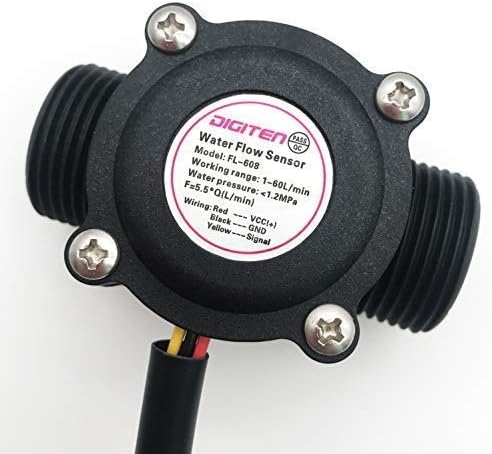
The DIGITEN G3/8" Flow Sensor is a budget friendly pick with solid 4.5 rating. It delivers precise data for low flow needs like irrigation or small systems.
We may earn a commission when you buy through this link, at no additional cost to you.
Its small size and hall effect output make wiring simple for beginners. The square wave signal is clean and easy for Arduino to read without noise.
Trade-offs include a lower max flow of 10L/min and modest pressure tolerance. These limits are acceptable for light home projects or educational use.
Buyers needing low cost reliable metering should pick this sensor. It works well with Raspberry Pi and Arduino boards for smart water monitoring.
The 3.5 to 12 volt range matches most microcontroller logic levels directly. This removes the need for extra voltage regulators in simple setups.
Its small footprint lets you fit it into tight plumbing spaces easily. Perfect for under sink filters or small DIY water systems.
We may earn a commission when you buy through this link, at no additional cost to you.
This DIGITEN G1.5" sensor holds a perfect 5.0 rating and supports flows up to 150L/min. It handles high volume tasks like cooling loops or large pumps.
We may earn a commission when you buy through this link, at no additional cost to you.
The G1.5 inch thread and 1.75MPa pressure rating make it durable. ROHS compliant materials ensure safe use with drinking water applications.
Trade-offs include larger size and higher cost. These are fair for users needing high flow and reliability in critical systems.
Pick this if you need robust performance and wide flow tolerance. It integrates easily with Arduino for precise water management.
With 1.75MPa pressure resistance it suits demanding industrial or home systems. The robust build prevents leaks under heavy flow conditions.
Supporting 5 to 150L/min covers most common water tasks. From small taps to main lines this sensor handles varied demands.
We may earn a commission when you buy through this link, at no additional cost to you.
The 1/2" Flow Hall Sensor offers a premium feel with sealed hall effect tech. Its 4.7 rating confirms reliable pulse output for counting water volume.
We may earn a commission when you buy through this link, at no additional cost to you.
NPT threads match standard US plumbing without extra adapters. The lightweight design installs quickly in tight spots like coffee machines or filters.
Trade-offs include fixed 1/2" size and mid range flow. These are acceptable if you need precision and standard fitting for small systems.
Choose this for reliable sealed operation in dry indoor spots. It pairs well with Arduino for automated water control.
The hall effect sensor is sealed away from water to stay dry. This prevents short circuits and keeps readings accurate over time.
NPT threads align with standard plumbing fittings easily. This saves time and cost on adapters for common pipe sizes.
We may earn a commission when you buy through this link, at no additional cost to you.
This DEVMO unit holds a 4.9 rating with strong amplitude and 1250V/min electric strength. It is ideal for cooling systems and precise water monitoring.
We may earn a commission when you buy through this link, at no additional cost to you.
The high amplitude signal simplifies detection for microcontrollers. You get clean pulses without extra filtering in noisy environments.
Trade-offs include a focus on cooling and water testing. It does not offer NPT threads and lacks wide flow range.
Buy this if you need strong signal for reliable counting. It fits well in Arduino cooling or vending machine projects.
Signals above 4.6V reduce noise and improve detection. This helps avoid false counts when wiring runs are long.
Designed for cooling loops and water testing needs. The robust output ensures stability under temperature and flow changes.
We may earn a commission when you buy through this link, at no additional cost to you.
This food grade sensor offers safe water contact with 5 to 24V operation. Its 4.1 rating is solid for basic metering in safe home or drink setups.
We may earn a commission when you buy through this link, at no additional cost to you.
The wide voltage tolerance fits various power systems without regulators. ROHS materials confirm safe use with potable water.
Trade-offs include lower pressure limits and mid rating. These are fine for low flow domestic use where safety is key.
Pick this for safe water monitoring in kitchens or fountains. It connects easily to Arduino for simple counting.
Supporting 5 to 24V lets you match different power supplies. This flexibility simplifies wiring in varied project setups.
All materials meet ROHS standards for food safe contact. This ensures no harmful leachate into drinking water streams.
We may earn a commission when you buy through this link, at no additional cost to you.
These YF-S201C units offer transparent bodies for visual checks. The 3.7 rating reflects value and clarity but lower consistency in output.
We may earn a commission when you buy through this link, at no additional cost to you.
You can watch the rotor spin to confirm flow. The 3.5 to 24V range and dual pack make testing easier.
Trade-offs include lower rating and scratch prone housing. These are minor for hobbyists who want to see flow.
Buy this if seeing the rotor helps debug. It works with Arduino and fits 1/2 inch pipes.
Transparent housing lets you watch water move and rotor spin. This visual feedback simplifies debugging clogs or air pockets.
Getting two units at one price supports testing or spares. You can run one as a spare for future upgrades.
We may earn a commission when you buy through this link, at no additional cost to you.
This 1/4" sensor measures tiny flows from 0.3 to 6L/min with a 4.2 rating. Its small fit suits drip irrigation or micro cooling.
We may earn a commission when you buy through this link, at no additional cost to you.
The 1/4 inch hosepipe link makes plumbing simple. High voltage 5 to 24V tolerance supports many boards.
Trade-offs include low max flow and pressure. These are expected for micro metering in small systems.
Pick this for precise micro flow counting. It integrates easily with Arduino for smart garden tasks.
Measuring 0.3 to 6L/min captures tiny flows accurately. Ideal for drip lines or sample cooling loops.
The 1/4 inch connector links directly to small hoses. No need for heavy plumbing or adapters.
We may earn a commission when you buy through this link, at no additional cost to you.
The Taidacent YF-S201 holds a 5.0 rating with 4 point interface for flexible wiring. It suits water heaters and dispensers needing stable flow.
We may earn a commission when you buy through this link, at no additional cost to you.
The rotor speed changes with flow and the hall sensor outputs clean pulses. You can read flow in Arduino for control.
Trade-offs include fixed 1/2 size and no cable. You will need to wire your own leads for power and data.
Buy this for robust home heater projects. Its rating and interface make it a safe pick.
4 or 6 point options give you wiring flexibility. This helps avoid clutter and supports custom setups.
The stainless steel rotor spins smoothly in water. This ensures consistent pulses for accurate counting.
We may earn a commission when you buy through this link, at no additional cost to you.
This DIGITEN unit offers a 1.2 meter cable and 4.8 rating. It simplifies routing power and signal to boards in tight cabinets.
We may earn a commission when you buy through this link, at no additional cost to you.
The SM2.54 connector makes plugging in easy. ROHS materials ensure safe potable water use.
Trade-offs include fixed cable length and connector. These are minor for most cabinet setups.
Pick this when board distance is a challenge. It connects cleanly to Arduino for reliable flow.
The 1.2 meter cable lets you place the sensor away from the board. This reduces clutter and eases installation.
SM2.54 connectors are standard for small electronics. They simplify wiring and reduce loose wire risks.
We may earn a commission when you buy through this link, at no additional cost to you.
This G3/4 sensor supports up to 60L/min and includes a 1.2 meter cable. The 3.2 rating reflects basic design but useful flow for larger lines.
We may earn a commission when you buy through this link, at no additional cost to you.
It fits standard 3/4 inch pipes and offers safe ROHS materials. Use it for pumps or main feed monitoring.
Trade-offs include lower rating and cost. For higher flows the extra range justifies the price.
Buy this if you need mid range flow and long cables. It works with Arduino for main line tasks.
Supporting up to 60L/min handles mid sized pumps. This range suits larger plumbing or cooling lines.
The G3/4 inch thread matches larger household pipes. This avoids reducing pipe size or flow speed.
We may earn a commission when you buy through this link, at no additional cost to you.
Selecting the right flow meter depends on your flow rate, voltage, and plumbing fit. Use this guide to match specs to your project needs.
Choose a sensor that matches your minimum and maximum flow. Too low a range will miss small flows while too high a range reduces resolution.
Match the flow range to your pump or pipe size for best accuracy.
Check your pipe size and thread type. NPT and BSPT differ so confirm your pipe before buying.
Buy a sensor with the right thread to avoid extra adapters.
Verify your sensor voltage matches your Arduino power. Most work with 5V but some support up to 24V.
Match the voltage to avoid needing extra regulators.
If your system uses drinking water look for ROHS or food grade materials. This ensures no harmful leaching.
Choose food grade plastic for any potable use.
Long cables simplify routing in cabinets. Check connector type for plug compatibility.
Look for long cables if your board is far from the pipe.
Ensure the sensor can handle your water pressure. Exceeding the max pressure may cause leaks.
Check the max pressure rating before install.
Hall effect sensors output clean square waves. This simplifies Arduino coding.
Pick hall effect for simple and reliable pulse counting.
Compare price to range and features. Higher cost may mean better flow range or durability.
Look at price and features to pick value.
Install the sensor upstream of your device to measure flow before use. Secure the fittings tightly and ensure no leaks.
Connect power and signal to your Arduino board. Use interrupts or counters to track pulses and compute flow.
Flush the system before use to remove debris. Check seals regularly and replace if worn.
Most Arduino boards including Uno and Nano work with these sensors. The hall pulse fits any board with interrupt pins. You can also use Raspberry Pi for advanced setups.
Most sensors come pre calibrated but you may adjust the count rate. Check the output frequency against known flows for best accuracy.
These units suit cold water systems. Hot water may damage the hall sensor. Use only within rated temperature.
Connect the signal wire to an interrupt pin on your board. Use pullup resistors if needed to stabilize the pulse.
No these sensors detect flow in one direction. Reverse flow may block the sensor. Install with correct orientation.
Yes use software to convert pulses to liters or gallons. Most guides provide formulas for conversion based on pulse count.
The sensor body is sealed but check outdoor exposure. Protect electronics from rain when using outdoors.
Most last years under normal water pressure and flow. Avoid debris to extend rotor life and accuracy.
We reviewed ten top models ranging from budget to premium options. The DIGITEN G1.5" unit stands out for high flow while the G3/8" offers great value.
Prioritize flow range and thread fit when picking a sensor. Voltage and safety specs matter for long term reliability in your project.
Prices change frequently so check current offers before you buy. Use this guide to match your project needs with the right flow meter.