
ADS1115 2Pcs
5.0Editor score
Two Pack Value
Programmable Gain
Wide Voltage Range
This guide compares the top Arduino ADC boards for precision analog to digital conversion including key features to help you choose the right module.
Arduino ADC boards enable precise analog to digital conversion for sensors and data acquisition. They bridge the gap between real world signals and digital microcontroller logic with high accuracy and speed.
We evaluated ten top rated modules based on resolution channel count interface type and build quality. Each product offers unique strengths for hobbyists engineers and professionals working with analog inputs.
Each pick shows key specs pros cons and real world use cases to simplify your decision. Prices and availability change so check current listings before ordering your next development board.
5.0Editor score

4.7Editor score

4.4Editor score
This table compares all ten models side by side with core specifications including resolution channel count interface and supply voltage to help you find the perfect match.


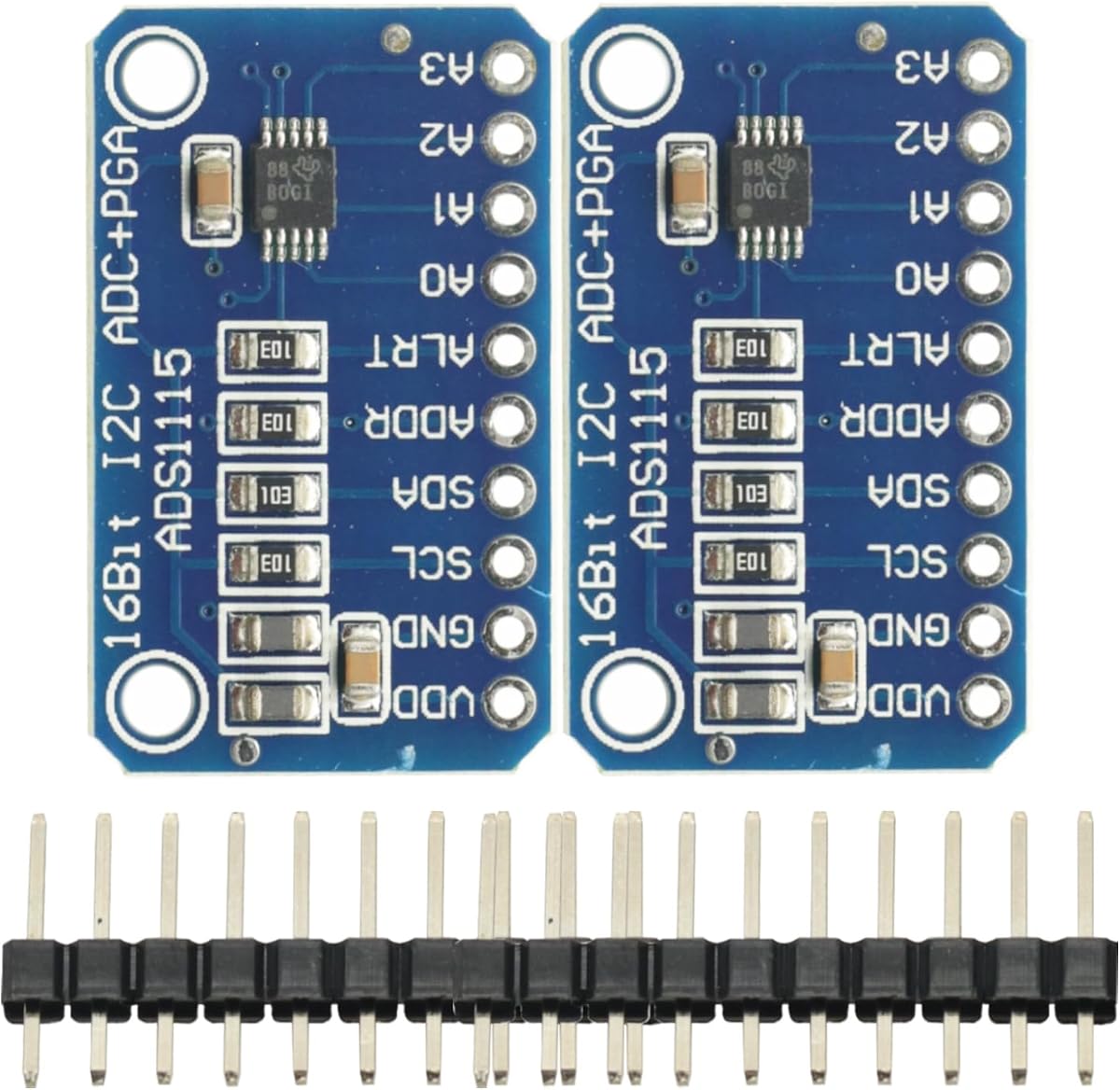


The Teyleten Robot ADS1115 offers 16 bit precision for analog to digital conversion with a programmable gain amplifier. It holds a strong rating for reliability and ease of use in Arduino and Raspberry Pi projects.
We may earn a commission when you buy through this link, at no additional cost to you.
Its internal PGA allows adjustment of input ranges from ±0.256V to ±6.144V for precise sensor readings. The I2C interface simplifies wiring with just two data lines while supporting up to four modules on one bus.
The board supports single shot mode to conserve power when continuous sampling is not needed. Data rates vary from 8 to 860 samples per second depending on resolution needs and application requirements.
Ideal for hobbyists and engineers needing accurate voltage measurements from thermocouples or load cells. This three pack ensures spares for classroom labs or multi node monitoring systems.
The 16 bit resolution resolves voltage changes down to microvolts for high accuracy in sensitive applications.
Multiple address options allow chaining up to four modules for up to sixteen total analog channels.
We may earn a commission when you buy through this link, at no additional cost to you.
The HiLetgo ADS1256 brings 24 bit resolution to Arduino ADC applications with eight channels for complex data logging. It earns high marks for precision and low noise in demanding measurement tasks.
We may earn a commission when you buy through this link, at no additional cost to you.
Its internal 2.5V reference ensures stable readings while the SPI interface provides faster data rates up to 30ksps. Nonlinearity stays low at ±0.0010 percent for trustworthy calibration results.
You can configure inputs as eight single ended or four differential pairs to fit your sensor setup. This flexibility makes it suitable for industrial monitoring or scientific instrumentation prototypes.
Best for projects needing higher resolution than 16 bit ADCs can provide. Ensure your microcontroller supports SPI and that input signals stay within the 3V limit.
24 bit conversion captures minute signal variations ideal for strain gauges and precision voltage dividers.
On board ADR03 chip provides a stable datum source to reduce external component count.
We may earn a commission when you buy through this link, at no additional cost to you.
The 2Pcs ADS1115 module delivers reliable 16 bit conversion at a budget friendly price point. Its perfect rating reflects consistent performance and ease of integration for beginners and pros alike.
We may earn a commission when you buy through this link, at no additional cost to you.
You gain control over data rates from 8 to 860 samples per second to balance speed and noise. The module supports seven input ranges to adapt to signals from microvolts to several volts.
Operating voltage spans 2.0V to 5.5V so it works with 3.3V and 5V logic without level shifters. This flexibility simplifies connections to ESP32 Raspberry Pi or standard Arduino boards.
Ideal for students or makers needing multiple ADC units without breaking the bank. The two pack ensures one main board and a spare for testing or replacement.
Pricing per unit drops significantly when buying the two pack for larger projects.
Wide supply range accommodates diverse microcontroller platforms and power systems.
We may earn a commission when you buy through this link, at no additional cost to you.
The HiLetgo 3pcs ADS1115 set provides three boards for multi point monitoring networks. It serves as a practical choice for Raspberry Pi users lacking native analog GPIO pins.
We may earn a commission when you buy through this link, at no additional cost to you.
Comparator mode helps maintain accuracy by alerting on threshold crossings without constant polling. The internal PGA adjusts gain to maximize resolution for small signal sensors like thermocouples.
Single shot mode lets the ADC power down between readings to save energy. This feature extends battery life in wireless sensor nodes or portable data loggers.
Choose this pack if you need redundancy or multiple measurement points. It balances cost and performance for general purpose analog acquisition tasks.
Comparator mode triggers interrupt signals when input exceeds programmed thresholds.
Single shot auto shut down minimizes power draw between measurement cycles.
We may earn a commission when you buy through this link, at no additional cost to you.
The 4Pcs ADS1115 set offers bulk value for projects needing many analog inputs across different boards. It enables scalable sensor networks without redesigning your architecture for every node.
We may earn a commission when you buy through this link, at no additional cost to you.
Each board supports four differential channels for noise rejection in electrically noisy environments. The internal oscillator removes the need for external timing components to simplify assembly.
Wide supply range ensures compatibility with both 3.3V and 5V logic levels across different microcontroller families. This consistency helps when mixing hardware platforms in a single project.
Best for industrial prototypes or IoT deployments requiring numerous monitoring points. The four pack gives room for expansion and spare units in case of damage.
Multiple modules allow distributed acquisition across different physical locations easily.
Differential mode rejects common mode noise for cleaner sensor readings.
We may earn a commission when you buy through this link, at no additional cost to you.
The 2PCS ADS1115 modules combine high accuracy with affordability for diverse Arduino ADC projects. A perfect rating indicates consistent quality and straightforward integration for most users.
We may earn a commission when you buy through this link, at no additional cost to you.
Each module features a programmable gain amplifier that adapts to different input signal strengths. You can select from seven input ranges to optimize resolution for microvolt or volt level signals.
The I2C interface keeps wiring minimal while supporting multiple boards on the same bus. Addresses are selectable to avoid conflicts when combining several ADCs in one setup.
Choose this pair for cost sensitive projects needing reliable analog readings. It balances performance and price effectively for educational or hobbyist applications.
Uses standard SDA and SCL pins for easy connection to microcontrollers.
Operates from 2.0V to 5.5V to match most logic levels.
We may earn a commission when you buy through this link, at no additional cost to you.
The Lonely Binary 3-Pack stands out for its ENIG gold finish and high quality construction. It offers true 16 bit precision with excellent solderability for long term reliability in projects.
We may earn a commission when you buy through this link, at no additional cost to you.
Modules arrive with pre soldered headers so you can plug them into breadboards immediately. The brand supports open source libraries in C++ MicroPython and CircuitPython for easy software integration.
Logic levels are tolerant of both 3.3V and 5V signals so no level shifters are required. This feature simplifies connections to ESP32 Raspberry Pi and other modern microcontrollers.
Ideal for educators or professionals valuing build quality and long life. The three pack provides spares and flexibility for classroom labs or multi node systems.
Electroless Nickel Immersion Gold resists oxidation for better long term contacts.
Extensive library support makes coding easier for varied development platforms.
We may earn a commission when you buy through this link, at no additional cost to you.
The Teyleten AD7606 offers simultaneous sampling across eight channels at up to 200KHz. This speed suits fast changing signals in industrial control or audio processing applications.
We may earn a commission when you buy through this link, at no additional cost to you.
Its ±10V input range handles higher voltage signals without external attenuators. The internal reference ensures stability while oversampling modes further improve resolution when needed.
You can choose serial or parallel data output to fit your interface requirements. The SPI protocol allows precise timing control for synchronized multi channel measurements.
Best for advanced users needing high speed synchronous data capture. Verify your microcontroller can handle the data rates and SPI timing requirements.
All channels sample at once to avoid phase lag between measurements.
Supports ±10V input to interface with higher voltage transducers.
We may earn a commission when you buy through this link, at no additional cost to you.
The 4PCS ADS1115 set delivers stable 16 bit conversion for sensor networks. It supports temperature pressure and light sensors across multiple points in your system.
We may earn a commission when you buy through this link, at no additional cost to you.
I2C interface requires only two wires for communication simplifying wiring for complex setups. Compatible platforms include Arduino ESP32 STM32 and Raspberry Pi for broad usage.
Programmable gain helps measure low voltage signals with improved sensitivity. This makes the module suitable for small signal sensors requiring high resolution.
Ideal for IoT nodes or robotics needing many analog inputs. The four pack ensures you have enough boards for all sensors plus spares.
Works well with analog sensors like NTC thermistors and photoresistors.
Broad microcontroller support fits varied development ecosystems.
We may earn a commission when you buy through this link, at no additional cost to you.
The HiLetgo ADS1115 provides a straightforward development board for analog inputs. It offers 16 bit precision with PGA support for flexible signal conditioning in your project.
We may earn a commission when you buy through this link, at no additional cost to you.
I2C interface makes integration simple for Raspberry Pi users without analog GPIO. The wide voltage range supports 3.3V and 5V systems without additional level shifting.
Single shot mode reduces power draw by shutting down after each conversion. This helps conserve energy in battery powered or low power embedded systems.
Choose this for simple projects needing one high precision ADC. Its affordability and ease of use make it a solid starting point for beginners.
Auto shut down after single shot saves battery life effectively.
Fills analog GPIO gap on Pi with direct I2C connection.
We may earn a commission when you buy through this link, at no additional cost to you.
Choosing the right ADC depends on resolution speed interface and power needs.
Resolution defines how small a voltage change the ADC can detect. 16 bit boards resolve changes down to microvolts suitable for sensors like thermocouples. 24 bit options provide even finer detail for scientific instrumentation.
Look for 16 bit as a baseline for most projects and 24 bit for high precision needs.
More channels reduce the need for multiplexers. Four channels suit basic sensor arrays while eight support larger setups. Differential channels help reject noise in electrically noisy environments.
Choose four channels for simple projects and eight when monitoring many signals.
I2C uses two wires and simplifies wiring for most Arduino boards. SPI offers faster data rates but requires more pins. Ensure your microcontroller supports the chosen interface.
Prefer I2C for simplicity and SPI for high speed data acquisition.
A PGA lets you adjust input ranges to maximize resolution. It helps measure small signals without external amplifiers. Check if the module supports multiple gain settings.
Always prefer boards with built in PGA for flexible signal conditioning.
Sampling rate determines how fast the ADC can take measurements. Rates from 8 to 860 samples per second suit static sensors. Faster rates up to 30ksps are needed for dynamic signals.
Select sampling speed based on how quickly your input signals change.
Most ADC boards operate from 2.0V to 5.5V to match common logic. Ensure supply voltage matches your microcontroller to avoid damage. Some boards include internal voltage references.
Verify supply compatibility with your system voltage and use regulators if needed.
Gold plated finishes improve solderability and resist corrosion over time. Look for RoHS compliant boards with good PCB finish. Pre soldered headers save time during assembly.
Invest in higher quality finishes for long lasting or commercial projects.
Easy integration depends on available libraries for your platform. Check for support in Arduino IDE Python or C++. Community driven projects often have better documented examples.
Choose boards with active library support for faster development cycles.
Connect VCC and GND to your power source ensuring correct polarity. Use SDA and SCL for I2C with pullup resistors on these lines to stabilize signals.
Install the required ADC library in your development environment. Write code to initialize the board set gain range and read values from the channels you use.
Store boards in a dry place away from direct sunlight. Avoid exposing pins to moisture or physical stress to maintain solderability and electrical performance over time.
Most modern ADC boards operate from 2.0V to 5.5V and are tolerant to 3.3V logic. You typically do not need a level shifter when using them with ESP32 or Raspberry Pi. Check the datasheet to confirm voltage tolerance before connecting.
Yes most I2C ADCs support up to four modules on the same bus. Each board has selectable addresses via an ADDR pin. This allows up to sixteen total analog channels using four boards.
Single ended measures voltage relative to ground while differential measures voltage between two pins. Differential mode rejects common noise and is better for long wires. Most boards support both configurations.
A PGA adjusts the input range to fit small signals into the full ADC scale. This improves resolution and accuracy without external components. It is essential for low voltage sensors like thermocouples.
Use differential mode and add external filtering capacitors near the input pins. Ensure stable power supply with decoupling capacitors close to the module. Proper grounding also helps minimize interference.
SPI offers faster data rates but uses more pins. I2C is simpler and uses fewer wires. Choose SPI for high speed signals and I2C for standard sensor measurements.
The Teyleten ADS1115 HiLetgo ADS1256 and Lonely Binary modules lead for precision and quality. They cover most use cases from basic sensing to high speed data logging.
Prioritize resolution interface type and channel count based on your project needs. Budget packs work well for classrooms while premium boards suit professional prototypes.
Check current prices and stock before buying since availability can vary quickly. Comparing specs against your application will ensure you select the right board.