
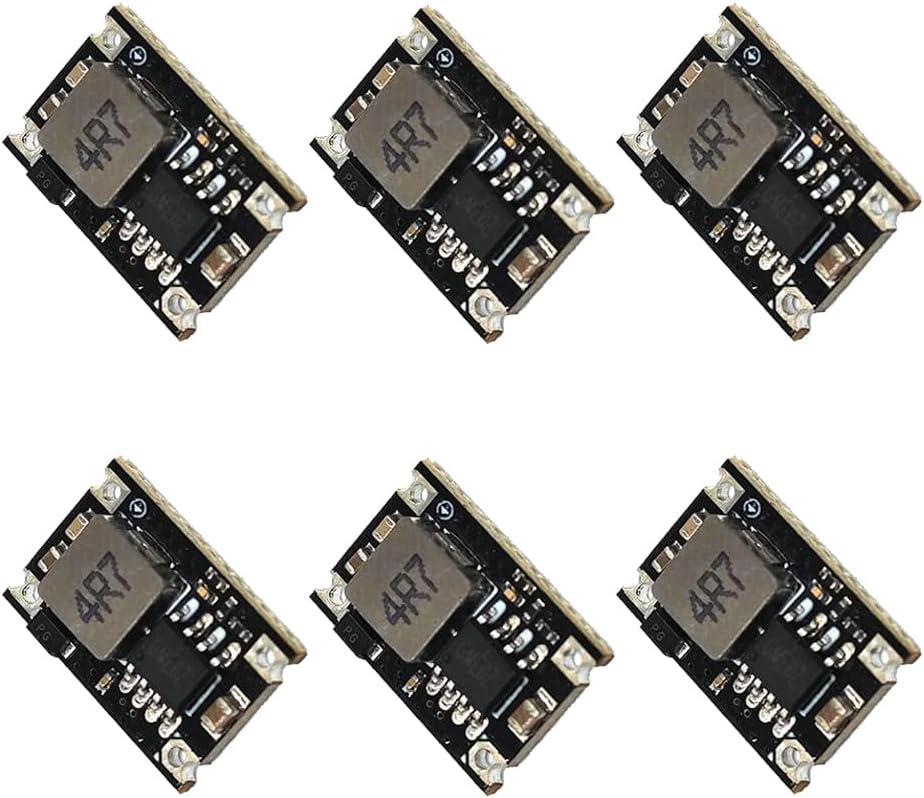
5pcs 3.3V Buck Converter Module
4.6Editor score
Wide 4.5V to 24V input range
Up to 1.8A output current
Ultra small 17.5x12x4.5mm size
This guide compares the top 5V to 3V voltage regulator options for electronics projects, focusing on stability, current output, and size.
Finding the right voltage regulator is essential for powering microcontrollers and sensors safely. These devices step down higher voltages to stable levels needed for sensitive electronics.
We evaluated ten highly rated modules based on output stability, current capacity, and physical size. Our analysis covers both linear and switching regulator types for various needs.
Each pick highlights key specs and use cases to help you choose quickly. Note that product availability and pricing may change over time, so check current details.
4.6Editor score

5.0Editor score
4.9Editor score
The following table provides a side by side comparison of all ten voltage regulator options. It highlights their input ranges, output capabilities, and key form factors.


This 5 pack buck converter module offers excellent value for hobbyists. It delivers stable 3.3V from a wide input range with strong 1.8A output capability.
We may earn a commission when you buy through this link, at no additional cost to you.
Its ultra small 17.5x12x4.5mm size fits easily into embedded projects. The low ripple and high switching frequency ensure clean power for sensitive microcontrollers.
Users must add a diode and capacitor when driving motors or servos to prevent damage. The modules do not include these external components.
Choose this pack if you need multiple units for prototyping. It is ideal for DIY makers expanding projects or testing different circuits.
Works with 5V, 9V, 12V, and 24V supplies for versatile applications.
Small dimensions allow installation in narrow spaces for portable devices.
We may earn a commission when you buy through this link, at no additional cost to you.
This 15 pack of AMS1117-3.3 linear regulators ensures stable power for microcontrollers. It maintains precise 3.3V output with minimal fluctuation under load changes.
We may earn a commission when you buy through this link, at no additional cost to you.
The low dropout design improves efficiency in battery powered scenarios. Built in overheat and overcurrent protection prevents chip damage during abnormal conditions.
It supports less current than switching options at 800mA maximum. The input range is limited to 12V which suits common logic levels.
This pack suits projects needing reliable linear regulation. It is perfect for Arduino, STM32, and low power MCU development boards.
Low dropout voltage minimizes power consumption for portable devices.
Simple VIN, OUT, GND pins simplify circuit connections.
We may earn a commission when you buy through this link, at no additional cost to you.
This premium 6 pack features MP1584EN based modules for high performance. It delivers up to 1.8A output with very low ripple for sensitive electronics.
We may earn a commission when you buy through this link, at no additional cost to you.
The tiny 17x11x3.6mm size is the smallest available. High frequency switching ensures efficiency and minimal heat generation during operation.
Like other buck converters, it requires external components for inductive loads. This adds minor complexity but ensures circuit safety and stability.
Select this for high power needs in tight spaces. It is ideal for aircraft models, drones, and compact embedded systems.
Smallest footprint allows integration in very compact PCB layouts.
MP1584EN chip ensures stable switching and high efficiency.
We may earn a commission when you buy through this link, at no additional cost to you.
This 10 pack offers reliable linear regulation for SCM projects. It supports 5V supplies and provides constant 3.3V power for microcontrollers.
We may earn a commission when you buy through this link, at no additional cost to you.
The simple dual panel design and 2 pin row pins make connection easy. It suits Arduino, STM32, and FPGA programmable logic systems well.
The 0.8A limit restricts high current uses. Users must respect this limit to avoid thermal shutdowns or component damage.
This choice fits projects needing simple reliable regulation. It is suitable for battery chargers and low power instruments.
2 pin single row pins ease connection to MCUs.
Overheat shutdown prevents damage from overheating.
We may earn a commission when you buy through this link, at no additional cost to you.
This unique converter handles both step up and step down scenarios. It accepts inputs as low as 1.8V and stabilizes output to 3.3V.
We may earn a commission when you buy through this link, at no additional cost to you.
Its 100mA limit makes it ideal for low power sensors. It works well with coin cells or battery sources below 3.3V.
The low current rating is not for general power. Users should avoid driving high loads like motors or Wi-Fi chips.
Choose this for specialized low voltage needs. It is useful for portable devices requiring step up conversion from batteries.
Operates as buck or boost depending on input voltage level.
Ideal for sensors running on single coin cell batteries.
We may earn a commission when you buy through this link, at no additional cost to you.
Dorhea offers a solid 7 pack of linear buck modules. These provide constant power for SCM projects needing 3.3V supplies.
We may earn a commission when you buy through this link, at no additional cost to you.
The 3 pin design simplifies soldering and connections. Protection circuits guard against overload and temperature issues during use.
The 800mA limit is strict and cannot be exceeded. Users should verify load requirements before applying power to devices.
This pack suits low power MCU systems. It is good for ARM chips and programmable logic systems.
3 pin design streamlines connection to development boards.
Built-in protection prevents damage from overloads.
We may earn a commission when you buy through this link, at no additional cost to you.
This board accepts inputs up to 30V for diverse applications. It delivers up to 1.8A output with a compact black PCB.
We may earn a commission when you buy through this link, at no additional cost to you.
Reverse polarity marks help prevent incorrect wiring. The small size fits in various places requiring high current conversion.
Lower rating suggests potential variance in performance. Users should monitor heat when running near the 1.8A maximum.
It suits applications needing higher input voltages. Ideal for solar panels or vehicle power sources.
Supports inputs up to 30V for versatile power sources.
Tiny board allows installation in tight enclosures.
We may earn a commission when you buy through this link, at no additional cost to you.
This converter handles 4.5V to 30V inputs for broad applications. It suits IoT devices and vehicle power systems with 1.8A output.
We may earn a commission when you buy through this link, at no additional cost to you.
Clean power and low ripple protect sensitive sensors. Units are tested before shipping to ensure reliability for prototyping.
External capacitors may be needed for inductive loads. This adds to the build process but ensures circuit stability.
Select this for IoT and vehicle projects. It works well with ESP32 and Raspberry Pi systems.
Supports various batteries and solar panel inputs up to 30V.
Units undergo testing before shipping to ensure functionality.
We may earn a commission when you buy through this link, at no additional cost to you.
This pack offers ten modules for multi circuit needs. It handles inputs from 4.5V to 7V and outputs stable 3.3V.
We may earn a commission when you buy through this link, at no additional cost to you.
The strict 800mA limit ensures safety if observed. Users must not exceed operating voltage to prevent damage easily.
Input range is tighter than many buck options. This limits use to lower voltage battery or USB sources.
Ideal for projects with limited supply voltage. It is perfect for small sensor arrays and 5V powered systems.
Designed for supplies under 7V to ensure safe operation.
Respect the 800mA limit to avoid overheating.
We may earn a commission when you buy through this link, at no additional cost to you.
This mini360 board supports inputs up to 24V for many needs. It outputs 3.3V with up to 1.5A current for robust projects.
We may earn a commission when you buy through this link, at no additional cost to you.
Low ripple ensures clean power for sensitive chips. Its tiny size fits narrow spaces for portable or embedded applications.
Zener diodes are recommended when using motors. This protects the rear stage circuit from large ripples generated.
Choose this for compact high current needs. It is excellent for 5V to 24V DC power systems.
1.5A output handles demanding loads better than linear types.
Small dimensions allow installation in tight PCB layouts.
We may earn a commission when you buy through this link, at no additional cost to you.
Selecting the right regulator requires checking voltage ranges, current needs, and form factor. This guide breaks down the critical factors to consider.
Always verify the input range covers your power source. Some modules handle 5V to 30V while others stop at 12V or 7V.
Check the input range matches your battery or supply output.
Your load determines the required current. Linear regulators often cap at 800mA while switching types reach 1.8A or more.
Ensure the regulator supports your device maximum peak current needs.
Switching regulators offer efficiency and higher current. Linear regulators provide simpler low noise power for sensitive circuits.
Pick switching for efficiency and linear for simplicity.
Compact boards fit portable devices better. Check dimensions and pin spacing for soldering ease in tight enclosures.
Verify the board size fits your available space.
Built in thermal and overload protection prevents damage. Modules without these require external components for safety.
Prioritize regulators with overheat protection.
Buying packs offers better value than single units. Consider how many projects you need power for when ordering.
Choose a pack size that fits your prototyping needs.
Low ripple ensures stable operation for sensors. High quality modules keep output clean to prevent interference issues.
Look for ripple specs under 30mV.
Inductive loads like motors need extra protection. Always check if your module works with your specific device type.
Add diodes if driving motors or servos.
Connect the input pins to your power source ensuring correct polarity. Most modules mark VIN and GND clearly for safe wiring.
Attach a small capacitor to the output if driving inductive loads. This smooths ripples and protects downstream components from spikes.
Ensure adequate airflow if running at high current. Avoid covering the module in tight enclosures to prevent overheating.
Yes if the regulator supports up to 24V. Always check the input range before connecting to ensure safe operation with higher voltages.
For current under 1A usually not. High loads may require airflow but compact modules often dissipate heat well without extra heat sinks.
Linear regulators are simpler but less efficient. Switching types provide higher current and better battery life for power intensive projects.
Motors generate back EMF and ripples. A capacitor and diode protect the regulator from sudden voltage spikes during operation.
Only if current needs stay under the limit. Standard Pi needs more current so check requirements before connecting directly.
Switching types are best for efficiency. Linear regulators work but drain batteries faster due to higher internal voltage drops.
Check input stability and capacitor values. Ensure your load is within the current rating to maintain consistent output performance.
Our top picks cover diverse needs from budget linear options to premium compact buck converters. Each offers stable 3.3V output for reliable project power.
Prioritize current capacity and input range for your use case. Select packs for prototyping and verify protection features for safety.
Always check current pricing and availability as stock changes. Verify specs match your device requirements before finalizing your order.