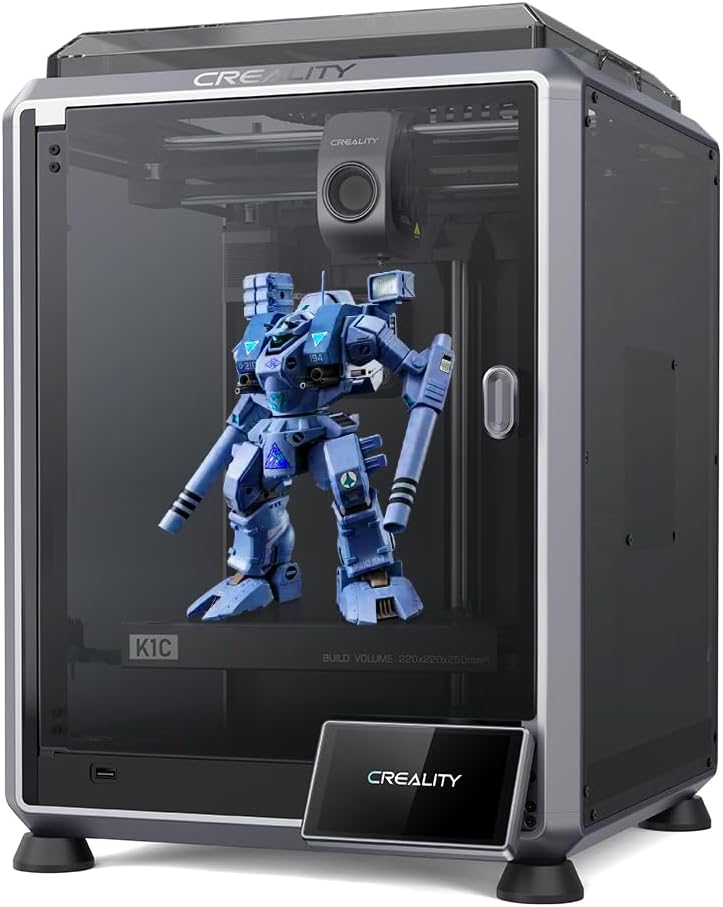
Creality K1C
4.3Editor score
300 Degree Nozzle
Carbon Fiber Ready
Auto Calibration
This guide compares the top 3D printers for high temperature filaments like ABS, PC, and Nylon based on chamber heat, nozzle limits, and reliability.
Finding the right machine for engineering materials requires careful evaluation of heating capabilities and enclosure quality to ensure successful prints.
We analyzed ten top models based on chamber temperature, nozzle limits, and speed to help you choose the best printer for your needs.
Each pick highlights key strengths and weaknesses while noting that prices fluctuate frequently so check current listings before making your final decision.
4.3Editor score
4.7Editor score

4.4Editor score
The table below provides a side-by-side overview of key specifications and features for every model included in this comprehensive selection list.



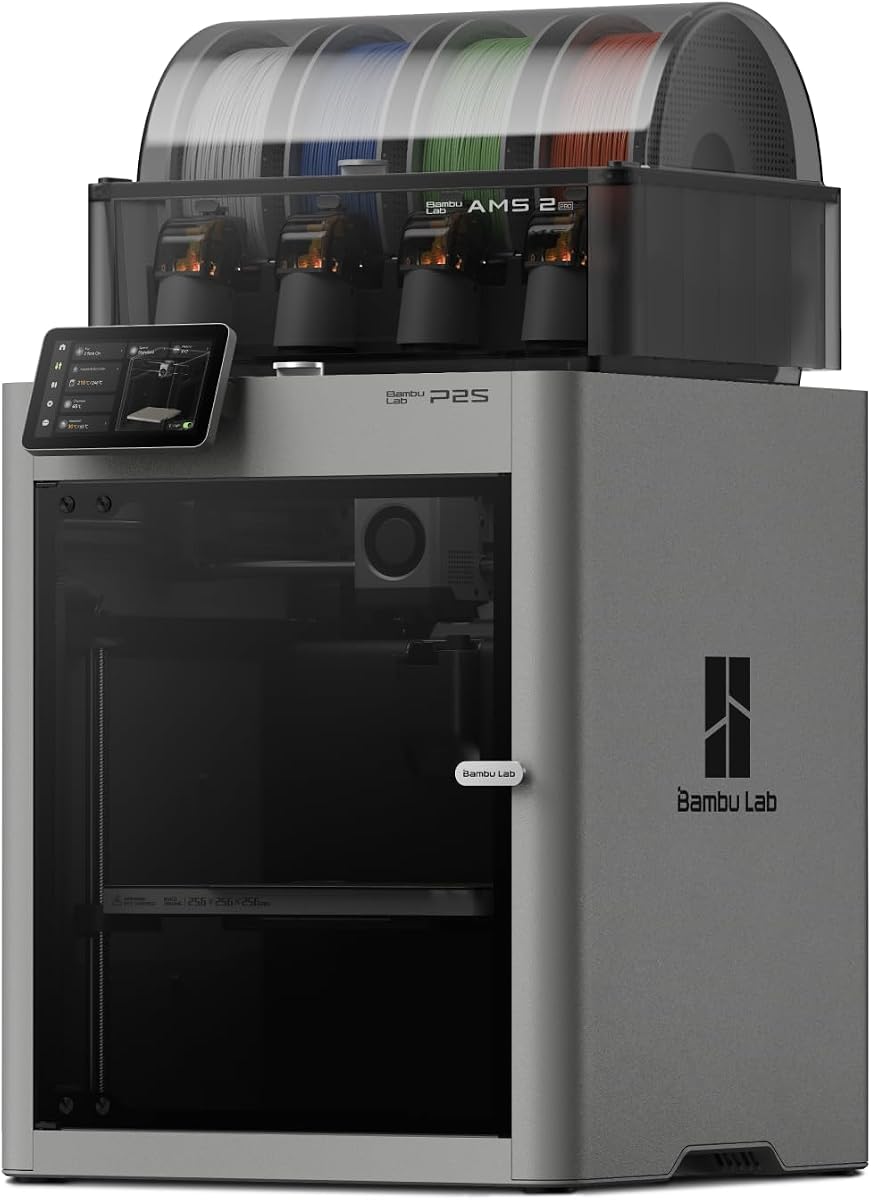
The Bambu Lab P2S Combo stands out as a leading choice for those seeking reliability and speed with high temperature materials like ABS and PC.
We may earn a commission when you buy through this link, at no additional cost to you.
Its Adaptive Airflow System maintains a 50 C chamber while balancing cooling, ensuring consistent results for engineering filaments without warping or delamination issues.
While the price is higher than entry-level models, the inclusion of the AMS 2 Pro and robust engineering features justify the investment for serious users.
If you value precision and multi-color capabilities alongside high temperature support, this printer delivers exceptional performance that few others can match today.
This system automatically balances cooling and heat retention to keep overhangs crisp while maintaining chamber heat for strong layer adhesion.
The AMS 2 Pro enables seamless multi-color printing with built-in filament drying up to 65 C for optimal material readiness.
We may earn a commission when you buy through this link, at no additional cost to you.
The Creality K1C offers an affordable entry into high temperature printing with a nozzle capable of reaching 300 C for demanding materials like ABS.
We may earn a commission when you buy through this link, at no additional cost to you.
Its clog-free direct extruder and titanium alloy heatbreak ensure reliable flow even with abrasive filaments like carbon fiber reinforced polymers.
Users should note the lack of active chamber heating which may require adjustments when printing materials like PC or Nylon for best results.
Overall this model delivers impressive value for hobbyists wanting to explore engineering plastics without breaking the bank on hardware costs.
The 300 C nozzle and hardened steel tip allow printing with tough filaments that typically clog standard 250 C extruders easily.
An observant AI camera detects failures like spaghetti or foreign matter in real time to save filament and time during prints.
We may earn a commission when you buy through this link, at no additional cost to you.
The FLASHFORGE Creator 5 Pro is designed for industrial applications, offering an active 65 C chamber and independent extruders for complex multi-material prints.
We may earn a commission when you buy through this link, at no additional cost to you.
Its HEPA13 filtration system ensures a safe environment while the active heating prevents warping on challenging materials like Nylon and Polycarbonate effortlessly.
The multi-extruder system allows color switching without purging, saving material and time which is crucial for professional workflows and daily production tasks.
For users requiring top-tier performance and safety features, this machine is a powerful investment that excels in high temperature and multi-color production.
Maintaining a stable 65 C ensures consistent interlayer adhesion and minimizes warping even when printing advanced materials like PC or Nylon.
Four independent toolheads switch colors instantly by swapping nozzles without purging to eliminate waste and speed up multi-color projects.
We may earn a commission when you buy through this link, at no additional cost to you.
The Bambu Lab P1S offers a fully enclosed design ideal for ABS and ASA printing with speeds up to 500 mm/s for quick turnaround.
We may earn a commission when you buy through this link, at no additional cost to you.
It supports high temperature filaments like PC and PA effectively through passive enclosure heat retention and careful settings rather than active heating.
While setup is quick and calibration is automatic, users wanting multi-color features will need to purchase the AMS separately for full capability.
This model balances cost and performance well, making it a popular choice for those needing reliability without the premium price of the P2S.
A fully enclosed body improves print performance for advanced filaments by retaining heat and reducing drafts that cause warping.
With speeds up to 500 mm/s and 20000 mm/s^2 acceleration, you can produce prototypes faster without sacrificing accuracy or quality.
We may earn a commission when you buy through this link, at no additional cost to you.
The Bambu Lab A1 brings high-speed precision and full-auto calibration to a beginner-friendly package ideal for small batches of engineering parts.
We may earn a commission when you buy through this link, at no additional cost to you.
While it is open frame, its ability to print PETG and TPU makes it versatile for many applications though higher temp filaments require care.
Active motor noise canceling and quick swap nozzles make maintenance and operation smooth for users of all skill levels easily.
This printer is perfect for those who prioritize ease of use and speed while still needing occasional access to higher temperature materials.
The printer handles Z-offset and bed leveling automatically ensuring optimal performance for every print without manual hassle or guesswork.
Active flow rate compensation ensures smooth prints by adjusting flow based on readings to maintain precision and accuracy constantly.
We may earn a commission when you buy through this link, at no additional cost to you.
The FLASHFORGE AD5X features a high-temperature nozzle up to 300 C for printing a wide range of filaments including ABS and PC.
We may earn a commission when you buy through this link, at no additional cost to you.
Its IFS technology enables multi-color printing with up to four colors simultaneously making it ideal for artistic projects or prototypes.
While the lack of chamber heating limits some high temperature applications, the speed and versatility offer great value for many users.
This printer is well-suited for those who need a balance of speed, color options, and material variety without a huge investment cost.
Independent Filament System allows up to four different colors simultaneously to create vibrant multi-colored 3D models with ease.
The nozzle reaches up to 300 C allowing you to work with tough filaments like ABS and PC for robust parts.
We may earn a commission when you buy through this link, at no additional cost to you.
The Anycubic Kobra S1 Max offers a massive build volume with a 350 C hotend and 65 C heated chamber for large scale engineering parts.
We may earn a commission when you buy through this link, at no additional cost to you.
Its CoreXY system ensures stability even at high speeds while the hardened steel nozzle supports abrasive filaments like carbon fiber.
With real-time AI monitoring and multi-color readiness, it is a powerful machine for those needing size and reliability in production.
This model is ideal for professional environments where large prints and high temperature materials are standard requirements for daily workflows.
Equipped with a 350 C hotend and 65 C heated chamber to handle advanced materials like ABS ASA PC PA and Carbon Fiber.
Features a 350x350x350mm build volume for large-scale projects including helmets footwear and functional prototypes easily.
We may earn a commission when you buy through this link, at no additional cost to you.
The Flashforge AD5X Multicolor provides a robust setup with a 300 C all-metal hotend and CoreXY system for rapid and accurate printing.
We may earn a commission when you buy through this link, at no additional cost to you.
It supports direct multi-color printing via IFS and features dual-band Wi-Fi for monitoring prints from anywhere via the app.
While it lacks an active chamber, the enclosed design helps with heat retention though an enclosure kit is needed for the best results.
This printer is a great option for users who want high speed and color versatility without the high cost of industrial machines.
Dual-band Wi-Fi allows you to monitor prints from anywhere with an HD camera ready for real-time streaming and timelapse videos.
The 300 C all-metal hotend prints ABS Nylon and Carbon Fiber with a quick swap nozzle upgrade to engineering-grade printing.
We may earn a commission when you buy through this link, at no additional cost to you.
The Snapmaker U1 stands out with four independent toolheads that swap in 5 seconds to enable true multi-material printing without purging.
We may earn a commission when you buy through this link, at no additional cost to you.
It supports engineering materials and flexible filaments simultaneously making it perfect for complex parts with different material properties easily.
The tool change system minimizes waste and increases speed by up to 5 times compared to traditional changing methods significantly.
Ideal for professionals, this printer offers unmatched flexibility for creating multi-color and mixed-material parts efficiently and accurately.
Four independent toolheads preloaded and preheated enable true multi-color printing without manual filament swaps or purging waste.
Swapping toolheads instead of purging reduces filament waste by up to 5X enabling faster and more efficient multi-color printing.
We may earn a commission when you buy through this link, at no additional cost to you.
The FLASHFORGE Creator 5 Pro brings industrial reliability with an active 65 C chamber and a near-zero waste FlashSwap system for efficiency.
We may earn a commission when you buy through this link, at no additional cost to you.
It features dual HEPA filtration for safety and a rigid CoreXY design for stability at high speeds while printing tough materials.
With automated toolhead calibration and real-time monitoring this machine ensures precise first layers and consistent quality every time.
This model is designed for professional workshops needing high output with minimal waste and maximum control over the printing process.
The FlashSwap changer switches nozzles without flushing filament to eliminate purge waste and slash operational costs significantly.
Maintains up to 65 C to prevent warping in advanced filaments like ABS PC and PA for consistent production output.
We may earn a commission when you buy through this link, at no additional cost to you.
Selecting the right printer involves understanding several key factors that directly impact your ability to print high temperature filaments effectively.
A heated chamber is critical for high temperature filaments like ABS and Nylon to prevent warping and ensure strong layer adhesion during the print process.
Look for models with active heating that can maintain at least 50 C or higher to achieve the best results with engineering-grade materials.
Standard nozzles typically cap out at 250 C which is not enough for materials like Polycarbonate or Carbon Fiber that require higher extrusion temperatures.
Choose a printer with a nozzle capable of reaching 300 C or more to expand your material options and ensure proper melting.
A fully enclosed build area helps retain heat and protect prints from drafts which is essential when working with materials that cool quickly.
Ensure the enclosure is well-sealed and made of materials that can withstand high temperatures without warping or damage over time.
High temperature filaments often contain abrasives like carbon fiber that can wear down standard nozzles and extruder gears quickly.
Invest in a printer with a hardened steel nozzle and a robust extruder system to handle tough materials and avoid frequent maintenance.
Successful prints depend heavily on precise calibration of the bed and Z-offset which can be challenging with high temperature materials.
Auto-calibration tools save time and reduce errors allowing you to focus on printing rather than manual adjustments for every new job.
Printing high temperature plastics can release particles and odors that may be harmful in enclosed spaces without proper filtration.
Select a model with HEPA and activated carbon filters to maintain a safe and healthy environment while you print.
Consider the size of your typical projects to ensure the printer offers enough space for your high temperature parts.
Larger build volumes allow for bigger prototypes but may require more powerful heating and cooling systems to maintain quality.
High speed does not mean sacrificing quality especially when printing with materials that need consistent extrusion and flow.
Look for printers with high acceleration and speed settings that still maintain precision to optimize your workflow.
Always start by calibrating your bed properly since high temperature materials shrink and require precise first layers to avoid warping.
Use a filament dryer before printing with sensitive materials like Nylon to ensure they are moisture-free and print smoothly.
Clean the nozzle regularly with a brush or filament cleaning kit to prevent clogs caused by burnt plastic residue during long prints.
While it is possible to print ABS in an open printer with careful temperature settings, an enclosure is highly recommended to prevent warping and ensure successful prints.
Hardened steel nozzles are ideal for abrasive filaments like carbon fiber because they resist wear and maintain their shape much longer than brass nozzles.
To prevent warping use a heated bed and a heated chamber, apply adhesive like glue stick, and keep the room draft-free during the print cycle.
A heated chamber is essential for materials like Nylon and Polycarbonate to ensure consistent heat and prevent layer separation during printing.
Use a respirator with organic vapor filters and work in a well-ventilated area to avoid inhaling fumes released during high temperature printing.
Change the nozzle when you notice inconsistent extrusion or when printing abrasive materials after a certain number of hours to maintain print quality.
You can upgrade to a higher temp nozzle and a heated bed but adding a heated chamber is usually difficult and expensive on non-enclosed models.
Adjust cooling fan settings to run at 0 percent for the first few layers and use a slower print speed to ensure better adhesion and quality.
We have reviewed ten top models ranging from budget options to industrial machines so you can find the right fit for your specific needs.
Prioritize chamber temperature and nozzle limits when deciding since these factors directly determine which materials you can print successfully.
Remember to check current prices and availability as they can change frequently based on promotions and demand in the market today.