
Original Prusa XL 2-Toolhead
3.5Editor score
Large-format CoreXY system
Multi-material dual tool
Segmented heated bed
Professional Prusa ecosystem
Discover the top 3D printers for engineering prototypes. This guide compares speed, accuracy, and material support to help you choose the right machine.
Finding the right 3D printer for engineering prototypes requires balancing speed, accuracy, and material versatility. Professionals need machines that handle complex geometries and durable materials without compromising on detail or reliability during critical development stages.
We evaluated ten leading models based on build volume, motion systems, chamber heating, and multi-material capabilities. Our analysis focuses on how each printer supports iterative design cycles, rapid testing, and functional part production for engineers and makers alike.
Each pick highlights specific strengths like CoreXY precision, active chamber control, or tool-changing efficiency. Note that prices and availability fluctuate regularly, so verify current offers before purchasing to ensure you get the best value for your engineering workflow needs.
3.5Editor score

4.5Editor score

4.7Editor score
This side-by-side comparison details the technical specifications and key capabilities of ten top-rated 3D printers suitable for engineering prototype development. Use this data to match machine performance with your specific project requirements and material needs.




The Snapmaker U1 stands out as a top choice for engineering prototyping due to its innovative four-toolhead system. With a 4.5 rating, it delivers exceptional versatility for creating functional parts that require different materials within a single print job.
We may earn a commission when you buy through this link, at no additional cost to you.
Its core strength lies in the SnapSwap technology which reduces tool change time to just five seconds. This drastically cuts down on purge waste and accelerates the iteration process. Engineers can test rigid and flexible combinations easily without manual intervention or lengthy setup times.
While the price point is higher than entry-level options, the efficiency gains justify the cost for professional workflows. The learning curve for multi-material slicing can be steep initially but the results in terms of part functionality and detail are unmatched in this class.
Buyers seeking a machine that handles complex assemblies and multi-material prototypes efficiently should prioritize this model. It is ideal for teams needing reliable multi-color and mixed-material prints without sacrificing speed or dimensional accuracy during development cycles.
The independent toolheads allow simultaneous use of soluble supports and structural materials. This ensures complex internal geometries are printed accurately without needing manual support removal that could damage delicate features.
Compatible with PETG, ABS, ASA, and various TPU hardnesses. This broad material range lets engineers test different mechanical properties like stiffness or flexibility directly in the prototype phase.
We may earn a commission when you buy through this link, at no additional cost to you.
The Original Prusa XL offers a massive build volume ideal for large engineering prototypes. Despite a lower average rating, its large-format CoreXY system provides the stability needed for industrial-grade outputs. The dual toolhead setup enables seamless material switching for complex functional parts.
We may earn a commission when you buy through this link, at no additional cost to you.
Its segmented heated bed system is crucial for reducing warping on large prints. This ensures consistent adhesion across the entire platform which is vital when working with engineering materials like ABS or PC. The Prusa ecosystem also offers extensive community support and reliable technical assistance.
Assembly can be time-consuming since fragile parts are packed separately for transport. Additionally the 3.5 rating suggests potential reliability concerns users should monitor. However for teams needing large scale reliable output the Prusa XL remains a strong contender.
Purchase this machine if you need to produce large parts without splitting models. It is best suited for workshops requiring a robust printer with proven community backing and the ability to handle significant build volumes consistently.
Build volume accommodates parts up to fourteen inches per axis. This allows engineers to print entire components in one go reducing assembly time and structural weakness points common in printed joints.
Smart switching minimizes purge waste between materials. This efficiency is key for sustainable workflows and reduces downtime during long multi-material prints required for functional prototypes.
We may earn a commission when you buy through this link, at no additional cost to you.
The Bambu Lab A1 is an excellent entry-level option for engineers needing rapid prototyping without a high budget. With a high rating and ready-to-use design, it delivers precision and speed ideal for testing small to medium-sized functional parts quickly.
We may earn a commission when you buy through this link, at no additional cost to you.
Its standout feature is full-auto calibration including Z-offset and bed leveling. This eliminates manual tuning hassles and ensures consistent print quality every time. Active flow rate compensation further enhances accuracy making it reliable for detailed prototypes.
While it lacks multi-color capability out of the box, adding the AMS Lite makes it versatile. The smaller build volume may limit large parts but for most prototyping iterations, it is sufficient. It remains quiet and easy to operate even for beginners.
Buyers prioritizing value and ease of use should choose this model. It provides a professional printing experience at a fraction of the cost of industrial machines. Ideal for students, startups, or teams needing a quick secondary printer for trials.
High acceleration allows fast print times without sacrificing detail. Engineers can iterate designs quickly since the machine prints parts in hours rather than days.
Automated processes ensure perfect first layers consistently. This reliability reduces failed prints and saves materials during critical development phases where time is limited.
We may earn a commission when you buy through this link, at no additional cost to you.
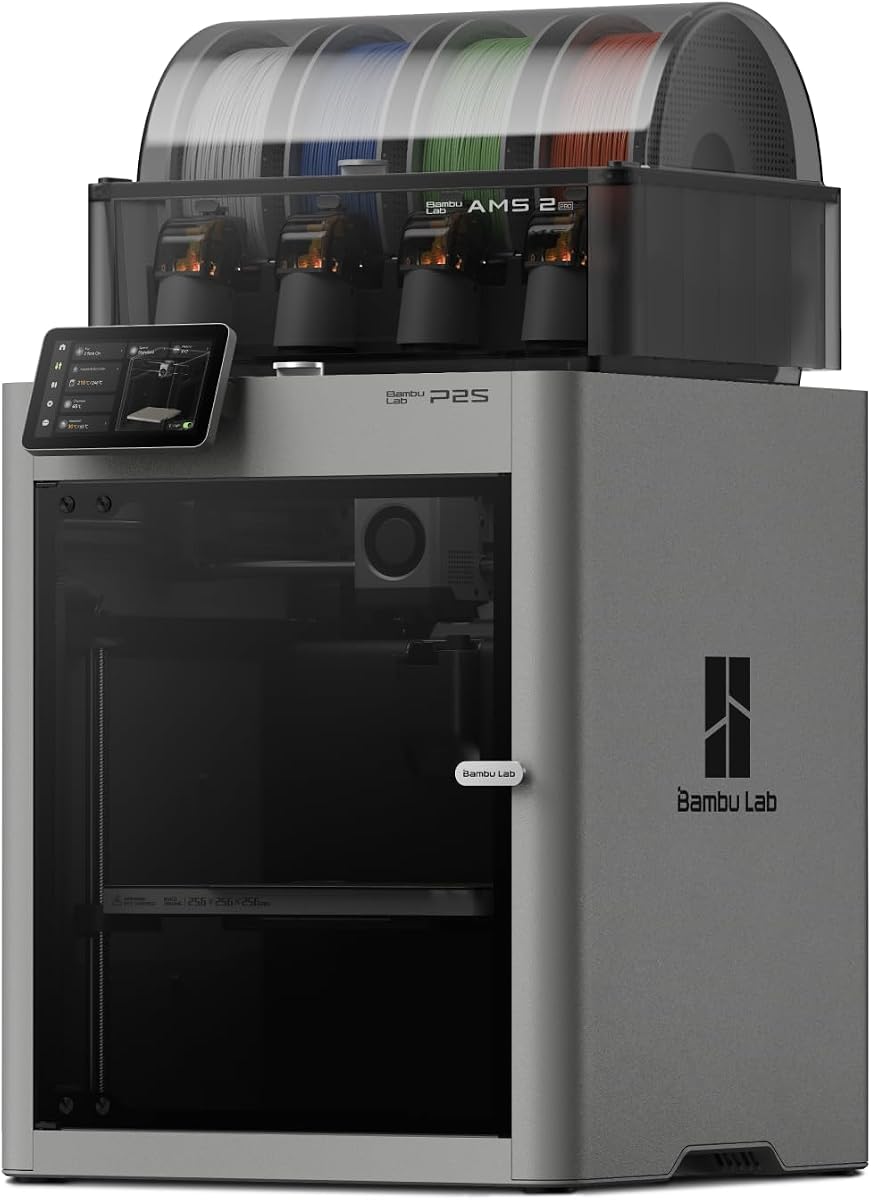
The Bambu Lab P2S Combo delivers unmatched speed and convenience for engineering prototyping. With a high rating and servo extruder technology, it ensures sharp corners and smooth finishes. The AMS 2 Pro integration enables complex multi-material designs easily.
We may earn a commission when you buy through this link, at no additional cost to you.
Its adaptive airflow system maintains chamber conditions necessary for engineering materials like ABS or PC. This thermal control prevents warping and ensures dimensional accuracy. Combined with rapid speeds, it accelerates the development cycle significantly.
While the P2S alone does not support multi-color, the combo package provides full capability. The setup is incredibly quick at just fifteen minutes. However, the price point places it in a premium tier compared to basic models.
Teams needing high throughput and multi-material flexibility should consider this unit. It suits environments where speed and print quality are paramount. Ideal for rapid iteration workflows demanding professional results with minimal operator intervention.
Automatically balances cooling and heat retention for material needs. This ensures overhangs are crisp while maintaining temperature for strong interlayer bonds in engineering polymers.
Active flowrate compensation keeps layers smooth at high velocities. This ensures consistent quality and accuracy even during rapid printing cycles.
We may earn a commission when you buy through this link, at no additional cost to you.
The QIDI Max4 Combo offers a massive build volume perfect for large industrial prototypes. A 4.4 rating reflects its stability and precision with closed-loop motors ensuring consistent printing. The heated chamber is essential for high-temp materials like ABS-CF.
We may earn a commission when you buy through this link, at no additional cost to you.
Smart features include AI monitoring that pauses prints when abnormalities are detected. This saves material and time on long engineering jobs. The large touch screen simplifies operations making it accessible to both pros and enthusiasts.
Note that the polar cooler is sold separately which adds to the total cost. Also, expanding to multi-color requires the QIDI BOX which is an additional investment. Despite this, it remains a strong machine for serious prototyping needs.
Buyers needing large formats and thermal stability should choose this printer. It handles complex molds and custom parts efficiently. Ideal for teams prioritizing build size and reliability in industrial material printing workflows.
Active heated chamber enables printing of PC and PPS-CF. This expands the material palette for functional prototypes requiring strength and heat resistance.
Automated detection of failures saves valuable engineering materials. Instant pauses prevent wasted time and resources on defective prints.
We may earn a commission when you buy through this link, at no additional cost to you.
The FLASHFORGE Creator 5 Pro is designed for industrial engineering with a four-toolhead system. It eliminates massive purge waste by switching nozzles without flushing. The active heated chamber ensures reliable printing of advanced filaments like PA and PC.
We may earn a commission when you buy through this link, at no additional cost to you.
Its CoreXY motion structure provides stability at high speeds up to 600mm/s. Dual HEPA filtration traps ultrafine particles ensuring a safe workspace. This makes it suitable for offices and labs where air quality matters.
The near-zero waste system reduces operational costs significantly compared to traditional single-nozzle setups. However, the setup and calibration may be complex for new users. Overall, it offers robust performance for serious engineering prototyping.
Choose this printer if waste reduction and multi-color capabilities are key goals. It is best for professional teams requiring reliable industrial features. Ideal for producing diverse engineering parts without excessive material consumption.
FlashSwap changer switches nozzles without flushing filament. This minimizes operational overhead and material costs while maintaining clean multi-color prints.
Integrated architecture with linear rails ensures precision. This eliminates ghosting and vibration at high speeds for better part accuracy.
We may earn a commission when you buy through this link, at no additional cost to you.
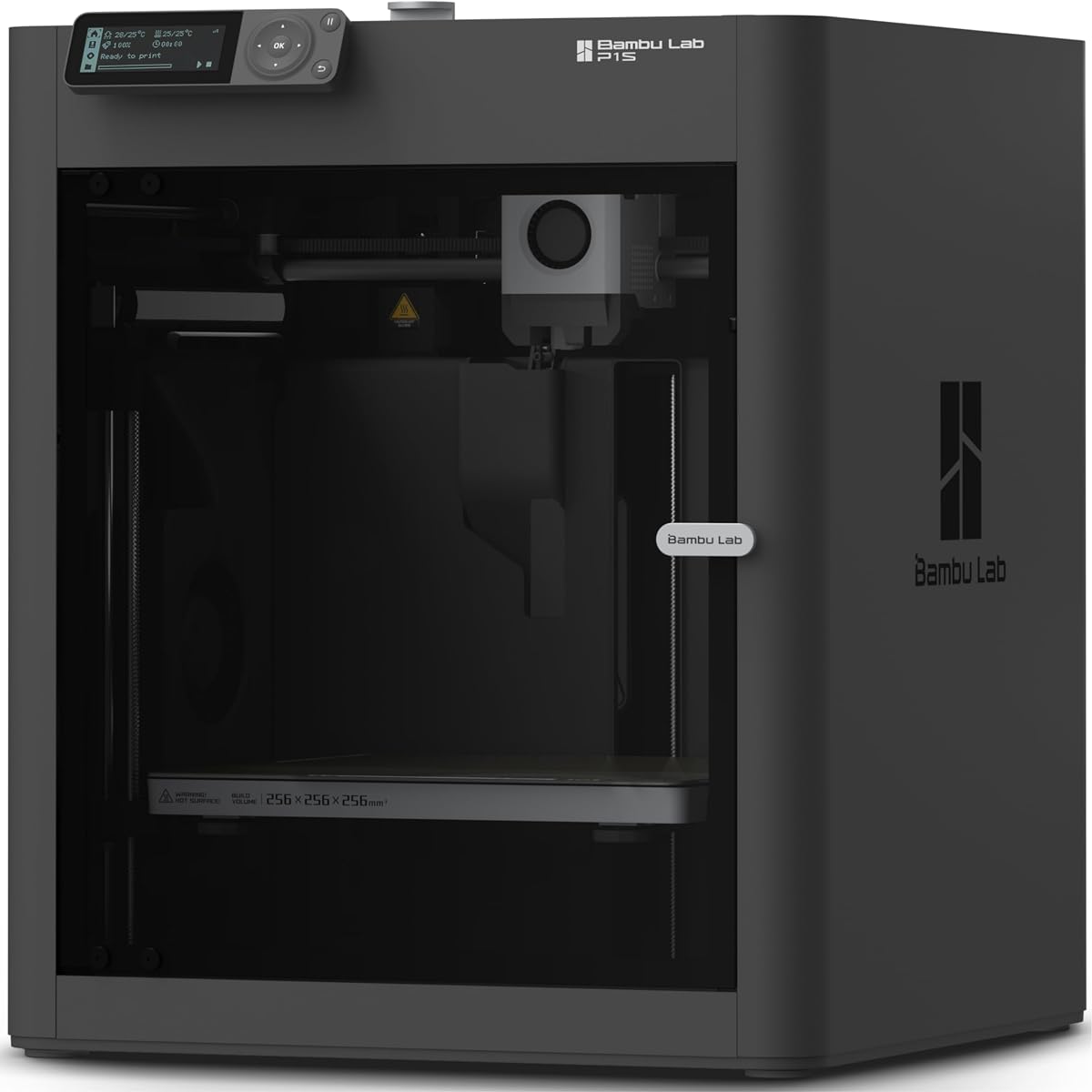
The Bambu Lab P1S is a reliable enclosed printer that handles engineering materials effectively. With a solid rating and high acceleration, it balances speed with quality. The enclosed design prevents warping making it suitable for ABS and ASA.
We may earn a commission when you buy through this link, at no additional cost to you.
Setup is quick at just fifteen minutes which is ideal for teams needing immediate use. Auto bed leveling ensures consistent first layers without manual intervention. While it supports multi-color, the AMS unit must be connected separately.
It is not recommended for carbon fiber reinforced polymers limiting material choice for some engineers. However, for standard engineering polymers, it performs exceptionally well. This machine offers a great balance of performance and ease of use.
Buyers seeking a dependable enclosed system should consider this model. It is best for those prioritizing reliability and quick setup. Ideal for small businesses or home labs requiring professional results without complexity.
Prevents heat loss and warping during prints. This stability is crucial for successful printing of high-temperature engineering materials.
True high speed up to 20000 mm/s/s2 acceleration. This delivers fast production times while maintaining excellent detail and accuracy.
We may earn a commission when you buy through this link, at no additional cost to you.
The FLASHFORGE Adventurer 5M Pro is designed for ease of use with high-speed capability. A 4.0 rating highlights its efficiency in rapid prototyping. The quick-swap nozzle system allows changes in just three seconds without tools.
We may earn a commission when you buy through this link, at no additional cost to you.
Its CoreXY structure eliminates ghosting ensuring smooth surfaces on parts. Dual filtration ensures a clean environment even in office settings. It handles materials like ABS and PETG-CF reliably for engineering applications.
While not as advanced as multi-tool systems, it is versatile enough for most prototypes. The quiet operation under 50dB is a bonus for home or office use. This makes it a practical choice for frequent small to medium prints.
Teams needing a fast and quiet machine should choose this printer. It is best for environments requiring minimal noise. Ideal for designers and engineers needing rapid part verification without extensive setup.
Tool-free nozzle changes enable rapid adjustments. This versatility allows switching between different nozzle sizes for various detail requirements.
280C nozzle temperature supports engineering materials. This ensures reliable printing of ABS and PETG-CF for durable parts.
We may earn a commission when you buy through this link, at no additional cost to you.
The Anycubic Kobra 3 Max Combo offers an ultra-large build volume perfect for big projects. Its 4.0 rating reflects solid performance for the price. The G-sensor vibration compensation ensures precision even at high speeds.
We may earn a commission when you buy through this link, at no additional cost to you.
Prints are supported on a dual-sided PEI plate for strong adhesion. The auto leveling simplifies setup for beginners. This machine is ideal for producing furniture components or life-size prototypes in a single print.
While the software is basic compared to premium options, the hardware performance is strong. It handles large parts efficiently without splitting. This makes it a cost-effective solution for large-scale prototyping needs.
Buyers needing a large build area on a budget should consider this model. It is best for makers and small businesses. Ideal for teams producing oversized parts quickly and efficiently.
420x420x500mm allows printing life-size parts. This reduces assembly time and improves structural integrity of prototypes.
G-sensor eliminates layer shifts during high-speed prints. This ensures dimensional accuracy even on complex geometries.
We may earn a commission when you buy through this link, at no additional cost to you.
The FLASHFORGE Creator 5 Pro Industrial is a high-performance machine for professional environments. With a 4.4 rating, it offers reliable chamber heating and independent extruders. This allows printing of high-performance materials like Nylon and PC consistently.
We may earn a commission when you buy through this link, at no additional cost to you.
HEPA13 filtration ensures safe air quality during long print runs. The independent extruder system avoids color mixing entirely improving print purity. This makes it ideal for detailed engineering parts requiring exact material specifications.
Despite the higher cost, the build quality and safety features justify the investment. It supports all-season printing regardless of room conditions. This ensures consistent results year-round for critical development work.
Buyers seeking professional-grade results should prioritize this model. It is best for industrial workflows requiring reliability. Ideal for teams producing high-quality parts in strict regulatory environments.
Maintains stable temperature up to 65C. This ensures consistent interlayer adhesion and minimizes warping for reliable engineering parts.
No purging required during color transitions. This ensures pristine color separation and material purity for complex prints.
We may earn a commission when you buy through this link, at no additional cost to you.
Selecting the right 3D printer for engineering prototypes involves evaluating several technical factors. This guide breaks down the essential criteria to help you find a machine that meets your performance and budget needs.
The build volume determines the maximum size of parts you can print in one go. Large builds reduce assembly time for complex prototypes but increase the machine's footprint and cost. Engineers should match the size to their typical part dimensions to avoid unnecessary overhead or limitations.
Choose a build size that fits your largest common component without waste to maximize efficiency.
Engineering prototypes often require materials beyond standard PLA like ABS PETG or carbon fiber composites. Check that the printer supports high-temperature nozzles and heated chambers to handle these materials. Incompatible hardware can lead to warping or failure during critical testing phases.
Ensure the machine supports the specific polymers needed for your functional tests.
An active heated chamber maintains consistent ambient temperature inside the printer. This is crucial for preventing warping and ensuring dimensional accuracy with engineering-grade filaments. Without this feature, prints may fail due to cooling inconsistencies in colder environments.
Look for active heating systems that maintain stable temperatures for reliable prints.
CoreXY motion systems provide better stability at high speeds compared to Cartesian setups. Faster printers reduce wait times during iterative testing cycles. Ensure the acceleration values are high enough to keep production moving without sacrificing surface quality.
Prioritize CoreXY or high-rail systems to balance speed with precision.
Complex prototypes often need multiple materials like flexible rubber parts combined with rigid structures. Independent extruders or tool changers allow for this without manual intervention. This reduces labor and allows for more accurate testing of assembled parts.
Select a machine with multi-material support if you need mixed property prototypes.
Proprietary software can streamline workflows but limits flexibility. Open-source slicers offer more control over settings for specific materials. Ensure the printer supports slicing software that allows advanced features like supports or temperature gradients.
Check that the software integrates well with your existing design workflow.
Engineering materials often release fumes during printing. HEPA filters and activated carbon systems remove particulates and odors to maintain a safe workspace. This is essential for indoor use in offices or classrooms.
Choose printers with built-in air filtration for a safer printing environment.
Consider the total cost of ownership including maintenance and consumables. High-performance machines may have higher upfront costs but reduce failed prints over time. Balance the features against your budget and expected usage frequency.
Evaluate long-term savings when choosing between budget and premium models.
Always calibrate the bed before printing new materials. This ensures proper adhesion and prevents failed prints. Use the machine's auto-leveling features where available to save time and ensure consistency.
Keep the print area clean and free of dust. Use compressed air to clean the nozzle and build plate regularly. This prevents clogs and ensures smooth filament flow for reliable prototypes.
Store filament in a dry environment to prevent moisture absorption. Use a filament dryer or desiccant packs during storage. Dry material prints better and reduces print failures due to inconsistent extrusion.
For ABS prototypes, choose a printer with a heated chamber like the FLASHFORGE Creator 5 Pro or QIDI Max4 Combo. These machines maintain stable temperatures to prevent warping during long prints. This ensures dimensional accuracy and reliable results for functional engineering parts.
Build volume determines the size of parts you can produce in one piece. Larger volumes reduce assembly time for big prototypes. Choose a machine that fits your typical part sizes to optimize workflow and reduce errors during development.
Yes, machines like the Snapmaker U1 or Bambu Lab P2S Combo support multi-material printing. They use independent extruders or tool changers to switch materials seamlessly. This allows you to create flexible and rigid parts in a single print.
Warping occurs when parts cool too quickly causing uneven shrinkage. Heated chambers and beds help maintain consistent temperatures to reduce this effect. Ensuring proper material storage also prevents moisture which contributes to printing issues.
The Bambu Lab P2S Combo and FLASHFORGE Adventurer 5M Pro offer speeds up to 600mm/s. High acceleration and CoreXY motion systems allow quick part creation. This speed helps engineers iterate designs faster without sacrificing quality.
Filters like HEPA and carbon systems are recommended for indoor use. They remove fumes and particles from materials like ABS or nylon. This protects your health and ensures a clean workspace for professional prototyping.
The Snapmaker U1, Original Prusa XL, and Bambu Lab A1 stand out for their unique strengths in multi-material capability, build size, and affordability. Each offers distinct advantages depending on your specific engineering needs and budget.
Prioritize machines with active chambers and multi-material support for complex prototypes. Speed and reliability are equally important to ensure rapid iteration and consistent quality across your projects.
Remember to check current prices and availability before purchasing. Technology updates frequently so verify the latest specs and offers to get the best deal for your engineering workflow.