
QNAP TL-D1600S 16 Bay SATA 6Gbps JBOD Storage Enclosure.PCIe SATA Interface Card (QXP-1600eS) Included
4.5Editor score
Includes PCIe SATA card
4 SFF-8088 ports
16 drive capacity
Finding the right storage solution for large data sets requires careful consideration of capacity and speed. A 16 bay NAS enclosure offers significant room for growth while maintaining efficient data management and access speeds for users.
We evaluated these products based on build quality, compatibility with various hard drives, and network connectivity options. Our comparison focuses on how each unit handles heavy workloads and supports future expansion needs effectively.
Each pick highlights specific strengths like cooling performance or interface speed. Remember that pricing and availability can change quickly, so check current listings before making your final decision to get the best deal available.
4.5Editor score

4.8Editor score
4.6Editor score
As an Amazon Associate we earn from qualifying purchases.
This side-by-side comparison helps you evaluate each model's specific strengths and weaknesses. Look at the specs to determine which unit fits your budget and performance requirements best for your specific data storage needs.


This unit offers a straightforward way to expand storage without complex configurations. With a solid aluminum body and active cooling, it keeps drives safe while allowing easy access to data.
We may earn a commission when you buy through this link, at no additional cost to you.
The USB 3.0 connection provides fast transfer speeds suitable for large files. Hot swapping capabilities mean you can change drives without shutting down the system, which is great for ongoing work.
However, the fan noise might be noticeable in quiet environments. Since it does not handle RAID, you will need your own software for data redundancy across multiple drives.
Buyers needing an inexpensive way to connect multiple drives should find this useful. It is best for personal use or small offices where simplicity and low cost are top priorities.
The tool-free design allows you to load drives quickly without screws or special tools.
Three built-in fans help maintain safe temperatures during prolonged use.
We may earn a commission when you buy through this link, at no additional cost to you.
This rackstation is built for demanding environments where speed and reliability matter most. Its powerful processor and massive capacity options make it a top choice for businesses managing heavy data loads.
We may earn a commission when you buy through this link, at no additional cost to you.
The dual power supplies ensure continuity if one fails. You can also add network cards or cache adapters through PCIe slots, customizing the unit for specific needs.
Cost is a factor here, but the performance justifies it for professional use. The warranty provides peace of mind for long-term operations without unexpected expenses.
Companies looking for a robust central storage server should consider this model. It excels in virtualization and large backup tasks where downtime is not an option.
Expandable to 40 drive bays with additional units for growing data needs.
Redundant power ensures your systems stay online during power fluctuations.
We may earn a commission when you buy through this link, at no additional cost to you.
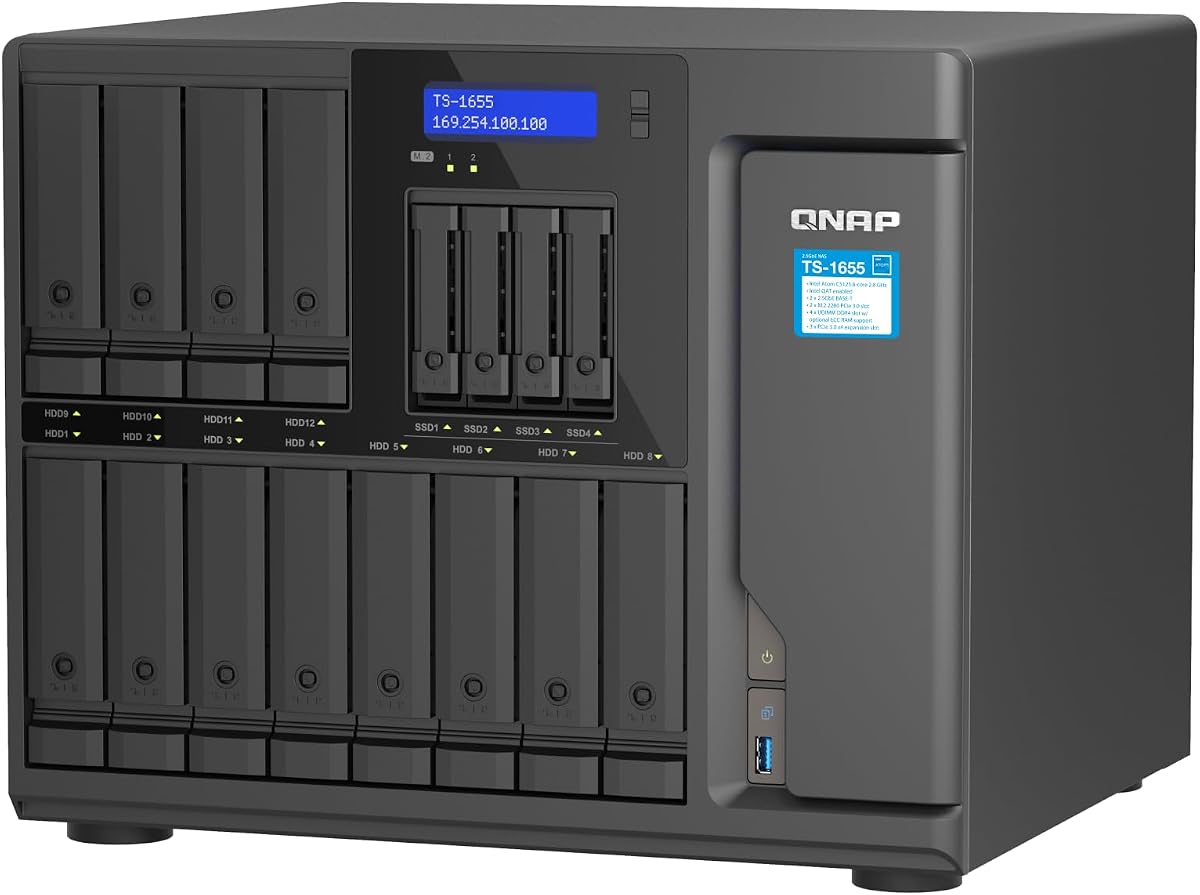
This hybrid NAS combines 3.5 and 2.5 inch drive options in one chassis. It supports ECC RAM for stability, which is rare at this price point for mixed use cases.
We may earn a commission when you buy through this link, at no additional cost to you.
Dual M.2 NVMe slots allow you to speed up specific apps or use as a cache layer. The networking ports handle large transfers efficiently without bottlenecks.
While it comes with 8GB RAM, the upgradability means you can scale memory for virtualization tasks. The processor is efficient enough for most media and backup workflows.
Tech-savvy users who want a mix of speed and capacity will appreciate this unit. It is a strong contender for small businesses needing versatile storage solutions.
ECC support helps prevent data corruption during intensive operations.
Use NVMe slots for caching to boost read and write speeds significantly.
We may earn a commission when you buy through this link, at no additional cost to you.
This expansion unit is designed specifically to grow Synology storage systems. It adds 12 bays easily, letting you increase capacity without replacing your main NAS.
We may earn a commission when you buy through this link, at no additional cost to you.
Synology DSM makes setup simple through unified tools. You can manage this unit alongside your existing drives in one interface, reducing administrative work.
The warranty adds value for business continuity planning. Since it is diskless, you control the total cost by choosing your own drives.
Synology owners looking to scale up should find this unit essential. It offers a clean way to add bulk storage without changing your current workflow.
Manage all drives through DSM without needing extra software.
Expand your storage pool as your data grows over time.
We may earn a commission when you buy through this link, at no additional cost to you.
This full tower case allows you to build a custom NAS from the ground up. It supports EATX boards and redundant power, which is rare for a chassis of this type.
We may earn a commission when you buy through this link, at no additional cost to you.
With 15 hot-swap bays and eight PCI slots, you have room for network cards and GPUs. The steel construction ensures durability and proper airflow for components.
Shipping takes longer as it is a special order. You will need to source components separately, but the flexibility pays off for specialized workloads.
Enthusiasts building a high-end workstation NAS will love the expansion options. It is ideal for those who want full control over their hardware choices.
Accommodates large graphics cards for rendering or AI tasks.
Compatible with CRPS power supplies for continuous operation.
We may earn a commission when you buy through this link, at no additional cost to you.
This NAS targets enthusiasts needing fast media transfer and high bandwidth. Its USB4 and dual 10GbE ports allow for smooth 4K editing workflows across the network.
We may earn a commission when you buy through this link, at no additional cost to you.
The DDR5 memory ensures fast access to data. Combined with NVMe slots for caching, it handles database and AI tasks well alongside standard file storage.
While limited to 10 bays, the speed compensates for smaller capacity. It is designed for power users who value performance over massive drive counts.
If you work with large video files and need quick access, this is a great pick. Its specs match well with modern editing suites and virtualization platforms.
USB4 offers 40Gbps speeds for fast external device transfers.
Ideal for 4K/8K media production and AI server tasks.
We may earn a commission when you buy through this link, at no additional cost to you.
This DiskStation excels at running virtual machines and video systems. Its Xeon processor handles concurrent workloads better than many standard NAS units on the market.
We may earn a commission when you buy through this link, at no additional cost to you.
You can scale up to 36 bays with expansions, fitting large data centers. The Fibre Channel support adds another layer of connectivity for enterprise networks.
Price and network requirements are steep, but performance is top-tier. If you need a robust server for multiple tasks, this unit handles them well.
Businesses running virtualization and large backups will find this reliable. It balances power and expandability for serious infrastructure setups.
Over 260k random read IOPS ensures fast access to many files.
Connects directly to SANs for integrated storage solutions.
We may earn a commission when you buy through this link, at no additional cost to you.
This short-depth JBOD is great for cabinets where space is limited. It holds 16 drives and connects via Mini-SAS HD for reliable throughput in tight setups.
We may earn a commission when you buy through this link, at no additional cost to you.
Redundant power ensures that storage stays online if one unit fails. The design reduces clutter behind the rack, making cable management much easier.
The rail kit is not included, so plan for extra cost there. Otherwise, it is a solid choice for adding bulk storage without moving racks.
Installers needing to fit drives in media cabinets will find it handy. It is a reliable way to add capacity to existing QNAP systems.
Short depth design fits into small cabinets or crowded racks.
Redundant supplies help maintain service during electrical issues.
We may earn a commission when you buy through this link, at no additional cost to you.
This enclosure offers an affordable way to add 16 drives to a PC or QNAP NAS. The included card simplifies setup, making it ready to use right out of the box.
We may earn a commission when you buy through this link, at no additional cost to you.
With SATA 6Gb/s support, data moves quickly without bottlenecks. It works on Windows and Linux, giving you flexibility across different server environments.
Since it is JBOD, you manage data organization yourself. But for raw storage needs, it provides great value without extra costs for add-ons.
Users wanting bulk storage for backup or archives should consider this unit. It is a practical choice for home labs or small office servers.
The QXP card is included to simplify connection and installation.
Works seamlessly with Windows and Linux systems.
We may earn a commission when you buy through this link, at no additional cost to you.
This unit is built for longevity, ensuring parts and support remain available. Its 8-core processor provides plenty of headroom for future applications and updates.
We may earn a commission when you buy through this link, at no additional cost to you.
Networking is solid with dual 2.5GbE ports. ECC memory support helps keep data safe, which is vital for long-term business storage setups.
You may need to upgrade RAM for heavy virtualization, but the base is sufficient for most tasks. The hybrid drive mix offers flexibility in drive selection.
Businesses wanting a reliable unit for years to come should look here. It balances current performance with long-term support for planning.
Assures continued support and parts for years.
Supports both 3.5 and 2.5 drives for mixed storage.
We may earn a commission when you buy through this link, at no additional cost to you.
Selecting the right 16 bay NAS enclosure depends on your specific usage needs. Consider factors like RAID support, network speed, and physical dimensions to match your setup.
Check if the unit supports both 2.5 and 3.5 inch drives to maximize storage options. Ensure it can handle the maximum drive capacity you plan to use for future growth.
Choose a model that supports your preferred drive types to avoid compatibility issues later.
Decide between JBOD units that require external software and NAS units with built-in RAID capabilities. Built-in RAID offers better data redundancy and easier management out of the box.
Pick a system with RAID features if data safety is a top priority for your setup.
Look for units with at least 1GbE ports, but consider 2.5GbE or 10GbE for faster data transfers. Network speed impacts how quickly you can access files on the network.
Prioritize higher network speeds if you work with large media files regularly.
Consider if the enclosure supports daisy chaining or additional expansion units. This allows you to grow your storage later without replacing the main unit entirely.
Choose expandable units if you anticipate needing more space as your data grows.
Redundant power supplies are valuable for businesses where uptime is critical. Check the wattage to ensure it supports all your drives and additional components.
Select models with redundant power if continuous operation is important to you.
Active cooling fans are necessary for 16 bays, but check decibel ratings if placed in living areas. Proper cooling protects drives while noise levels affect your workspace.
Opt for balanced cooling if the unit will be in a quiet environment.
Measure your available space before buying. Rackmount units need specific rack sizes while desktop units need clear desk space.
Ensure the physical dimensions fit your intended installation area comfortably.
Long warranties indicate manufacturer confidence and protect your investment. Look for units with multi-year coverage for better long-term peace of mind.
Prioritize brands offering solid warranty terms for reliability assurance.
Start by installing drives in the specified order and checking the status lights. Most units allow hot-swap insertion which lets you add drives without powering down.
Keep the unit in a well-ventilated area to prevent overheating. Dust buildup can clog fans so clean filters regularly to maintain airflow.
Backup important data regularly even if using RAID configurations. RAID protects against drive failure but not against software errors or accidental deletion.
Yes most units support both HDD and SSD drives provided they match the SATA standards. Some models even offer M.2 slots specifically for faster SSD cache or boot drives.
JBOD models often work as plug-and-play with your OS but NAS units need setup via their web interface. This interface helps configure drive pools and network access easily.
No RAID is optional depending on your needs for data protection. JBOD units let you use each drive independently while RAID models offer data redundancy out of the box.
Most support up to 16 drives directly but some models offer daisy chaining for even more capacity. Check expansion capabilities to see if you can add extra units later.
Many units support drives up to 20TB or more per drive totaling over 300TB. Always verify the exact limit in the specs to ensure your drives fit.
Most units allow adding drives as long as slots are available and compatible. Some support expansion enclosures so you can grow storage without replacing the main system.
16 bays do use more power than smaller units but efficiency varies by model. Redundant power supplies help manage usage but expect higher electricity needs.
Most offer broad OS support including Windows Mac and Linux for wide compatibility. Check the supported OS list to confirm it works with your existing system.
Our top picks cover various needs from budget-conscious users to enterprise-grade setups. The Synology RS4021xs+ leads for performance while QNAP offers excellent value for hybrid systems.
When choosing focus on your required storage capacity and network speed needs. Prioritize units with redundant power if uptime is essential for your business operations.
Prices and availability change frequently so always check current listings before purchasing. Verify that your chosen model supports your drives and operating system for a smooth setup.