
Workman A28 Lightning ARRESTOR
4.5Editor score
Affordable protection for CB and Ham antennas
Simple PL-259 male and female connections
Includes side ground screw for easy setup
This comprehensive guide compares the top 10 Antenna Lightning Arrestor models to help you safeguard your radio equipment from damaging electrical surges and
Protecting your valuable radio equipment from unexpected electrical surges is crucial for any serious operator. An Antenna Lightning Arrestor serves as the first line of defense, diverting harmful energy away from your sensitive transceivers and associated hardware before it can cause catastrophic failure or costly repairs.
We have carefully evaluated ten leading models based on their construction quality, impedance matching, insertion loss, and grounding capabilities. Our analysis focuses on how well each device handles high voltage transients while maintaining signal integrity across various frequency bands used by modern communication systems.
Each pick below highlights specific strengths suited for different setups, from amateur radio base stations to cellular boosters. Please note that product availability and pricing can fluctuate frequently, so always verify current details on the retailer site before making your final purchase decision today.
4.5Editor score

4.8Editor score

4.8Editor score
The following table provides a side-by-side comparison of the top ten models, highlighting their key specifications and compatibility to help you quickly identify the right fit for your specific antenna system requirements.
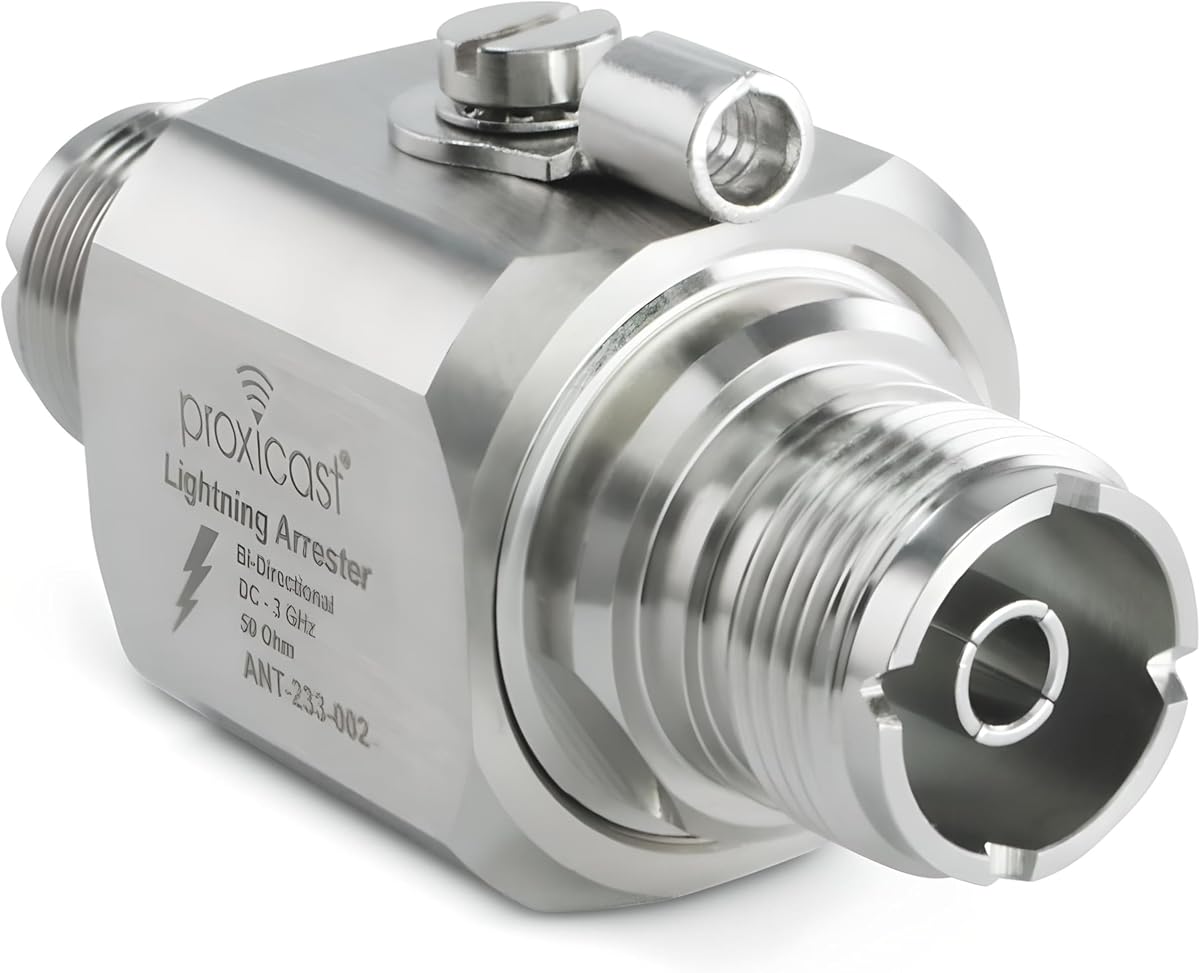


This unit stands out as a reliable solution for protecting VHF UHF and two-way radio equipment from dangerous electrical surges. With a strong 4.6 rating, it offers robust protection using a 230V gas discharge tube designed to handle multiple lightning strikes over time.
We may earn a commission when you buy through this link, at no additional cost to you.
The construction quality is excellent, featuring bi-directional protection and low insertion loss to ensure your signal remains strong even during critical communication moments. It connects easily via SO-239 ports and includes a DC pass-through feature for power lines.
While it requires a separate ground cable which must be purchased independently, this is standard for high-quality arrestors. The 50 Ohm impedance matches most common amateur radio setups perfectly without introducing significant signal attenuation.
If you operate a CB or Ham radio station, this arrester provides essential peace of mind against storm damage. Its straightforward design and proven performance make it a top choice for anyone seeking dependable surge protection.
Protects both incoming and outgoing signals ensuring equipment is safe regardless of surge direction.
Uses a 230V gas tube that effectively shunts high voltage energy safely to ground.
We may earn a commission when you buy through this link, at no additional cost to you.
Designed specifically for mobile and base station antennas, this model excels at preventing equipment damage from powerful lightning strikes. It boasts an impressive impulse wave discharge capacity of 6000 Amps, offering serious protection for high-value setups.
We may earn a commission when you buy through this link, at no additional cost to you.
One of its key strengths is the replaceable surge arrester element, which allows you to maintain protection without replacing the entire unit after a major strike. This feature extends the lifespan and value of the device significantly over time.
The insertion loss is extremely low at less than 0.3 dB, ensuring your signal remains clear and strong. However, it may be slightly more expensive than other options and is best suited for users with compatible Diamond equipment.
For those running professional or heavy-duty stations, the SP1000 offers reliable defense against electrical surges. Its durable construction ensures long-term performance even when exposed to harsh outdoor conditions regularly.
The surge arrester element can be swapped out to restore protection after a discharge event.
Minimal signal attenuation keeps your transmission quality high during normal operations.
We may earn a commission when you buy through this link, at no additional cost to you.
This N-Type version of the Proxicast ProGrade offers versatile protection across a massive frequency spectrum from DC all the way up to 6 GHz. It is ideal for protecting modern 4G 5G cellular modems as well as traditional radio gear.
We may earn a commission when you buy through this link, at no additional cost to you.
The wide-band performance ensures that whether you are dealing with 900 MHz radios or 5 GHz WiFi access points, the arrester provides consistent low-loss protection. The N connectors are robust and suitable for panel or bulkhead mounting.
While N connectors require a bit more care to install compared to UHF types, the stability they provide is worth the effort. Like other models, you will need to provide your own ground wire for full safety compliance.
If you need a single solution for mixed equipment including helium miners or routers, this arrester covers all bases. Its high-quality construction and bi-directional protection make it a smart choice for diverse setups.
Handles everything from DC to 6 GHz making it perfect for mixed cellular and radio networks.
Designed for bulkhead or panel mounting for clean integration into outdoor enclosures.
We may earn a commission when you buy through this link, at no additional cost to you.
This N Type arrestor is an excellent choice for protecting GPS receivers and outdoor antennas across a broad range of frequencies. Its high rating of 4.7 reflects user satisfaction with its performance and durability in outdoor environments.
We may earn a commission when you buy through this link, at no additional cost to you.
The device features very low insertion loss to keep your signal strong, and it handles frequencies from DC to 6 GHz efficiently. It is specifically designed to protect HAM radio equipment as well as cellular boosters and amplifiers.
The 90V gas discharge tube provides effective protection, though it is rated lower than the 230V options found in other models. Still, for most standard use cases, it offers substantial defense against common transients and surges.
For those looking for an affordable yet reliable solution for mixed signal protection, this model is hard to beat. Just remember to attach a grounding cable properly to ensure maximum safety for your expensive electronics.
Designed to safeguard sensitive GPS receivers from static and lightning induced surges.
Works seamlessly with 3G 4G LTE boosters and amplifiers for uninterrupted connectivity.
We may earn a commission when you buy through this link, at no additional cost to you.
This UHF arrestor delivers solid performance for CB and Ham radios with a VSWR of less than 1.2 ensuring minimal signal reflection. The construction uses brass nickel plating which provides durability and corrosion resistance for outdoor use.
We may earn a commission when you buy through this link, at no additional cost to you.
Installation is straightforward since it uses standard UHF female connectors on both ends. The low insertion loss means your transmission power reaches the antenna efficiently without significant degradation from the protective device.
While the frequency range is limited to DC to 500MHz, this covers most traditional radio applications perfectly. It is an ideal choice if you do not need higher frequency protection for modern cellular or WiFi systems.
For budget-conscious operators needing reliable protection for standard base antennas, this unit offers great value. It protects against surges effectively while maintaining signal quality for consistent communication reliability.
VSWR under 1.2 ensures maximum power transfer and minimal signal reflection.
Brass nickel plating provides resistance to rust and corrosion in harsh weather.
We may earn a commission when you buy through this link, at no additional cost to you.
This unit features a brass nickel-plated outer conductor that improves hardness and corrosion resistance for all-weather outdoor use. The PTFE insulating material protects the inner core effectively to extend the service life of the device.
We may earn a commission when you buy through this link, at no additional cost to you.
It is designed for safety with a gas discharge tube that diverts surges when sudden current or voltage is generated. The structure provides a wide bandwidth and low insertion loss suitable for GSM base stations and walkie-talkie setups.
The design allows for easy installation through an enclosure wall without complex modifications. However, as with most arrestors, you must connect a ground wire to ensure the surge is safely diverted away from your electronics.
For general protection across various fields including home equipment or internet connections, this arrester is a practical choice. It balances performance and price well for users needing reliable surge protection for standard coaxial setups.
Nickel plating on brass ensures long-term durability against rust and outdoor elements.
PTFE material offers high dielectric strength and low signal loss.
We may earn a commission when you buy through this link, at no additional cost to you.
This budget-friendly option provides essential protection for CB and Ham base antennas without breaking the bank. It uses standard PL-259 connectors and includes a convenient side ground screw to simplify the grounding process.
We may earn a commission when you buy through this link, at no additional cost to you.
The design is straightforward and easy to install between your radio and antenna for surge diversion. It is lightweight and functional for basic setups where cost is a primary factor in the purchasing decision.
While it lacks the heavy-duty construction of premium models, it offers sufficient defense for typical hobbyist stations. Just remember to attach the ground cable properly to ensure the surge has a safe path to earth.
If you are looking for an entry-level solution for surge protection, this arrester is a solid choice. It serves its purpose well for casual operators who need basic safety features at a low price point.
The side screw makes it easy to attach a ground wire directly to the unit.
Installed inline to divert surges before they reach sensitive radio equipment.
We may earn a commission when you buy through this link, at no additional cost to you.
This model stands out with its ultra-low insertion loss of less than 0.1 dB ensuring your signal stays incredibly strong. It is designed specifically for professional outdoor deployments including IoT and solar node installations.
We may earn a commission when you buy through this link, at no additional cost to you.
The heavy-duty brass nickel-plated body withstands weather exposure while the replaceable gas discharge tube allows for continuous protection after surges. It covers a massive range from LoRaWAN to 5G Sub-6GHz and WiFi networks.
Its build quality is excellent with a brass-plated inner needle that ensures optimal signal connection. However, it is priced higher than budget models and requires a separate ground cable for full safety compliance.
For those investing heavily in connected devices like LoRa gateways or helium miners, this protection is essential. The wide frequency support and low loss make it the top premium choice for diverse network setups.
Less than 0.1 dB loss ensures signal strength remains intact across all supported frequencies.
Perfect for protecting LoRaWAN gateways and other smart infrastructure devices.
We may earn a commission when you buy through this link, at no additional cost to you.
This F-Type arrester is specifically designed for 75 Ohm systems including TV satellite and cable internet antennas. It ensures compatibility with standard RG6 cables while providing robust surge protection using a 230V gas discharge tube.
We may earn a commission when you buy through this link, at no additional cost to you.
The bi-directional protection and low insertion loss help maintain clear signal quality for your entertainment systems. It is rated for outdoor use which allows it to be mounted safely near your equipment entrance point.
While it is not suitable for 50 Ohm amateur radio gear, it excels in residential communication setups. The installation is straightforward with F connectors fitting standard coaxial cables used in homes today.
For households wanting to protect televisions and satellite receivers from lightning damage, this unit is ideal. It offers reliable protection at a fair price point for standard home entertainment systems.
Impedance matches typical TV and satellite systems to prevent signal reflections.
Designed for use with RG6 RG59 and similar coaxial cables found in home setups.
We may earn a commission when you buy through this link, at no additional cost to you.
This model offers a wide frequency range from DC to 3000 MHz making it versatile for many types of Ham radio antennas. It has a 200W power rating and handles an impressive impulse wave discharge of 1000V for strong defense.
We may earn a commission when you buy through this link, at no additional cost to you.
The N-Type female to female connectors provide durable and stable connections for long term use in outdoor environments. Its construction is designed to handle high voltage transients without compromising the integrity of your signal.
While it comes with a higher price tag, the build quality and performance justify the investment for serious operators. It is excellent for protecting high value transceivers against potential storm damage over time.
For those seeking a reliable protection solution with a proven track record, this SP3000 is a top contender. Its high rating reflects user satisfaction with its consistent performance and durability over years of service.
Withstands 200W continuous power ensuring no signal degradation during normal operation.
1000V impulse wave discharge capacity provides robust defense against strong surges.
We may earn a commission when you buy through this link, at no additional cost to you.
Selecting the right lightning arrestor involves evaluating several technical factors to ensure maximum protection for your specific equipment.
Choose a connector type that matches your antenna and transceiver ports such as PL-259 SO-239 F-Type or N-Type. Mismatched connectors will require adapters which can degrade performance and introduce points of failure.
Always ensure the gender of the connectors matches your existing coaxial cables for a secure fit.
Verify that the arrestor matches the impedance of your system which is typically 50 Ohm for radio and 75 Ohm for TV. Using the wrong impedance can cause signal reflections that reduce transmission quality and damage equipment.
Matching impedance ensures smooth signal flow and optimal performance of your communication system.
Check that the device supports the frequencies you operate across whether you use VHF UHF or cellular bands. Wider bandwidths like DC to 6 GHz offer more versatility for mixed setups and future upgrades.
Select a model that covers your current needs plus any planned expansion of your equipment.
Look for a model with low insertion loss typically under 0.5 dB to ensure minimal signal attenuation. High loss can weaken your transmission power and reception sensitivity significantly over time.
Lower loss values are critical for maintaining high fidelity signal quality in professional setups.
A gas discharge tube is essential for diverting high voltage surges safely to ground. Models with replaceable tubes extend the product life and reduce long term maintenance costs after major storms.
Replaceable tubes ensure you can restore protection without buying a completely new unit.
Outdoor rated constructions with nickel plating or weatherproof seals are necessary for long term reliability. Exposure to moisture or UV light can degrade cheaper materials and lead to device failure during storms.
Robust materials like brass and Teflon ensure consistent performance in harsh environments.
Every arrestor requires a proper ground cable to divert the surge safely. Ensure you have access to an earth ground or use a ground rod if connecting to a building ground is not feasible.
Proper grounding is the most critical step to ensure safety and device effectiveness.
Stick with established brands known for quality and reliability like Diamond or Proxicast. These companies have a track record of meeting industry standards and providing better customer support for defects.
Trusted brands offer peace of mind that your equipment is protected by tested technology.
Install the arrestor between your outdoor antenna and the indoor equipment. It should be mounted as close to the entry point of the building as possible to protect all internal devices effectively.
Connect a heavy ground wire from the arrestor terminal to a proper earth ground rod. Ensure this connection is tight and corrosion free to guarantee a safe path for electrical surges.
Inspect the unit periodically for signs of corrosion or physical damage especially after severe storms. Replace the device if the gas discharge tube has discharged or if the body shows any cracks.
An arrestor contains a gas discharge tube that remains non-conductive during normal operation. When a surge occurs the tube ionizes and directs the high voltage safely to the ground preventing it from reaching your equipment.
Yes absolutely. The arrestor provides a path for the surge but that path must be connected to a true earth ground. Without proper grounding the surge cannot be diverted and damage may still occur.
Most models do not include a ground cable. You will need to purchase a heavy gauge wire separately to connect the arrestor to your earth ground system for full protection.
Generally each antenna line requires its own arrestor to ensure individual protection. However some central units exist for multi-feed systems but individual arrestors offer better localized protection against surges.
You should replace it after a major lightning strike or if the gas tube indicates discharge. Regular visual inspections help identify corrosion or wear that could compromise safety over time.
High quality models have very low insertion loss so the effect is negligible. Poor quality arrestors can introduce noise or attenuation but premium units are designed to maintain signal integrity.
They protect against induced surges from nearby strikes but cannot stop a direct hit on the antenna itself. Direct strikes often require additional protective measures like proper grounding systems and shielding.
Only if the impedance matches both systems. Radio uses 50 Ohm while TV uses 75 Ohm so you must choose an arrestor specifically designed for your equipment type to avoid signal loss.
We have highlighted ten reliable options from budget friendly choices to premium models for diverse needs. Whether you need protection for CB radios or complex cellular networks there is a solution that fits your requirements perfectly.
Prioritize low insertion loss and proper grounding to ensure your safety and signal integrity. Investing in a quality arrestor saves money by preventing expensive equipment failures during storm season.
Always verify the specific model details and current availability before purchasing to get the best value. Prices change frequently so checking the latest offers ensures you secure the best deal available today.