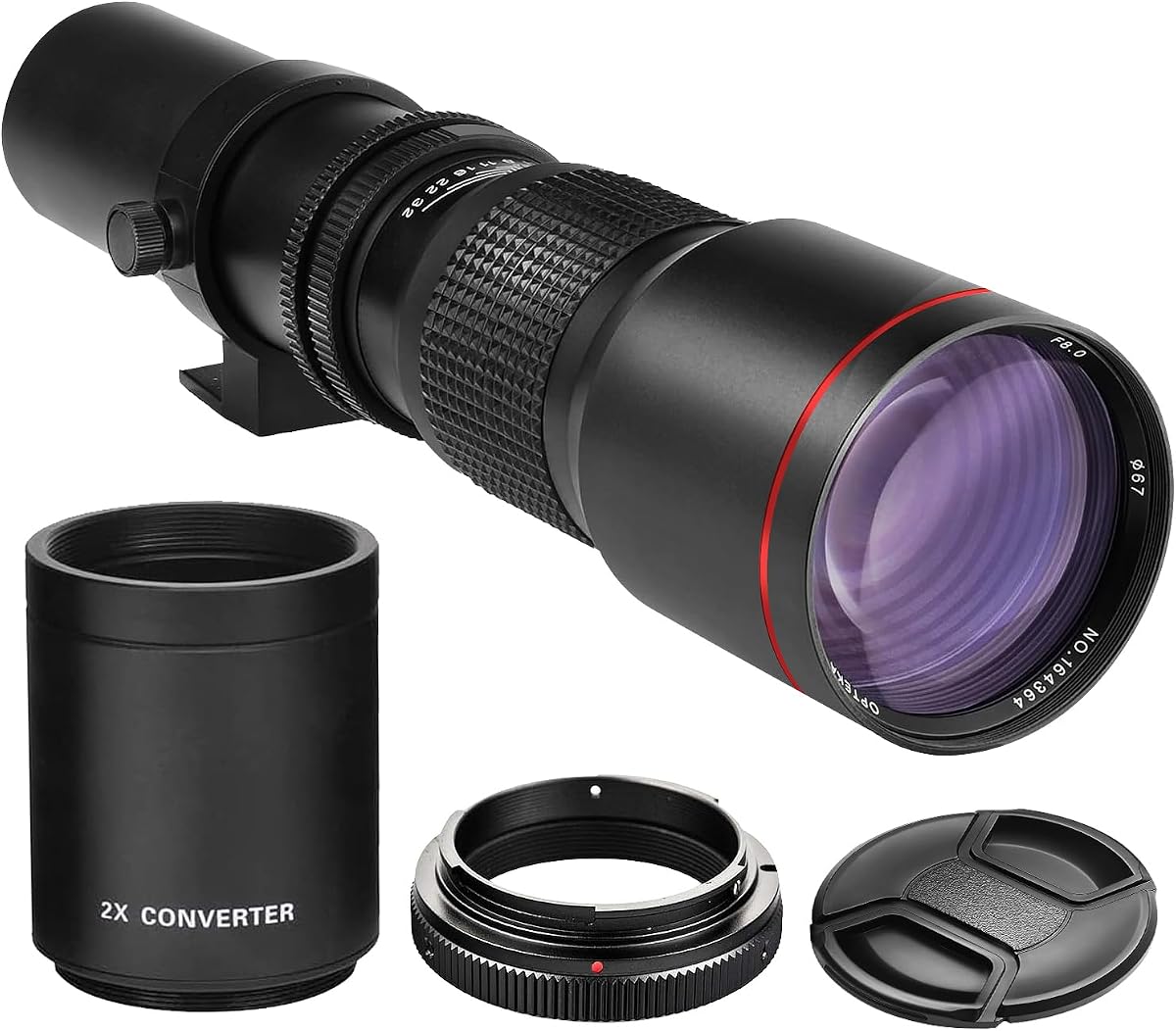
High-Power 500mm/1000mm f/8 Manual Telephoto Lens
4.0Editor score
1000mm max reach
Manual focus control
Affordable price point
This guide compares the top camera lens for long distance wildlife to help you choose the perfect telephoto optic for capturing sharp animal shots.
Capturing wildlife from a safe distance requires specialized optics that balance reach and clarity. A good lens for long distance wildlife photography ensures you get sharp images without disturbing the animals in their natural habitat.
We analyzed ten highly rated telephoto options based on focal range, stabilization, and optical quality. This list covers everything from budget-friendly manual lenses to professional-grade zooms for mirrorless and DSLR cameras.
Each pick highlights key strengths and potential trade-offs to help you decide. Remember that prices and availability change frequently so check current listings before making your final purchase decision today.
4.0Editor score
4.7Editor score

4.0Editor score
The following table provides a side-by-side overview of all ten selected lenses comparing their focal lengths, mounts, stabilization features, and target camera systems for informed decision making.



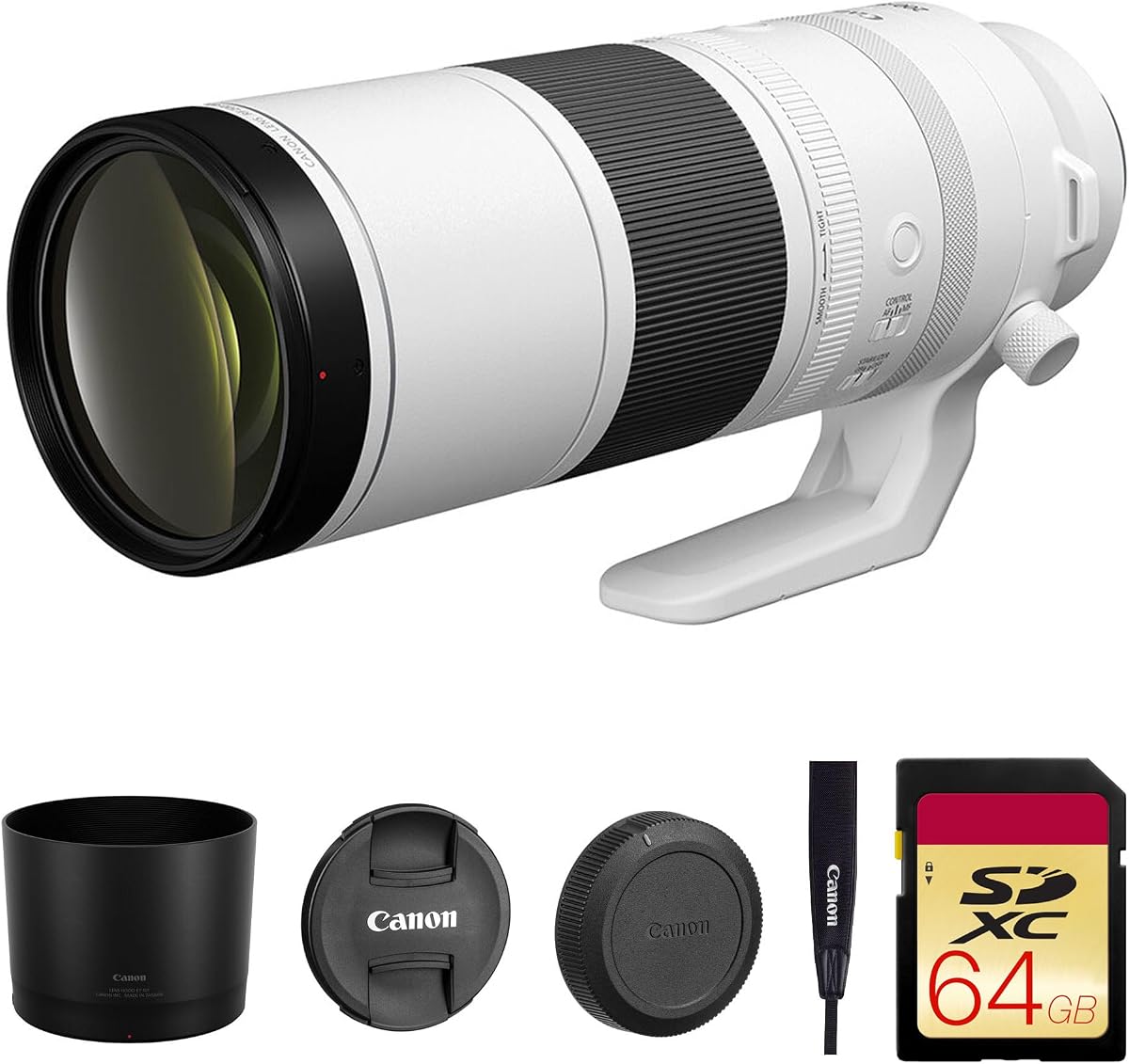
The Canon RF 200-800mm lens bundle stands out as the top choice for wildlife photographers needing serious reach. With a rating of 4.7 stars it offers unmatched flexibility from 200mm to 800mm.
We may earn a commission when you buy through this link, at no additional cost to you.
Its built-in image stabilization ensures shake-free results even at full zoom allowing for comfortable handheld shooting. The advanced USM autofocus system captures fast-moving subjects quickly and quietly which is essential for wildlife behavior.
While the aperture narrows as you zoom in this is a common trade-off for such extreme range. The lens remains surprisingly compact making it ideal for travel and outdoor adventures without excessive bulk.
Birdwatchers and nature photographers should buy this for its superior performance. It delivers sharp focus and excellent mobility making it the best overall option for capturing distant animal subjects.
The range from 200mm to 800mm provides incredible versatility for framing distant wildlife without needing to move closer.
Despite its reach the lens is designed to be easy to handle for extended periods during outdoor shoots.
We may earn a commission when you buy through this link, at no additional cost to you.
This RF mount lens is the world's first AF super-telephoto zoom with an 800mm telephoto end. It brings powerful telephoto capabilities to mirrorless users who need maximum reach for wildlife and sports.
We may earn a commission when you buy through this link, at no additional cost to you.
The optimized optical design maintains high image quality throughout the zoom range. It is compatible with Extender RF1.4x and Extender RF2x extending its versatility even further for distant subjects.
Its lightweight design allows for comfortable handheld shooting and excellent mobility in the field. However users must ensure they have a compatible RF mount camera to utilize this lens effectively.
Wildlife photographers using Canon mirrorless systems will find this lens ideal. It combines portability with extreme range making it a top contender for dedicated wildlife shooters.
This lens sets a new standard for mirrorless wildlife photography with its groundbreaking 800mm reach at an affordable weight.
Users can pair it with 1.4x and 2x extenders to push focal lengths beyond 800mm when needed.
We may earn a commission when you buy through this link, at no additional cost to you.
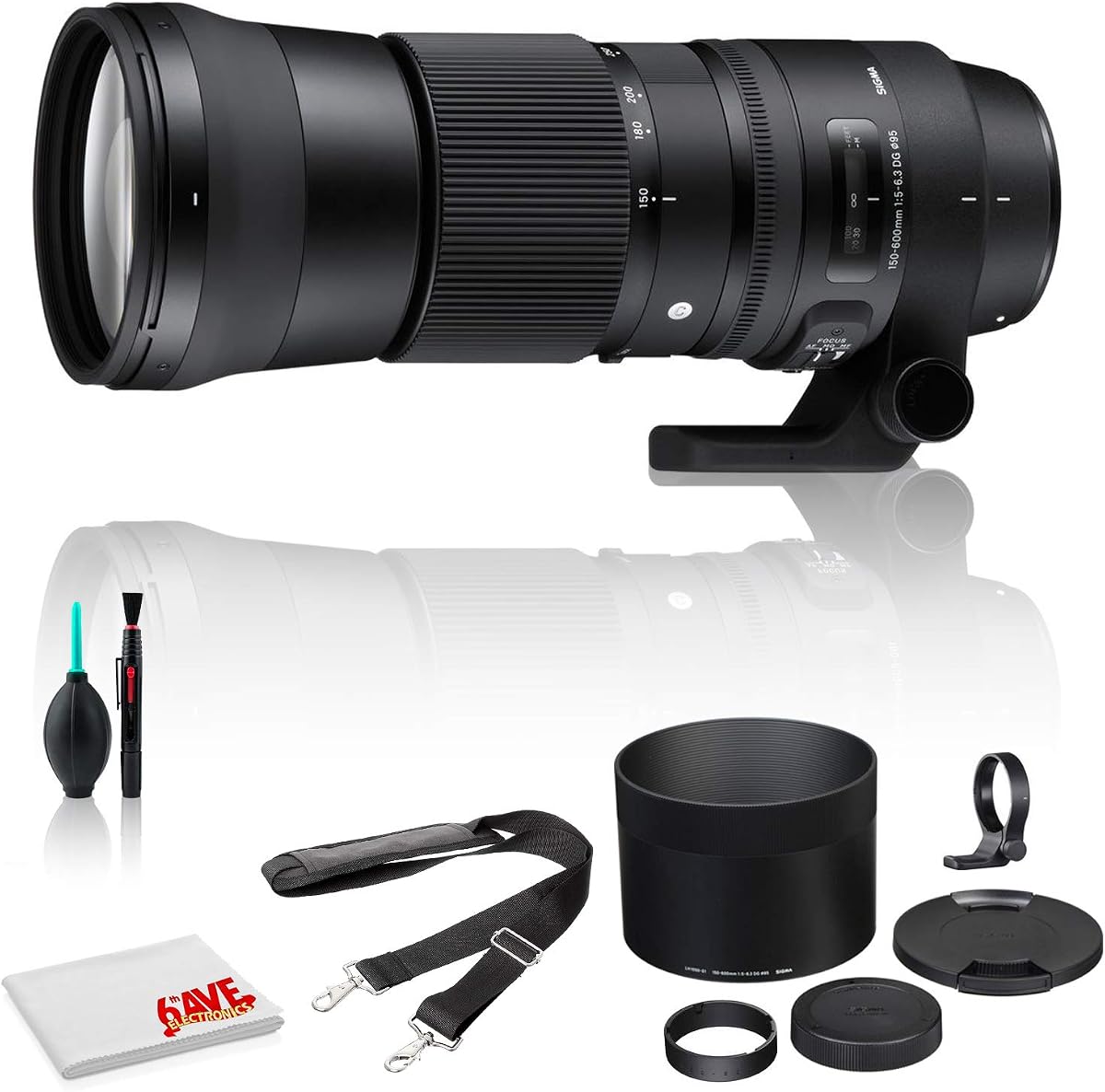
The Sigma 150-600mm Contemporary lens offers a versatile range suitable for many wildlife scenarios. It features advanced glass elements including one FLD and three SLD to reduce aberrations.
We may earn a commission when you buy through this link, at no additional cost to you.
Its Hyper Sonic Motor AF system provides quick focusing while the Optical Stabilizer with accelerometer helps keep shots steady. The bundle also includes a deluxe cleaning kit for lens maintenance.
While it is designed for Canon EF mount DSLRs it delivers professional quality images. The lens can be a bit heavier compared to newer RF models which may affect long field use.
Existing Canon DSLR users will appreciate this option for its range and optical quality. It provides a strong balance of performance and value for serious nature photographers.
The inclusion of FLD and SLD elements ensures minimal chromatic aberration for crisp wildlife images.
Optical Stabilizer ensures clear shots even when shooting handheld at long distances.
We may earn a commission when you buy through this link, at no additional cost to you.
For photographers on a tight budget this high-power manual lens offers incredible reach for the price. It reaches up to 1000mm with the included teleconverter making it useful for distant wildlife.
We may earn a commission when you buy through this link, at no additional cost to you.
The manual focus allows for fine-tuning shots giving full creative control. It is compatible with a wide range of Canon EF-mount DSLR cameras including various Rebel and 5D models.
Users must be comfortable with manual focus and slower apertures which can challenge low light shooting. However the durability and reach make it a reliable companion for outdoor adventures.
Beginners or hobbyists looking for extreme reach should consider this lens. It brings subjects closer than thought possible without the high cost of professional optics.
The 2X teleconverter doubles the lens power to a groundbreaking 1000mm for extreme magnification.
Manual focus and aperture give complete control over image capture and exposure settings.
We may earn a commission when you buy through this link, at no additional cost to you.
This L-Series lens delivers professional image quality with advanced optical construction including fluorite and Super UD elements. It covers a 100-400mm range ideal for wildlife and distant action photography.
We may earn a commission when you buy through this link, at no additional cost to you.
Built-in optical image stabilization improves handheld performance significantly. The ring-type ultrasonic motor delivers fast precise and quiet autofocus with full-time manual override capabilities.
While it is heavier than some newer models the build quality is robust and reliable. The included filter kit adds value for users who want to protect their optics in the field.
Serious photographers wanting top-tier glass should buy this lens. It ensures dependable image quality and offers compatibility with optional teleconverters for extended reach.
Removable rotating tripod collar and adjustable zoom tension provide stable handling in any situation.
Multiple specialized elements minimize aberrations for sharp and colorful wildlife portraits.
We may earn a commission when you buy through this link, at no additional cost to you.
This lens provides a must-have long range capability reaching up to 1600mm with the included teleconverter. It is designed for capturing clear long-distance shots of wildlife and landscapes.
We may earn a commission when you buy through this link, at no additional cost to you.
The sophisticated f/8.3 aperture ensures photos are crisp and clear while the manual zoom gives users control. It fits many Canon DSLR models including various Rebel and 5D series cameras.
Manual operation means slower workflow and requires patience. But for those who need extreme reach at a low cost this lens brings subjects closer like no other.
Hobbyists wanting maximum focal length without a high price should consider this. It offers enhanced photographic flexibility for distant subjects in a compact package.
The 2X teleconverter doubles the lens power to a whooping 1600mm for distant wildlife.
Zooming allows photographers to frame subjects precisely without moving physically closer.
We may earn a commission when you buy through this link, at no additional cost to you.
This RF tele zoom lens combines high image quality with a versatile 100-400mm range in a compact body. It features an optical image stabilizer with up to 5.5 stops of shake correction.
We may earn a commission when you buy through this link, at no additional cost to you.
Paired with EOS R series cameras featuring IBIS it offers up to 6 stops of stabilization. The Nano USM motor ensures high speed smooth and quiet autofocus for tracking moving wildlife.
It has a close focus distance and maximum magnification allowing for more than just distant shots. However the aperture narrows to f/8 at the long end which requires more light.
Travel photographers needing a lightweight RF option will love this lens. It offers a great balance of performance and portability for mirrorless wildlife shooters.
Up to 5.5 stops of shake correction enables sharp handheld images at long focal lengths.
Minimum focusing distance of 2.89 feet allows for detailed shots at 200mm and beyond.
We may earn a commission when you buy through this link, at no additional cost to you.
This entry-level telephoto lens offers a 75-300mm range at an affordable price point. It is designed for Canon SLR cameras and provides a smooth zoom mechanism for easy operation.
We may earn a commission when you buy through this link, at no additional cost to you.
Weighing only 16.8 ounces it measures 2.8 inches in diameter making it compact and portable. The improved zoom ring makes framing shots easier during handheld photography sessions.
The lack of image stabilization means shutter speeds must be fast to avoid blur. But for users on a budget or learning telephoto basics this lens is a reliable companion.
Beginners should buy this for its simplicity and low cost. It allows you to explore wildlife photography without a heavy financial investment.
Weighing just 16.8 ounces this lens is easy to carry on day hikes or travel.
An improved mechanism makes zooming smoother for better control over framing.
We may earn a commission when you buy through this link, at no additional cost to you.
This Nikon bundle is crafted for FX sensors and works well with DX sensors delivering versatile reach. It features three extra-low dispersion elements that diminish color fringing for superior clarity.
We may earn a commission when you buy through this link, at no additional cost to you.
The Silent Wave Motor ensures rapid silent and accurate autofocus with full-time manual override. Vibration Reduction minimizes camera shake providing up to 4.5 stops of stabilization for handheld shots.
Its electromagnetic aperture mechanism ensures stability and precision during continuous shooting. The bundle includes a filter kit and cleaning items adding value to the purchase.
Nikon DSLR users looking for wildlife range should consider this lens. It delivers unwavering performance across the entire zoom spectrum for detailed nature photography.
Three extra-low dispersion elements substantially diminish color fringing for sharp images.
Ensures rapid silent and accurate autofocus without disturbing wildlife during capture.
We may earn a commission when you buy through this link, at no additional cost to you.
This renewed lens offers the same functionality as the new version at a lower cost. It features an EF mount and aperture range of f/4 to f/5.6 with a DC autofocus motor.
We may earn a commission when you buy through this link, at no additional cost to you.
It includes a 58mm filter thread and measures 2.8 inches in diameter. The improved zoom mechanism ensures smooth transitions and reliable operation for everyday use.
While it does not offer image stabilization the price makes it an attractive option for casual photographers. The renewed status provides a tested product at a budget-friendly rate.
Budget-conscious buyers wanting a working Canon telephoto should consider this. It remains a reliable option for learning wildlife photography basics.
Purchasing renewed allows access to reliable optics at a fraction of the new price.
The built-in DC motor provides adequate autofocus performance for non-action subjects.
We may earn a commission when you buy through this link, at no additional cost to you.
Choosing the right telephoto lens involves understanding focal length, mount compatibility, and stabilization features that impact your wildlife shooting experience.
Focal length determines how close distant subjects appear. For wildlife lenses reaching 400mm or higher allow you to photograph animals safely without disturbance.
Look for at least 400mm reach for serious wildlife work to ensure you can capture detailed shots of distant behavior.
Ensure the lens matches your camera mount. RF mounts are for mirrorless cameras while EF mounts fit DSLRs. Mismatched mounts prevent proper operation.
Check your camera body specifications to choose between RF or EF mount options before purchasing any telephoto lens.
Image stabilization reduces camera shake allowing sharper handheld shots at long focal lengths. Look for lenses with built-in stabilization or those compatible with in-body systems.
Prioritize lenses with optical stabilization for better handheld performance especially when shooting in low light conditions.
Fast autofocus motors like USM or Silent Wave Motor help track moving wildlife. Quiet operation prevents startling sensitive animals during photography sessions.
Choose lenses with fast silent autofocus systems to capture behavior without causing stress to the subjects.
Aperture affects light gathering and depth of field. Fast apertures allow better low-light performance but may be limited at long reach ranges.
Accept that apertures often narrow at maximum zoom to achieve longer reach without excessive weight and cost.
Outdoor shoots require durable construction. Weather sealing protects against dust and moisture common in field environments.
Invest in robust lenses with weather resistance to ensure reliability during harsh outdoor conditions.
Long lenses can be heavy. Consider how you will transport them whether by hand or tripod for comfort during long outings.
Balance reach and weight based on your hiking habits to avoid fatigue during shoots.
Telephoto lenses vary widely in price. Determine your budget early to find the best value for your specific needs.
Weigh the cost against performance benefits to select a lens that offers the best return on investment.
Always ensure your lens is securely attached to the camera mount before shooting to prevent damage or poor image quality.
Use a tripod or monopod for stability especially when using longer focal lengths to minimize shake and ensure sharp results.
Clean your lens regularly with a soft cloth and professional cleaning kit to maintain optical clarity over extended periods of use.
For wildlife a focal length of at least 400mm is recommended to capture detailed shots from a safe distance. Longer lenses like 600mm or 800mm provide even better reach for distant subjects without disturbance.
Manual telephoto lenses can be worth it if you need extreme reach on a tight budget. They lack autofocus but offer unique control and lower costs for enthusiasts willing to work manually.
While not always mandatory tripods are highly recommended for telephoto lenses especially those with longer focal lengths. They provide stability to prevent camera shake and ensure sharp images.
Yes Canon EF lenses can be used on RF mirrorless cameras with an EF-EOS R adapter. This allows older lenses to work seamlessly on newer camera bodies without performance loss.
Optical stabilization compensates for camera shake reducing blur in handheld shots. It is especially critical for telephoto lenses where small movements can significantly impact image sharpness.
Use a microfiber cloth and lens cleaning fluid to gently wipe the glass. Always store your lens in a protective case to avoid scratches and dust accumulation when not in use.
The Canon RF 200-800mm bundle leads as the top choice for its extreme reach and stabilization features. The budget manual options offer accessible paths for hobbyists seeking long focal lengths.
Prioritize your camera mount compatibility and stabilization needs when selecting a lens. These factors impact your ability to capture sharp images consistently in the field.
Check current prices and availability before purchasing to ensure you get the best value for your budget and needs.