
Handheld Fish Finder Portable
4.2Editor score
Portable kayak friendly design
4 AAA battery powered
Fresh and saltwater use
Finding the right tool to locate fish and measure water depth is essential for every angler. A cheap depth finder provides the necessary technology to navigate waters safely and identify productive fishing spots without breaking the bank.
We evaluated ten top-rated models based on sonar clarity, display quality, ease of use, and durability. Our analysis focuses on how each device performs in real-world conditions across fresh and saltwater environments.
Each pick includes key specifications, standout features, and honest trade-offs to help you decide. Note that availability and stock levels may change, so verify current details before purchasing your next fishing gear.
4.2Editor score
4.6Editor score

4.3Editor score
As an Amazon Associate we earn from qualifying purchases.
This side-by-side comparison highlights the core specifications and capabilities of each model to help you quickly identify the best fit for your specific fishing style and vessel type.


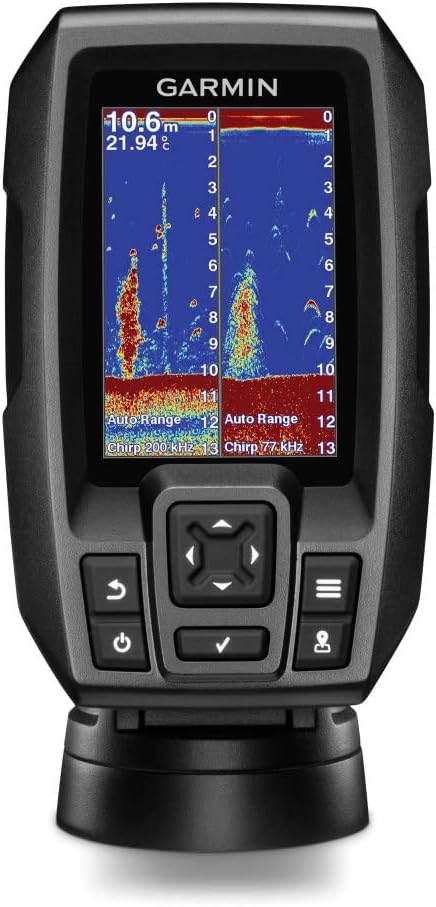
The Garmin Striker 4 stands out as a top choice for anglers seeking a reliable depth finder without overspending. It combines ClearVu scanning sonar with CHIRP technology to deliver detailed views of underwater structure and fish locations.
We may earn a commission when you buy through this link, at no additional cost to you.
Its user-friendly interface features dedicated buttons that make operation simple even for beginners. The included GPS waypoint map helps you mark productive spots like brush piles and docks for future trips.
While the 3.5-inch screen may feel small compared to larger units, it remains highly visible in bright sunlight. The device is built to withstand splashes and rain thanks to its IPX7 water rating.
This model is ideal for small boats and kayaks where space is limited. If you want clear imaging and essential navigation tools in a compact package, the Striker 4 is a strong recommendation.
The high frequency sonar provides near photographic images that show detailed representations of objects and fish in the water.
You can easily view and mark locations such as stumps and docks to return to prime fishing spots later.
We may earn a commission when you buy through this link, at no additional cost to you.
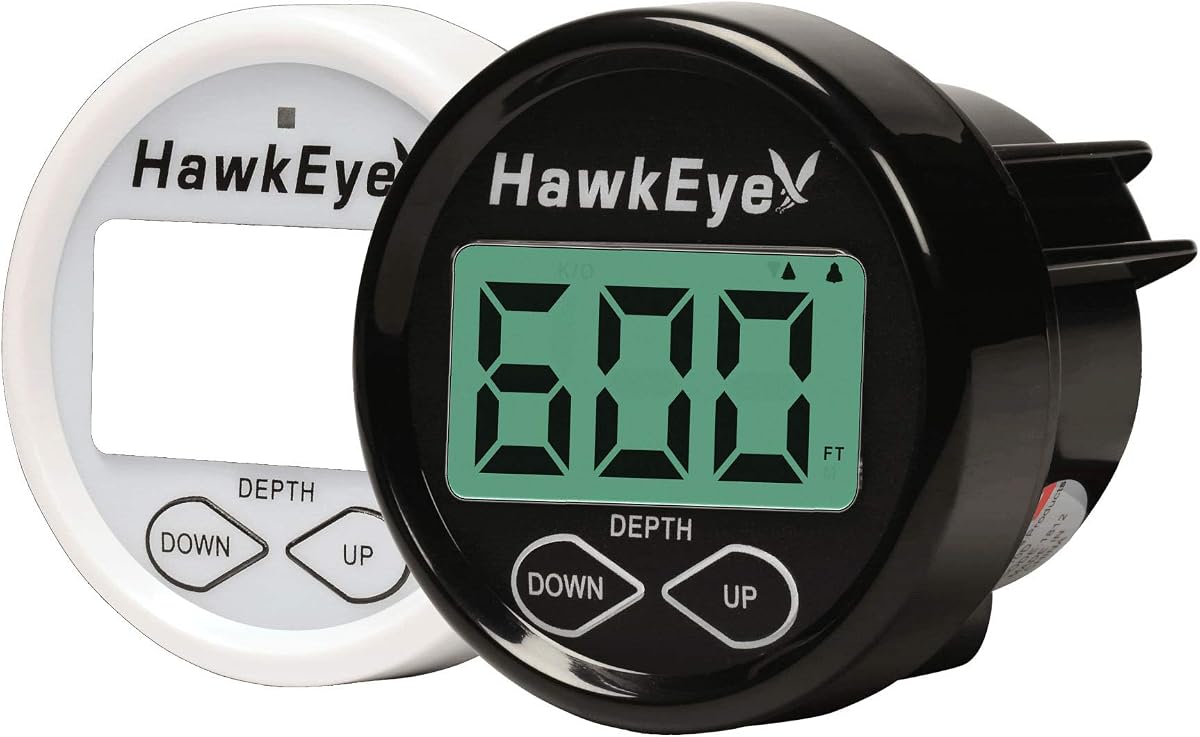
The DepthTrax 2B offers a dedicated in-dash solution for boaters who want continuous depth monitoring. Its polarized LCD display ensures visibility even with sunglasses on during sunny days.
We may earn a commission when you buy through this link, at no additional cost to you.
A key advantage is the dual mount transducer which allows for installation through solid fiberglass hulls or thin aluminum hulls. This flexibility makes it suitable for various boat types.
The device includes a three-stage warning system that signals shallow water with sound and light alerts. Algorithmic programming helps maintain precision and reduce annoying false readings.
Ideal for fixed installations on smaller boats this unit provides uninterrupted readings up to 600 feet. It is a robust option for those needing consistent depth data while underway.
No glare polarized LCD icon display allows for spot free viewing with or without sunglasses for comfortable monitoring.
Signals alarm conditions with audible alarm bright red LED warning light and LCD indicators for immediate awareness.
We may earn a commission when you buy through this link, at no additional cost to you.
The Hawkeye DT1H is a compact handheld device perfect for anglers fishing from shore or small vessels. It provides essential depth and temperature readings without the bulk of larger units.
We may earn a commission when you buy through this link, at no additional cost to you.
This tool is designed for simplicity allowing you to check water conditions quickly. Its portable nature makes it easy to slip into a tackle box or pocket for on-the-go access.
While it lacks advanced mapping features the straightforward functionality ensures you get the data you need. The temperature reading helps identify thermal layers where fish might be holding.
Best for casual fishermen or as a backup device this model delivers reliable performance for basic depth monitoring. It is a practical addition to any fishing kit.
Displays water temperature alongside depth to help anglers understand conditions that affect fish behavior.
Handheld form factor allows for easy transport and use from shore docks or kayaks.
We may earn a commission when you buy through this link, at no additional cost to you.
This portable fish finder offers an affordable entry point for anglers wanting sonar capabilities. It works well for kayaks ice fishing and shore casting where a large unit is impractical.
We may earn a commission when you buy through this link, at no additional cost to you.
Powered by four AAA batteries it runs for about five hours of continuous use. The included neck strap keeps the device secure while you handle your line and tackle.
The sonar displays approximate fish locations and depth up to 328 feet. Settings like sensitivity and backlight can be saved for quick setup at your next trip.
For those on a tight budget this model provides essential functionality without complexity. It is an excellent starter device for beginners exploring the benefits of using a depth finder.
Suitable for all sorts of fish and environments from kayak fishing to ice fishing off the dock.
Toss transducer in water and turn on display to see depth and fish if schools are passing by.
We may earn a commission when you buy through this link, at no additional cost to you.
The LUCKY Kayak Portable is tailored for anglers who need a simple yet effective tool on the water. Its compact size allows for easy handling with one hand while managing your gear.
We may earn a commission when you buy through this link, at no additional cost to you.
A backlit LCD display ensures you can read data clearly in bright sun or low light. The ability to switch between feet and meters adds flexibility for international users or specific chart needs.
Five sensitivity levels let you adapt to clear or turbid water conditions. The battery save mode extends runtime for longer fishing sessions without needing frequent changes.
This unit is great for those who want a straightforward device that plugs into their kayak setup. It balances portability with enough features to make fishing more efficient.
Designed to fit just one hand held with a neck strap to wear around neck when busy on kayak.
Get alarms when fish or schools pass by so you know exactly when to drop a bait.
We may earn a commission when you buy through this link, at no additional cost to you.
The Humminbird PiranhaMAX 4 offers a dual beam sonar system that gives you flexibility in viewing options. You can choose narrow beams for detail or wide beams for broader coverage.
We may earn a commission when you buy through this link, at no additional cost to you.
The tilt and swivel mount allows quick adjustments to find the best viewing angle on your boat. This ease of use means less time fiddling and more time fishing.
It comes with a transom mount transducer and all necessary hardware for installation. The device is robust enough to handle regular use on various water bodies.
Ideal for boaters who want essential sonar without complex features this model provides solid performance. It is a trusted choice for those prioritizing reliability and coverage area.
Choose from narrow and wide beams to help you identify fish structure and contours effectively.
Quickly adjust your viewing area angle with the included tilt and swivel mount system.
We may earn a commission when you buy through this link, at no additional cost to you.
The Lowrance Eagle delivers a modern user experience with an IPS portrait screen that remains clear in bright sunlight. It simplifies the process of finding fish through Auto-Tuning sonar technology.
We may earn a commission when you buy through this link, at no additional cost to you.
You can focus on fishing rather than settings because the device optimizes itself for conditions. The simple fish identification icons help you see depth and locate targets quickly without clutter.
Installation is streamlined with a twist-lock connector that makes connecting and removing the display simple. The compact portrait design fits well in limited spaces on small boats.
This unit is perfect for anglers who appreciate updated tech and ease of use. It balances premium features with reasonable cost making it a strong contender in the market.
Automatically provides optimized settings so you can focus on finding fish rather than adjusting knobs.
View fish icons with depth and use zoom for a closer look without an audible fish alarm.
We may earn a commission when you buy through this link, at no additional cost to you.
This portable depth finder is designed to handle various fishing scenarios including ice and shore fishing. It displays water depth fish group and temperature to give you a comprehensive view.
We may earn a commission when you buy through this link, at no additional cost to you.
The device includes an attracting fish lamp which can help draw in light sensitive species. Its water resistant construction allows for use as a range finder for snorkeling or diving activities.
Built to be rugged it withstands splashes and harsh outdoor conditions. The contour readout provides useful data about the bottom structure to help you position your bait effectively.
Best for anglers who want a multi-purpose tool without complexity. It combines basic sonar with extra features like temperature and lights to enhance your fishing experience.
Withstands splashing and allows use as a range finder for snorkeling or diving up to 100 feet.
Two-color lure fish lamp works on some light sensitive fish to help attract them to your spot.
We may earn a commission when you buy through this link, at no additional cost to you.
The LUCKY portable wireless fish finder offers exceptional range allowing you to cast the sensor far from shore or boat. This freedom removes the need for complex wiring or permanent mounting.
We may earn a commission when you buy through this link, at no additional cost to you.
The display shows exact fish depth and location relative to structure making it easier to target specific areas. The scrolling screen history lets you track movement and locate structures you passed.
Powered by a rechargeable battery it reduces waste and ensures you are ready for trips. The floating sensor is lightweight and can be tied to your line for easy retrieval.
Ideal for anglers who want maximum mobility and advanced data. It is a strong choice for those willing to invest in wireless technology for better fishing outcomes.
Experience ultimate freedom with 853FT operation distance and no wires to limit your casting or movement.
Reveals exact depth of fish and location relative to structure turning guesswork into guaranteed success.
We may earn a commission when you buy through this link, at no additional cost to you.
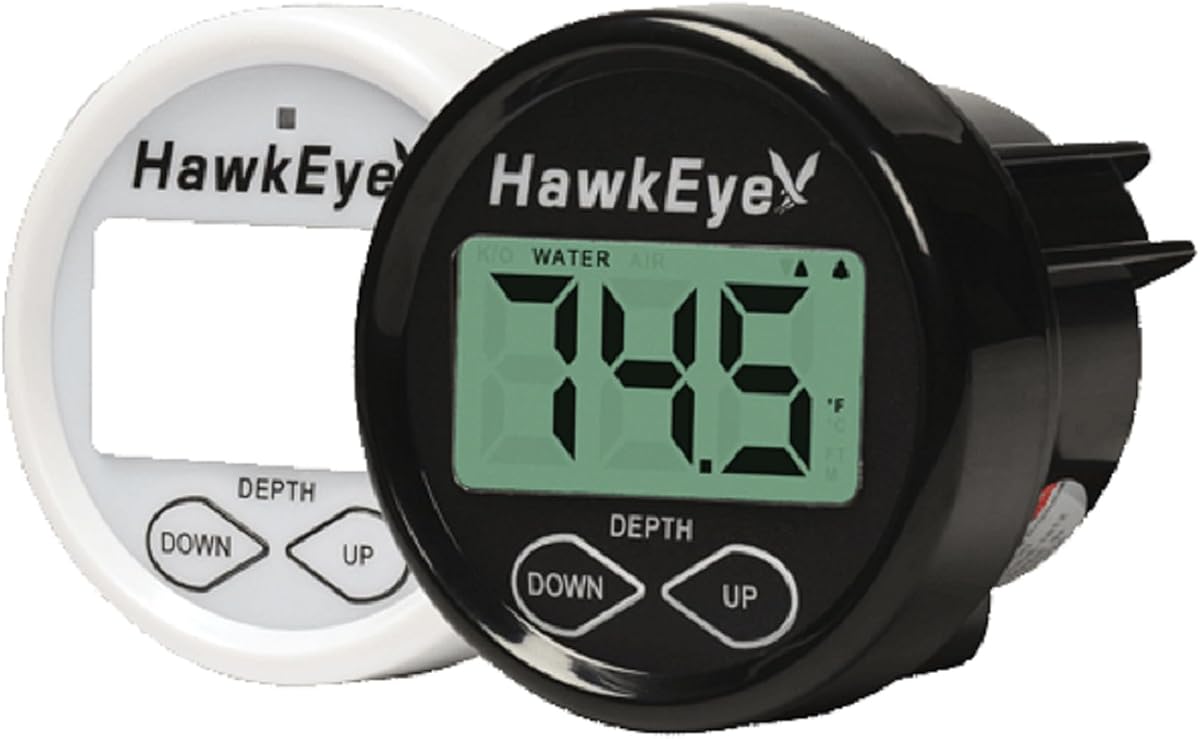
The HawkEye DT2BX-TM provides a robust in-dash solution for continuous depth and temperature monitoring. Its large display is designed to be seen clearly even at higher speeds.
We may earn a commission when you buy through this link, at no additional cost to you.
Temperature readings are available for both air and water helping you monitor environmental conditions. The Soft Glow backlit LCD display ensures visibility in low light without being too bright.
A three-stage warning system alerts you to shallow water with sound and light. The unit includes a transom mount transducer with sufficient cable to reach most installation points.
Best for boat owners who want a permanent installation. It offers reliable data and safety features that make it a worthy choice for regular water travel.
Water or air temperature readings displayed in Fahrenheit or Celsius on a Soft Glow backlit LCD display.
3-stage system signals alarm with audible alarm LED warning light and LCD indicators with one-touch muting.
We may earn a commission when you buy through this link, at no additional cost to you.
Selecting the right depth finder depends on your vessel type fishing style and budget. This guide breaks down key factors to consider before making a purchase.
Larger displays are easier to read in sunlight and provide more detailed graphics. However smaller handheld units save space and weight for portable use.
Look for backlit screens and anti-glare features if you often fish in bright conditions.
Modern devices may use CHIRP or ClearVu scanning for better target separation. Basic sonar is cheaper but offers less detail on fish shape and structure.
Prioritize units with adjustable sensitivity to reduce false alarms in rough water.
Choose between transom mount for boats or handheld for portable use. Some models offer glue-in options for specific hull materials.
Ensure the included transducer matches your boat material and hull thickness.
Most affordable units measure down to 300 or 600 feet. Deep water fishing may require higher range capabilities.
Verify the maximum depth matches your typical fishing location to avoid limitations.
Handhelds usually run on AAA batteries while boat units may use marine power. Battery save modes can extend runtime significantly.
Check replacement battery costs and availability for long-term usability.
Look for IPX7 water resistance ratings to protect against splashes and rain. Rugged builds withstand drops and vibration better.
Ensure the device can handle both fresh and saltwater if you fish in mixed environments.
Interfaces with dedicated buttons are easier to learn than touchscreens. Consider how quickly you can access settings while on the water.
Auto-tuning features simplify setup for casual anglers who prefer less manual control.
Boat units need secure mounting spots that do not interfere with steering. Handhelds often come with straps or floating designs.
Check installation requirements like hole sizes or wiring needs before purchasing.
When installing a transom mount ensure the transducer is aligned horizontally to avoid signal interference. For handhelds throw the sensor gently into the water and wait for the reading to stabilize.
Clean the transducer with fresh water after every use to prevent corrosion. Store the unit in a dry place and remove batteries if not using it for extended periods.
Regularly update firmware or software if your model supports it to maintain performance. Check connections and wires periodically for wear to ensure consistent data.
A depth finder primarily measures water depth to help you navigate safely. A fish finder uses sonar to detect fish and structure below the surface providing more detailed imaging.
Most modern affordable units are designed to work in both fresh and saltwater. Always check the product specifications to confirm saltwater durability and corrosion resistance.
Mount the transducer on the boat hull near the centerline ensuring it is horizontal. Secure it with screws and run the cable to the display unit making connections tight.
Yes many models are portable and designed for kayak use. Look for lightweight handhelds with neck straps or castable transducers that do not require permanent mounting.
CHIRP sends a continuous sweep of frequencies for better target separation. It provides crisper fish arches and detailed views of underwater structure compared to standard sonar.
Battery life varies but typically lasts between four to five hours of continuous use. Using battery save modes can extend this time depending on settings and usage habits.
Many units have IPX7 ratings meaning they can withstand immersion up to one meter briefly. However you should avoid submerging the entire unit unless explicitly stated as waterproof.
No a basic depth finder only needs a transducer to show water depth. GPS is an extra feature that helps mark waypoints and navigate but is not required for basic operation.
The Garmin Striker 4 and Handheld Fish Finder Portable stand out for their balance of features and affordability. Each option offers unique benefits depending on whether you prioritize imaging or portability.
Consider your primary fishing style and vessel size when selecting a model. Investing in durable materials and reliable brand support will ensure long-term value for your purchase.
Always verify current product details and features before buying. Stock availability and specifications may change so checking the latest information helps you make the best choice.