
Solid State Logic Super 9000
5.0Editor score
Dual mic pre options
Input flip for saturation
Stereo compressor pairing
This guide compares the top channel strips for recording to help you find the best preamp and processor for your vocal or instrument tracking needs.
Channel strips are essential tools for professional audio recording. They combine multiple processing stages into a single unit to shape sound before it hits your digital audio workstation.
We evaluated ten leading models based on sound quality, feature sets, build construction, and user feedback. Each product offers unique advantages for different recording scenarios and budgets.
Every pick highlights key strengths and ideal use cases for engineers and producers. Keep in mind that pricing fluctuates regularly so verify current costs before making your final purchase decision.
5.0Editor score

4.5Editor score

4.6Editor score
This side-by-side comparison helps you evaluate the critical specifications and features across all ten selected channel strips for recording environments.




The dbx DBX286SV Instrument stands out as a highly capable channel strip for recording vocal and instrument tracks. With a strong rating from users, it delivers reliable performance and comprehensive signal processing tools in a compact 1U rack unit.
We may earn a commission when you buy through this link, at no additional cost to you.
Its standout quality is the inclusion of four independent effects sections including compression, de-essing, enhancement, and gating. This allows you to shape tone and dynamics without needing outboard gear or software plugins during tracking.
While the EQ lacks deep parametric control, the enhancer adds useful clarity and punch to mixes. These trade-offs are acceptable given the price point and the unit's ability to handle live and studio signals effectively.
Anyone needing a full-featured analog processor for home or project studios should consider this model. It provides a professional signal chain in a budget-friendly package that integrates seamlessly into any recording workflow.
The combination of compression and de-essing ensures vocals stay present without harshness during critical listening sessions.
The loop-out jack lets you insert external hardware between the preamp and processing sections for customized signal paths.
We may earn a commission when you buy through this link, at no additional cost to you.
The PreSonus STUDIOCHANNEL offers a classic vacuum-tube sound that many engineers crave for warming up digital recordings. Its design focuses on delivering rich harmonics and smooth dynamics through a high-voltage Class A preamplifier stage.
We may earn a commission when you buy through this link, at no additional cost to you.
Key strengths include the variable-Q midband EQ and VCA compressor with soft or hard knee settings. These tools give precise control over tone shaping and dynamic range which is essential for professional vocal and instrument tracking.
Users should note that vacuum tubes wear out over time and may need replacement for consistent performance. Also, the lack of visual metering means you rely on your interface meters to monitor levels accurately during recording.
This unit is ideal for those seeking analog warmth and tactile control without moving to expensive vintage hardware. It bridges the gap between clean modern sound and classic vintage character effectively.
The 12AX7 tube adds pleasing saturation that glues tracks together and adds perceived loudness to soft performances.
Adjusting the Q of the midband lets you target specific frequencies for surgical cuts or broad tonal boosts.
We may earn a commission when you buy through this link, at no additional cost to you.
The Solid State Logic Super 9000 represents the pinnacle of modern analog channel strip design with legendary SSL sound heritage. It offers a pristine signal path and advanced features that justify its premium positioning in professional studios.
We may earn a commission when you buy through this link, at no additional cost to you.
You can choose between SuperAnalogue and VHD preamps to suit different source materials. The input flip feature allows you to route the VHD pre into the line path for intentional saturation which adds a creative edge to your tracks.
The cost is significant and might exceed budgets for smaller setups. However, for users demanding the best possible analog processing and transparency this unit delivers industry-standard performance that rivals large console channels.
High-end recording facilities and mastering engineers will appreciate the detail and depth this processor provides. It is an investment that pays off in improved mix clarity and professional polish across all source types.
Switching between preamp types lets you match the best analog character to your specific microphone or instrument source.
Linking two units as a stereo pair ensures consistent compression and EQ across paired tracks for a unified sound.
We may earn a commission when you buy through this link, at no additional cost to you.
The Solid State Logic SiX brings premium analog processing into a compact 500 Series format for space-constrained studios. It maintains the sonic integrity and build quality expected from SSL while fitting into modular racks easily.
We may earn a commission when you buy through this link, at no additional cost to you.
Its single knob compressor design simplifies workflow by combining threshold and gain into one intuitive control. The switched high pass filter helps eliminate low frequency rumble before it reaches your digital audio workstation interface.
Because it is a 500 Series module you need a compatible rack chassis which adds to the total system cost. Also the EQ is more limited than full rack units so it suits specific tonal tasks rather than full channel control.
This strip is perfect for engineers who want analog warmth for critical tracks like lead vocals or bass. It offers a taste of high-end SSL processing without the size and expense of a full rack channel strip.
The simplified control set lets you dial in compression quickly during live sessions without getting lost in menus.
You can pair this with other 500 Series modules to create a custom signal path that fits your exact workflow needs.
We may earn a commission when you buy through this link, at no additional cost to you.
The ART Pro Channel III offers tube-based channel strip features at an accessible price point for home studios. Its main appeal lies in the switchable options that let you tailor the signal path to your recording needs.
We may earn a commission when you buy through this link, at no additional cost to you.
You can select between Opto and FET compression voicings to match the dynamic response you want for different instruments. The switchable microphone impedance allows better matching with various capsule types for improved frequency response.
However user reviews indicate potential issues with build quality and component consistency. These factors make it a risky choice compared to more established brands that offer reliable performance out of the box.
Consider this model only if you need tube characteristics on a tight budget and can handle potential troubleshooting. For critical professional work, investing in a more robust unit may save time and effort in the long run.
Adjusting the input impedance helps optimize tone for vintage mics that benefit from specific load characteristics.
Choosing between Opto and FET allows you to select a faster or slower attack time for different dynamic control.
We may earn a commission when you buy through this link, at no additional cost to you.
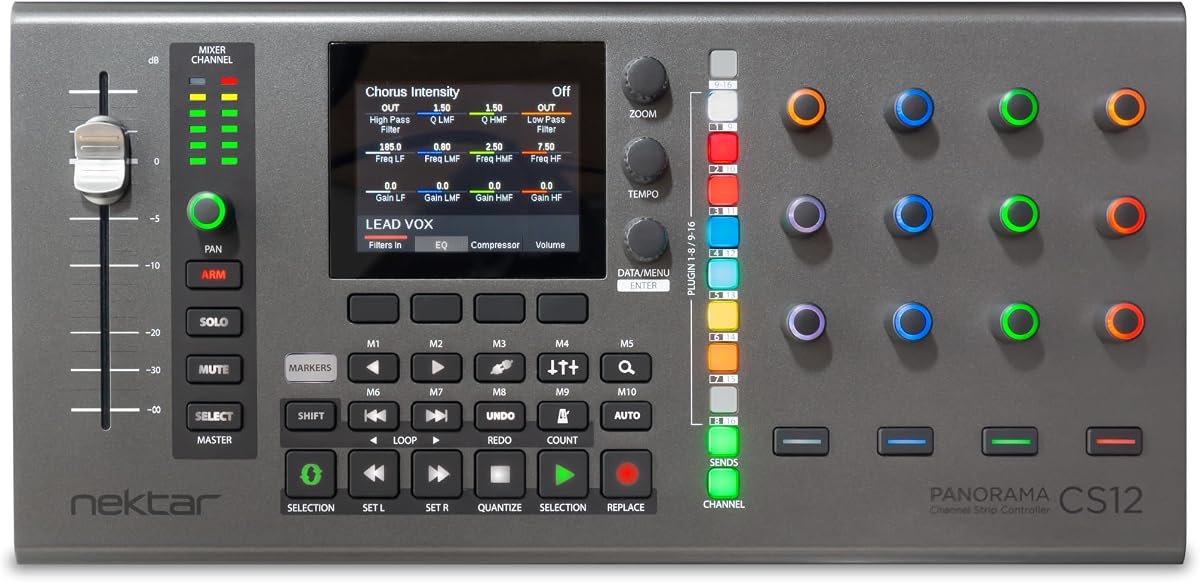
The Nektar Panorama CS12 functions as a physical controller for channel strip plugins rather than an analog processor. It brings the tactile experience of mixing hardware to your digital audio workflow with precise motorized feedback.
We may earn a commission when you buy through this link, at no additional cost to you.
Its motorized fader and rotary encoders give you hands-on control over plugin parameters. The transport buttons and display simplify navigating your project without constantly looking at a screen which speeds up recording and mixing.
This device does not process audio directly so you rely on specific software plugins to handle the sound shaping. If your preferred DAW or plugins are not supported you may not get full value from the hardware controls.
Engineers who want analog-style control in a fully digital environment will find this tool valuable. It bridges the gap between mouse clicking and console mixing to improve your creative focus during sessions.
The faders and knobs map directly to your channel strip settings so changes happen in real time without clicks.
Start and stop buttons let you manage playback and recording without reaching for your keyboard or mouse.
We may earn a commission when you buy through this link, at no additional cost to you.
The YAMAHA MG10XU serves as a versatile entry-level solution combining mixing, preamplification, and audio interface capabilities. It features D PRE amplifiers known for delivering natural sound that works well for live and studio recording.
We may earn a commission when you buy through this link, at no additional cost to you.
Key strengths include the integrated SPX digital effects and one-knob compressors on select channels. These tools simplify live sound or quick tracking where you need immediate tone shaping without additional hardware or software.
The compression is limited to specific channels and the EQ is fixed to three bands. For detailed channel strip processing you might need external plugins or processors though this unit covers most basic tracking needs well.
This mixer is ideal for home studios and podcast setups that need multiple inputs and direct USB recording. It provides a professional foundation for recording that saves cost and space compared to separate components.
USB connectivity lets you send multi-channel audio to your computer without buying a separate sound card.
The compressor knob simplifies dynamic control for guitars and vocals so you do not need complex parameter tuning.
We may earn a commission when you buy through this link, at no additional cost to you.
The Solid State Logic Revival 4000 brings the legendary analog character of the iconic 4000 series into a compact 1U chassis. It aims to deliver that signature sound with modern reliability for today's recording environments.
We may earn a commission when you buy through this link, at no additional cost to you.
Its primary strength is the commitment to an all-analogue signal path which avoids digital conversion until the output stage. This preserves the warmth and harmonic richness that engineers seek when tracking lead vocals or acoustic instruments.
Data on user satisfaction is limited at this stage so performance consistency may vary compared to older proven designs. The price reflects the prestige and technology involved so it remains a niche product for specific studio needs.
Users chasing that classic console sound in a standalone unit should explore this model further. It offers a direct link to industry history in a format that fits modern production workflows and rack spaces.
Avoiding digital processing before the output stage ensures the signal remains as natural as possible throughout.
This strip allows you to introduce classic sound into hybrid setups where analog and digital gear coexist seamlessly.
We may earn a commission when you buy through this link, at no additional cost to you.
The Universal Audio LA-610 Mk II is a benchmark for tube-based channel strips offering a warm and musical sound. Its combination of a tube preamp and optical compressor delivers the smooth dynamics and rich harmonics that professionals love.
We may earn a commission when you buy through this link, at no additional cost to you.
Key strengths include its ability to handle multiple input types from microphones to instruments with equal grace. The EQ section provides musical tonal shaping that enhances tracks without sounding artificial or colored in an unpleasant way.
The main trade-offs are the high cost and physical size which may limit its use in smaller home studios. However for those seeking a legendary analog sound this unit provides a level of quality that defines industry standards.
Recording engineers who prioritize tone quality over budget will find this channel strip invaluable. It delivers the classic sound that has shaped decades of hits and provides a solid foundation for any professional recording.
The optical compressor responds naturally to audio signals ensuring smooth leveling without pumping or breathing.
Line and instrument inputs allow you to connect diverse sources without needing extra adapters or preamps.
We may earn a commission when you buy through this link, at no additional cost to you.
The Neve 1073SPX-D combines the iconic 1073 preamp and EQ with a high-resolution USB audio interface for a complete recording chain. It brings the classic Neve sound to modern digital workstations with exceptional clarity.
We may earn a commission when you buy through this link, at no additional cost to you.
Class A circuitry ensures low noise and high headroom which preserves signal integrity for critical recording applications. ADAT I/O allows you to expand your input count easily if you need to record more instruments simultaneously.
This unit represents a significant investment and routing can be complex compared to simple USB interfaces. However the sound quality and flexibility make it a powerful choice for studios that want analog tone with digital convenience.
Recording professionals seeking the best of analog heritage and modern connectivity will find this tool rewarding. It simplifies your workflow by handling both signal processing and conversion in one reliable rack unit.
The 1073 EQ and preamp design provides a warm and punchy sound that cuts through dense mixes effortlessly.
ADAT I/O lets you add more channels via external converters without adding more cables to your main interface.
We may earn a commission when you buy through this link, at no additional cost to you.
Selecting the right channel strip depends on your recording needs budget and desired sound character. These factors will guide your decision.
The preamplifier sets the foundation for your recorded sound. Look for units with low noise high headroom and clean gain staging to capture detail without unwanted coloration.
Prioritize preamps that offer enough gain for dynamic microphones while maintaining clarity for quiet sources like acoustic instruments.
A good channel strip provides at least a three-band EQ. Parametric mid frequencies allow precise targeting of resonant frequencies which helps clean up muddy recordings.
Choose units with variable Q controls if you need surgical control over specific tones during the tracking phase.
Compression and gating help manage dynamic range in real time. Look for flexible attack and release settings to shape transients without crushing the natural feel of a performance.
Optical compressors offer smooth leveling while VCA types provide precise control depending on your source material.
Analog strips offer tangible sound and harmonic richness but lack recallability. Digital plugins offer flexibility and recall but may lack the tactile experience and subtle saturation of analog circuitry.
Decide based on whether you prioritize workflow and tone or convenience and cost in your recording setup.
Ensure the unit supports the types of inputs you use such as XLR 1/4 inch TRS and instrument Hi-Z. Balanced outputs are essential to reduce noise over long cable runs.
Additional options like insert sends or loop-outs expand connectivity for external hardware and modular processing.
Channel strips come in rackmount 1U formats or 500 series modules. Choose a form that fits your available rack space and power requirements without adding excessive clutter.
Build quality impacts long-term reliability so look for rugged metal chassis and durable controls that withstand daily use.
Prices vary widely from budget units to high-end professional strips. Determine your spending limit and prioritize the features that matter most for your typical recording sessions.
A slightly higher initial investment often pays off in reliability and sound quality that improves your final mixes.
Begin by setting all controls to neutral positions to avoid sudden level spikes when connecting microphones or instruments. Always check phantom power settings before engaging condenser microphones.
Use the compressor gently during tracking to avoid permanent distortion. Adjust threshold and ratio to tame peaks while preserving the natural dynamics of the performance.
Store your unit in a stable environment away from moisture and extreme temperatures. Clean controls regularly with dry tools and avoid spraying liquids directly on the chassis to prevent damage.
A channel strip combines multiple audio processing stages such as preamplification, equalization, and compression into one unit. It allows engineers to shape sound before recording to reduce the need for later correction.
Not strictly since software plugins can emulate most functions but an analog strip provides tactile control and unique sonic character that many producers prefer. It is optional but beneficial for workflow.
Yes most channel strips connect via balanced outputs to digital interfaces. The processed signal from the strip becomes the input for your audio interface which then converts it for your computer.
The main types include optical, VCA, and FET compressors. Optical units are smooth and musical while VCA units are precise and FET units offer fast aggressive shaping for dynamic control.
Adjust gain until the input level peaks around the optimal range without clipping. Use the unit's LED meter to ensure the signal sits healthy in the green or yellow zones before processing.
Rack units typically offer more features and build durability. Desktop strips are compact and affordable but may lack the full feature set of larger units designed for studio environments.
We highlighted top picks across budget and premium categories including the dbx 286s for versatility and the Solid State Logic Super 9000 for high-end processing. Each unit serves distinct needs.
Prioritize features like preamp quality and EQ flexibility over extra controls. Matching the right tool to your primary instrument and genre will save time and improve results significantly.
Remember that prices fluctuate often so always verify current pricing and warranty terms before purchase. Choosing a reliable dealer ensures support and protection for your investment.