
400AH Lead-Acid Battery Desulfator Battery Maintainer
4.0Editor score
Automatic voltage setting
Supports 12V to 48V
Affordable pulse maintenance
Simple terminal connection
Explore the top battery desulfator solutions for extending lead acid battery life with our detailed comparison of chemical additives and electronic pulse
Choosing the right battery desulfator solution can significantly extend the lifespan of your lead acid batteries. Whether you maintain golf carts, RVs, or solar systems, understanding how sulfation affects performance is crucial. This guide helps you identify the best options available today.
We compared ten leading products based on compatibility, ease of use, and reported effectiveness. Our analysis covers both chemical additives and electronic pulse devices designed to dissolve sulfate buildup. We evaluated user feedback and technical specifications to rank these solutions accurately.
Each pick includes detailed pros, cons, and usage instructions to help you make an informed decision. Prices and availability may change over time, so always verify current details before purchasing. Our goal is to provide reliable information for maintaining your power storage systems effectively.
4.0Editor score

4.1Editor score

3.8Editor score
The following table provides a side by side comparison of all ten products analyzed in this guide. It highlights key specifications such as voltage compatibility, application type, and intended battery types to help you quickly identify the right solution for your specific needs.




This electronic battery desulfator offers a professional solution for rejuvenating lead acid batteries without chemical additives. With a rating of 4.1 stars, users appreciate its ability to handle everything from 12V car batteries to 72V golf cart systems. It stands out for its compatibility with AGM, Gel, and flooded types.
We may earn a commission when you buy through this link, at no additional cost to you.
The device uses advanced high frequency low current pulses to prevent and dissolve lead sulfate buildup. This process helps restore battery capacity and brings aging units back to near new condition over time. It operates safely with low voltage cutoffs and reverse polarity protection built directly into the aluminum shell.
While effective, users should note that improvements typically take two to four weeks of consistent use. It is designed for batteries that still accept a charge but may not hold power as well as before. Dead or frozen batteries will not respond to this treatment method.
This product is ideal for owners of RVs, solar systems, and golf carts who want a universal maintenance tool. It serves as a reconditioner during charging, discharging, or standby. If you need a versatile solution for various battery voltages, this desulfator is a top recommendation.
Supports a wide range of voltages and battery chemistries for one device.
Includes smart cutoffs and fuses to protect your battery and equipment.
We may earn a commission when you buy through this link, at no additional cost to you.
For those seeking an affordable electronic desulfator, this device offers reliable performance without breaking the bank. It features auto setting capabilities that recognize battery voltage when connected. Users report feeling performance improvements after two to three weeks of consistent use.
We may earn a commission when you buy through this link, at no additional cost to you.
The desulfator uses high frequency peak pulses to prevent lead sulfate crystals from sticking to electrodes. This helps keep the battery in a near new state and extends its overall life. It can be used together with a standard charger to maintain power during long periods.
Before using this product, ensure your battery voltage is above 11.5V for proper operation. If the voltage is too low, charge the battery first before connecting the desulfator. This ensures the device functions correctly and avoids potential operational issues.
This maintenance tool is perfect for 12V to 48V systems with a maximum of 400 AH. It simplifies the process of keeping batteries healthy without complex manual settings. If you want a budget friendly way to extend battery life alongside your regular charging routine, this is a strong choice.
Automatic voltage detection removes the guesswork from setup.
Provides electronic desulfation benefits at a very accessible price.
We may earn a commission when you buy through this link, at no additional cost to you.
This gallon size solution is designed for professionals or owners managing multiple lead acid batteries at once. It treats three to six batteries with enough solution to spare. Many users value that it is made in the USA with a non toxic formula for safe handling.
We may earn a commission when you buy through this link, at no additional cost to you.
The formula chemically dissolves hardened lead sulfate crystals that block electrical flow on battery plates. After adding it to cells, a full charge cycle is run to let the product work. Most customers see measurable improvement after seven to ten days of regular charging.
It works best on batteries that still accept a charge but are weak or underperforming. It will not work on gel, AGM, or maintenance free batteries that have frozen cells. You simply add it before storage or seasonal use to extend battery life effectively.
Ideal for golf courses, marina operators, and farm equipment fleets, this product reduces the need for costly replacements. Its non toxic nature makes it safe to handle in a garage or on a course. If you need a bulk solution for maintaining several batteries, this is a premium option.
Large volume makes it ideal for managing multiple batteries efficiently.
Non toxic formula allows for safe use without special gear.
We may earn a commission when you buy through this link, at no additional cost to you.
This 64 oz additive is a proven choice for bringing old and weak lead acid batteries back to life. Users report it restores batteries better than standard desulfators in many cases. It is versatile enough for cars, golf carts, motorcycles, and other machinery.
We may earn a commission when you buy through this link, at no additional cost to you.
The product works by removing harmful sulfation buildup and improving the chemical balance inside the battery. This increases charge capacity and significantly extends the overall life. It acts as a gentle refill and restorer, protecting internal components while boosting performance.
While effective, it is specific to lead acid batteries and may not help other types. Consistent use and proper charging are key to seeing the full benefits. The price point makes it a budget friendly solution for reducing costly battery replacements.
If you are looking to boost charge capacity without spending a fortune on new batteries, this additive is a strong candidate. It ensures reliable performance for your vehicles and equipment by extending battery lifespan. It offers a safe way to rejuvenate aging lead acid power sources.
Restores internal chemical balance to improve how the battery holds power.
Helps avoid expensive replacements by extending existing battery life.
We may earn a commission when you buy through this link, at no additional cost to you.
This solution is specifically designed for golf carts but works on all flooded lead acid batteries. It helps dissolve sulfate deposits that limit charging efficiency. Users can treat an entire six battery golf cart pack with one 64 oz bottle and have solution remaining.
We may earn a commission when you buy through this link, at no additional cost to you.
The formula penetrates cells to break down sulfate buildup, helping batteries accept a stronger charge. For preventative maintenance, it is recommended to use it once per year. It is made in the USA with a commitment to quality and customer satisfaction.
Best results are typically achieved on batteries one to five years old that still accept a charge. It is not compatible with AGM, Gel, or frozen batteries. Using this before long storage periods or at the start of the season yields the best outcomes.
Golf course owners or individual users with multiple carts will appreciate the larger bottle size. It provides a non toxic way to renew aging batteries without draining or special tools. If you need a dedicated solution for your golf cart fleet, this is a reliable choice.
Formulated specifically to address common issues in golf cart batteries.
Produced in the USA with controlled manufacturing standards for consistency.
We may earn a commission when you buy through this link, at no additional cost to you.
Battery Renew Solution is made for serviceable lead acid batteries that still accept a charge but are underperforming. One gallon treats three to six batteries depending on voltage and cell count. It is produced in the USA to meet high quality standards.
We may earn a commission when you buy through this link, at no additional cost to you.
This solution restores charging capacity in flooded lead acid batteries by breaking down harmful lead sulfate buildup. After adding the correct dose per cell, charge normally for ten days to let the formula work. It is designed to help batteries last longer with regular maintenance use.
It will not revive dead, damaged, or end of life batteries. Users should apply it when a battery holds less charge than it should or before seasonal storage. The gallon size makes it the right choice for golf courses or solar installations.
For those managing fleets of forklifts or carts, this product offers a cost effective maintenance solution. It ensures customers get a product that meets the highest quality standards. If your batteries are weak but still functional, this is a targeted solution to consider.
Large volume is designed for maintaining multiple units at once.
Produced in the USA to ensure product consistency and quality.
We may earn a commission when you buy through this link, at no additional cost to you.
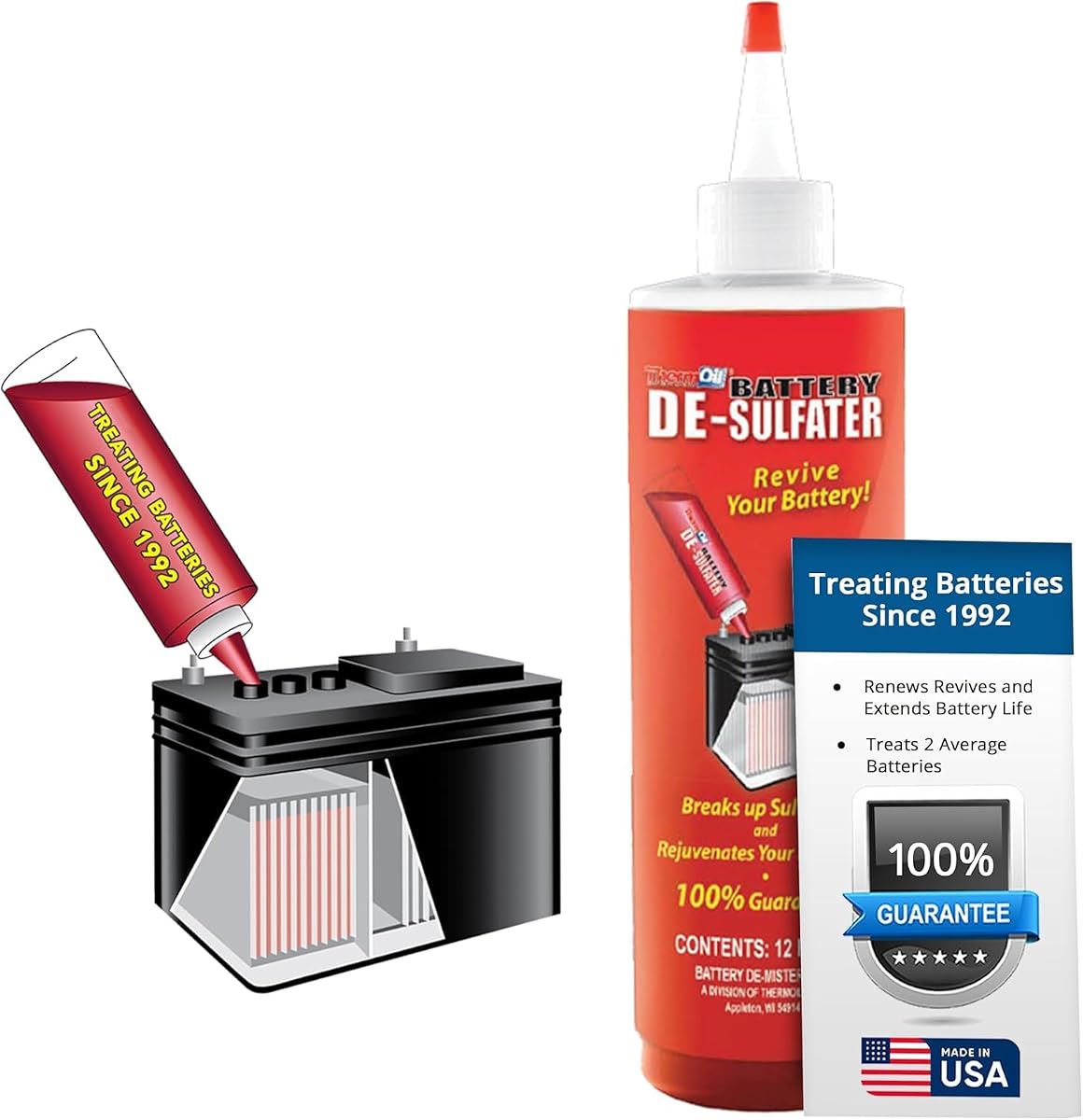
Thermoil De-Sulfater contains zero Epsom salts unlike many other cheaper options. It has been treating batteries since 1992 and works every time in mechanically sound sulfated lead acid batteries. This reliability is backed by a 100% guarantee for peace of mind.
We may earn a commission when you buy through this link, at no additional cost to you.
The non acidic formula enhances battery performance by breaking down sulfation corrosion on plates. Users report reduced internal heating and increased power efficiency after use. It acts as a protector to prevent damage from overcharging and extends battery life regardless of age.
This smaller 12 oz bottle is ideal for single or small scale maintenance. Simply add it as an electrolyte additive and let it work its magic. It is safe for all lead acid batteries and offers a risk free investment for battery maintenance.
For those who prefer tried and true formulas over modern chemicals, this is a strong option. The brand history and guarantee provide confidence in the product. If you need a small size for specific maintenance needs, this desulfator is worth considering.
A product that has been used and trusted since 1992.
Non acidic and non hazardous for safe handling and application.
We may earn a commission when you buy through this link, at no additional cost to you.
This 64 oz version offers the same trusted formula in a larger quantity. It contains zero Epsom salts and is designed for ease of use. The non acidic nature helps preserve the integrity of both new and used lead acid batteries.
We may earn a commission when you buy through this link, at no additional cost to you.
By breaking down sulfation corrosion, it enhances battery performance and reduces internal heating. Users see elimination of resistance by up to 50 percent. It acts as a protector against overcharging to extend the life of mechanically sound batteries.
It is a risk free investment backed by a guarantee. Simply add it as an electrolyte additive to your lead acid battery and let it work. The larger size makes it suitable for multiple applications compared to the smaller 12 oz bottle.
If you need a balance between quantity and ease of use, this option is ideal. It provides a hassle free solution to battery maintenance for those who want proven results. For users needing more volume for multiple maintenance events, this is a solid choice.
Helps reduce internal resistance to improve how the battery works.
Maintains the structural health of both new and used batteries.
We may earn a commission when you buy through this link, at no additional cost to you.
This solution helps break down lead sulfate buildup on battery plates to restore lost capacity. It is designed to save money by improving performance before investing in costly replacements. One 64 oz bottle treats an entire six battery golf cart pack with solution remaining.
We may earn a commission when you buy through this link, at no additional cost to you.
For maximum results, allow up to seven to ten days of normal charging cycles after treatment. It works on all flooded lead acid batteries across multiple voltages. It is proudly produced in the USA with a commitment to performance.
Best results are typically achieved on batteries one to five years old that still accept a charge. It is not compatible with AGM, Gel, or frozen batteries. Users should add it at the start of golf season or before long storage periods.
Despite some lower ratings compared to other products, it remains a viable option for renewal. If you are looking to maintain your batteries rather than replace them immediately, this is a practical choice. It provides a non toxic way to extend battery life effectively.
Helps avoid buying new batteries by improving existing performance.
Allows for treatment without draining or special tools.
We may earn a commission when you buy through this link, at no additional cost to you.
This device features automatic operation that reconditions lead acid batteries through controlled charging cycles. It utilizes specialized electronic pulses to help revive and maintain battery performance. The connection process is simple, making it easy to set up.
We may earn a commission when you buy through this link, at no additional cost to you.
It helps dissolve sulfate crystal buildup on battery plates to restore capacity and extend life. It is versatile and works with car, marine, RV, and deep cycle batteries. The automatic nature makes it convenient for long term maintenance.
Users should expect time to see results as the desulfation process takes place gradually. It is designed for continuous maintenance and reconditioning rather than instant fixes. If you have various types of lead acid batteries, this tool provides broad support.
For those who want a hands off approach to battery health, this is an excellent solution. The pulse technology helps keep batteries in optimal condition with minimal effort. If you need a reliable automatic desulfator for various power needs, this is a solid option.
Runs automatically with minimal user intervention for ease of use.
Uses pulses to dissolve crystals that reduce battery capacity.
We may earn a commission when you buy through this link, at no additional cost to you.
Choosing the right battery desulfator solution involves understanding your battery type and maintenance goals. Consider whether you need a chemical additive or an electronic device for your needs.
First ensure the solution is compatible with your battery chemistry. Most desulfators work on flooded lead acid batteries but not on AGM or Gel types. Electronic devices often offer wider compatibility while chemical additives are usually limited to flooded types.
Always verify the product specs match your battery type before purchasing to avoid damage or ineffective results.
Chemical additives are poured into cells and require charging to activate. Electronic desulfators connect to terminals and work during charging or standby. Decide whether you prefer manual pouring or automatic maintenance based on your workflow.
Choose the method that fits your comfort level and how frequently you can access the batteries.
If you manage a fleet or multiple batteries, larger gallon sizes may be more cost effective. Single batteries can be treated with 64 oz bottles or 12 oz options. Consider the total number of batteries you need to maintain at once.
Buy larger volumes only if you have the volume to use them within a reasonable time.
Look for non toxic and non hazardous formulas that are safe to handle in a garage. Ensure the product meets environmental standards and does not contain harmful salts. Safety features like fuses or cutoffs in electronic devices also prevent equipment damage.
Prioritize safety to protect yourself, your equipment, and the environment during application.
Compare the cost per treatment to evaluate long term value. While additives may be cheaper upfront, electronic devices can offer repeated use. Consider the lifespan of the solution and whether it extends battery life effectively.
Select the option that offers the best balance of initial cost and long term benefits for your needs.
Research the brand history and customer feedback to gauge reliability. Products with guarantees or a history of success often perform better. Look for reviews that specifically mention performance with your type of battery.
Stick with reputable brands that offer support and stand behind their product claims.
Some solutions work in days while others take weeks to show full results. Electronic devices typically need multiple charging cycles to complete desulfation. Plan your maintenance around downtime for your equipment or vehicles.
Consider how quickly you need the batteries to be restored before purchasing.
Determine whether you need a one time fix or ongoing maintenance. Some products are designed for annual preventative use while others treat immediate sulfation issues. Match the frequency of the treatment to your maintenance schedule.
Choose a solution that fits your regular maintenance routine for best results.
Before starting any treatment, ensure your battery is charged above 11.5V and in good condition. For chemical additives, open the cell caps and add the recommended amount per cell based on voltage. Reinstall caps and run a full charge cycle to activate the solution.
For electronic desulfators, connect red to positive and black to negative terminals carefully. Let the device run continuously for several weeks while the battery is in storage or on charge. Monitor the battery temperature and voltage to ensure safe operation.
After treatment, check battery capacity and voltage with a multimeter to confirm results. Continue regular maintenance to prevent sulfation from returning. Store unused chemical solutions in a cool dry place away from children and pets.
Most battery desulfators are designed for lead acid batteries but not all types. Chemical additives usually work only on flooded lead acid. Electronic devices often support AGM and Gel types. Always check the product description for compatibility details before purchase.
Results depend on the desulfator type and battery condition. Chemical additives typically show improvement after 7 to 10 days of regular charging. Electronic devices may take 2 to 4 weeks to complete the desulfation process. Patience is key for best outcomes.
Generally no most desulfators are designed for weak but rechargeable batteries. If a battery is completely dead frozen or has dry cells it likely needs replacement. Check battery voltage before treatment to confirm it is still viable for restoration.
Yes most modern chemical desulfators are non toxic and safe to handle. Look for products labeled non hazardous and non acidic. Always wear gloves as a precaution and avoid direct contact with eyes or skin during application.
Electronic desulfators are generally safe to connect while charging or in storage. However they are not designed to be used while a vehicle is in motion. Follow manufacturer instructions regarding safe connection and operation times for your specific unit.
No draining is usually required for most desulfator solutions. You can add the additive directly to the cells or connect the electronic device to the terminals. Keep the battery charged and allow the product to work through the electrolyte.
We reviewed ten effective battery desulfator solutions ranging from chemical additives to electronic pulse devices. Top picks included versatile electronic models and bulk chemical options for fleets. Each product offers unique benefits for extending lead acid battery life.
Prioritize compatibility with your battery type and your specific maintenance needs. If you manage many batteries, look for gallon sizes or multi battery treatments. For individual users, smaller bottles or affordable electronic units may be more suitable.
Always check current prices and availability as these can change over time. Maintaining your batteries regularly can save significant money in replacement costs. With the right desulfator solution you can enjoy longer lasting and more reliable power.