
JBER 4Pack Acoustic Foam
4.2Editor score
Lightweight seamless blending
Efficient sound absorption
Great value studio acoustics
This guide compares the top bass traps for recording rooms to help you choose the best acoustic treatment for improving low frequency response in any studio
Finding the right bass traps for recording rooms is essential for achieving clear and balanced audio. These acoustic panels target low-frequency standing waves that often muddy recordings and compromise mixing accuracy in untreated spaces.
We evaluated ten highly rated bass trap products based on their absorption capabilities, build quality, ease of installation, and overall value for money. Our analysis considers real user feedback and technical specifications to provide a trustworthy list.
Each pick highlights specific strengths and ideal use cases to help you match the treatment to your room size and acoustic needs. Remember that availability and shipping details may vary, so check the latest information before ordering.
4.2Editor score

4.5Editor score
4.0Editor score
Below is a side-by-side comparison of all ten bass trap options to help you quickly assess their dimensions, materials, and specific design features for your recording room needs.



The TroyStudio Bass Traps offer a reliable solution for treating low frequencies in home recording environments. With a solid 4.5 star rating from users, these dense foam panels are praised for their ability to reduce echoes and improve clarity in vocal and instrument recordings.
We may earn a commission when you buy through this link, at no additional cost to you.
Each pack includes twelve panels measuring four by four by twelve inches, providing substantial coverage for small to medium rooms. The high density polyurethane construction ensures that the foam effectively attenuates low-pitched sounds that typically accumulate in corners, leading to a cleaner monitoring experience.
While the panels are designed for corner mounting, they require you to purchase spray adhesive or tape separately. This adds a small step to the setup process but allows for a cleaner installation compared to using nails or screws that might damage walls.
For producers and voice-over artists looking for an affordable yet effective acoustic treatment, these traps are a top recommendation. Their eco-friendly and flame-retardant properties add an extra layer of safety for any studio setup.
The thick and dense design of these bass traps specifically targets standing waves that muddy your mix, ensuring that bass notes are tighter and more defined during playback.
Manufactured to meet California Technical Bulletin 117 standards, the foam is flame-retardant and non-toxic, making it a safe choice for long-term use in enclosed spaces like bedrooms or offices.
We may earn a commission when you buy through this link, at no additional cost to you.
JBER delivers a professional look without a high price tag with these corner bass traps. Aimed at home studios and small offices, this four-pack provides a quick way to finish off your acoustic treatment plan. Users appreciate the sharp square edges that blend seamlessly with wall panels.
We may earn a commission when you buy through this link, at no additional cost to you.
The foam is designed to absorb low and mid frequencies to flatten the room response. While it may not have the extreme depth of super chunk traps, it effectively reduces flutter echoes and unwanted reflections. The lightweight nature makes it simple to position without tools.
One consideration is that the four-pack covers limited space compared to larger sets. You may need to buy multiple packs to treat all corners of a larger room. However, the cost per unit remains very competitive for budget-conscious creators.
If you are starting your first studio setup, these traps offer a smart balance of form and function. They transform a muddy sounding room into a more pleasant environment for mixing and listening at a minimal investment.
Unlike rough foam that looks industrial, these traps feature sharp square edges that mimic the clean finish of professional studio gear, enhancing the visual appeal of your workspace.
You can affix these panels to ceilings or walls using glue, tape, or even nails, giving you the flexibility to choose a mounting method that suits your rental or ownership situation.
We may earn a commission when you buy through this link, at no additional cost to you.
For serious mixing engineers, the Foroomaco Delta Bass Traps provide the depth needed to tame deep bass frequencies. These traps are engineered with a substantial 16.5 inch body, offering more absorption than standard flat panels. They target the long vertical lines where low-frequency buildup commonly collects.
We may earn a commission when you buy through this link, at no additional cost to you.
The open-cell foam construction is key to their performance, allowing sound waves to penetrate deep into the material. This design helps reduce boomy corner buildup so kick drums and bass notes are easier to judge. The flat top and bottom surfaces allow you to stack multiple units for full-height coverage.
While the price is higher than basic wedge foam, the performance gain in low-end control justifies the investment for critical listening environments. They are modular, meaning you can start with one pair and expand as your room requirements grow over time.
Ideal for home studios that need a clean look without sacrificing acoustic performance, these traps pair well with reflection point panels. They ensure your monitoring position remains accurate, which is vital for making professional-quality mixes.
The flat surfaces on the top and bottom allow you to stack these traps from floor to ceiling, ensuring continuous treatment of the vertical corner that often causes the most resonance issues.
The deep open-cell foam provides substantially more treatment depth than standard acoustic wall panels, effectively capturing low frequencies that typically pass right through thinner materials.
We may earn a commission when you buy through this link, at no additional cost to you.
This eight-pack option provides ample coverage for treating multiple corners in a recording studio. The traps measure eight by eight by twelve inches, offering a substantial footprint for absorbing sound energy. They are designed with high-density foam to specifically target low-frequency standing waves.
We may earn a commission when you buy through this link, at no additional cost to you.
Safety is a priority with these units as they pass CA117 testing standards for fire-retardant performance. This feature is crucial for professional environments where electrical equipment and foam are in close proximity. The dense structure ensures strong sound absorption without harming the environment or your health.
The traps arrive compressed to save on shipping space and cost. You will need to allow them to expand for up to forty-eight hours after opening before mounting to ensure they maintain their shape and effectiveness. This is a standard practice for foam acoustic treatment.
For larger rooms or multiple rooms needing treatment, this value pack is a practical choice. It allows you to treat all four corners plus additional boundary areas to create a more consistent acoustic environment for recording and playback.
Always open the package and place the traps in a well-ventilated area for up to two days to ensure they fully expand to their normal shape before installation.
The foam meets B1 class fire-retardant performance standards, providing peace of mind regarding safety in any studio, office, or home theater setting.
We may earn a commission when you buy through this link, at no additional cost to you.
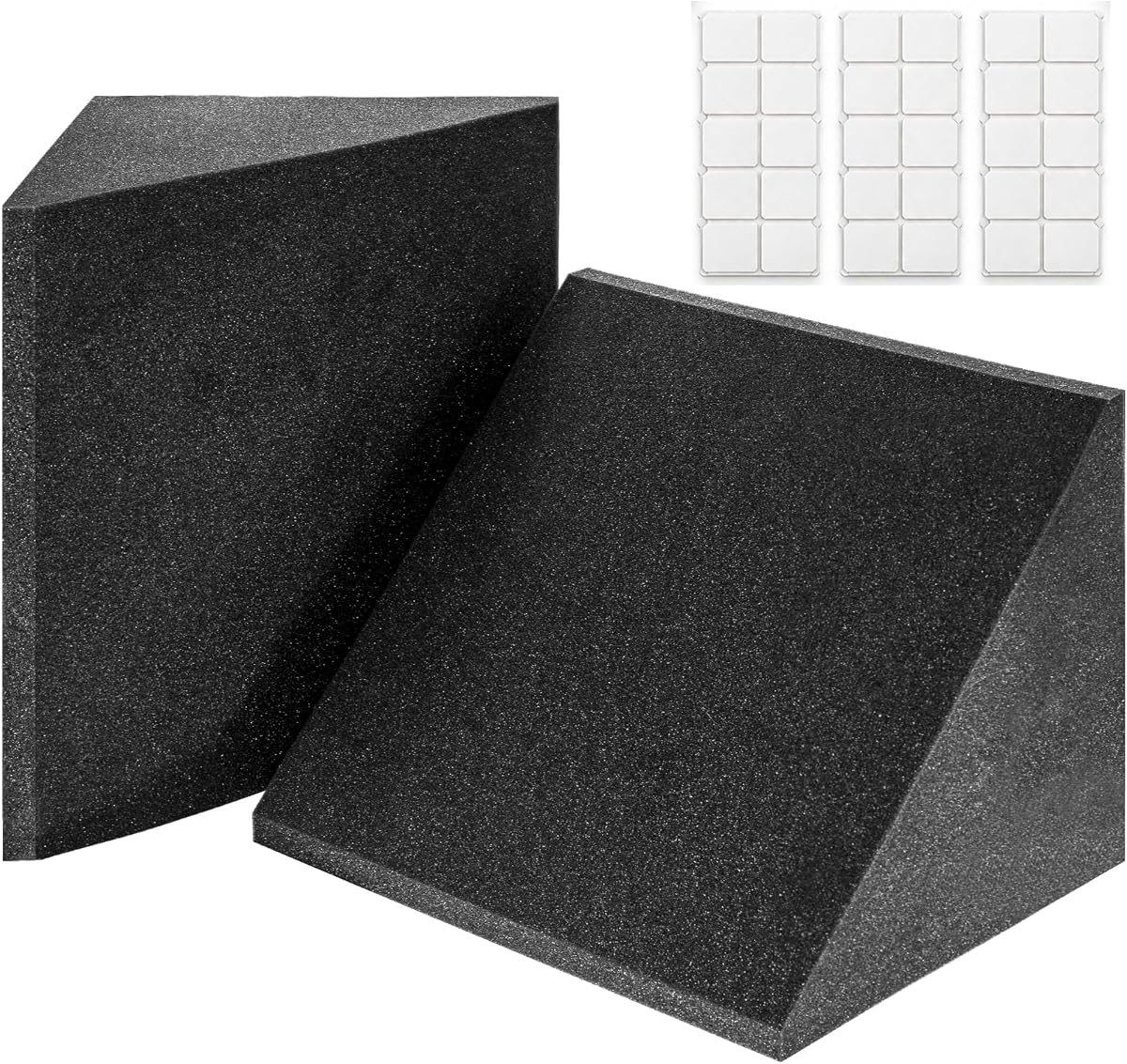
These triangular traps are purpose-built for the junction where two walls meet the ceiling, a common hotspot for low-frequency buildup. The design ensures you treat the ceiling corners without wasting your wall space for other acoustic panels. Each unit measures 16.5 inches on the face with a 12 inch depth.
We may earn a commission when you buy through this link, at no additional cost to you.
Using deep open-cell polyurethane foam, these traps provide substantial porous treatment depth. This helps reduce boomy, muddy corner buildup so bass notes and kick drums are easier to evaluate. It is a clean way to handle the upper parts of your room for acoustic issues.
The four-pack allows you to treat all ceiling corners in a standard room. This complements wall corners treatment for a comprehensive room system. However, ceiling mounting requires a bit more planning than wall installation to ensure they stay secure over time.
For producers who have already treated walls but still struggle with low-end issues, these traps are a targeted solution. They fit into the trihedral corners effectively and help create a cleaner monitoring environment without blocking your view of the room.
These traps are designed specifically for the three-surface junction where two walls meet the ceiling, targeting a common low-frequency buildup point often ignored in standard setups.
They are part of a complete room treatment system, intended to pair with acoustic foam panels at reflection points and Delta Bass Traps in vertical corners for balanced results.
We may earn a commission when you buy through this link, at no additional cost to you.
This sixteen-pack offers a bulk solution for studios needing extensive acoustic treatment. The column wedges help finish off your standard acoustic wall panels for an ultra clean look. They are designed to reduce unwanted noise and echo in small to medium sized rooms.
We may earn a commission when you buy through this link, at no additional cost to you.
The fire-retardant properties ensure safety in recording studios and home offices. Users find these panels effective for reducing reverb and flutter echoes which can muddy vocal tracks. The compressed delivery means you must allow them to expand fully before mounting to get the best performance.
While the wedge shape is less focused on corners than dedicated traps, they still provide valuable absorption for walls and corners alike. This makes them versatile for rooms that need both reflection control and low frequency management in one purchase.
For large spaces or studios on a budget, this pack offers excellent value. It allows you to treat a whole room at once without breaking the bank. Just plan for the drying time and installation effort to get the best results.
The foam can be expanded by airing it out for 24-48 hours or running it under water and drying it, giving you flexibility on how to prep the panels for use.
These panels help reduce reverb, flutter echoes, and undesirable acoustic reflections, making them best for small to medium size rooms, theaters, or offices.
We may earn a commission when you buy through this link, at no additional cost to you.
If you need to treat every corner in a multi-room setup, this 24-piece pack is a comprehensive choice. It doubles the volume of the standard 12-pack while maintaining the same dense and thick construction. This is ideal for podcast studios, rehearsal spaces, or large home studios.
We may earn a commission when you buy through this link, at no additional cost to you.
The acoustic absorption properties help attenuate low-pitched sounds effectively. Users value the odorless and non-toxic nature of the foam, ensuring a safe environment for recording sessions. The periodic structure design adds a bit of aesthetic appeal compared to plain foam blocks.
Installation requires mounting accessories like tape or screws which are sold separately. This allows you to choose your preferred method based on your wall type. The tiles are easy to cut so you can customize them for specific corners.
This kit provides a long-term solution for acoustic treatment needs. You get enough material to treat corners and ceilings thoroughly without needing to order more later. It is a smart buy for anyone serious about clearing up their room's acoustics.
These corner bass absorbers are perfect for numerous spaces such as home studio, office, music room, recording studio, apartment, bedroom, and basement.
You can use foam spray adhesive, double-sided tape, or small screws to mount these pads, minimizing wall damage when removing panels if needed.
We may earn a commission when you buy through this link, at no additional cost to you.
This four-pack holds a perfect 5.0 star rating from users who appreciate its simplicity and effectiveness. Designed for room corners where sound energy collects, these traps help eliminate unwanted echoes. They fit into wall corners to provide greater acoustic treatment depth than flat panels.
We may earn a commission when you buy through this link, at no additional cost to you.
One major convenience is that each trap includes double-sided adhesive dots. This helps secure the foam in place without needing additional accessories, making setup quick and simple. The lightweight design ensures they stay in place without heavy hardware.
The foam reduces excessive bass buildup, making vocals and instruments easier to hear during recording. While the pack only covers four corners, it is a solid start for smaller rooms. For larger spaces, you may need to buy multiple packs.
For gamers or home theater owners looking to create a serene space, these traps are ideal. They help create a more focused environment by cutting down on room noise and reverberation that can distract from the experience.
Each corner bass trap includes double-sided adhesive dots for convenient mounting, helping secure the foam panels in place without requiring additional installation accessories.
These corner bass traps make vocals, instruments, and speaker playback easier to hear and evaluate during recording, mixing, and listening sessions.
We may earn a commission when you buy through this link, at no additional cost to you.
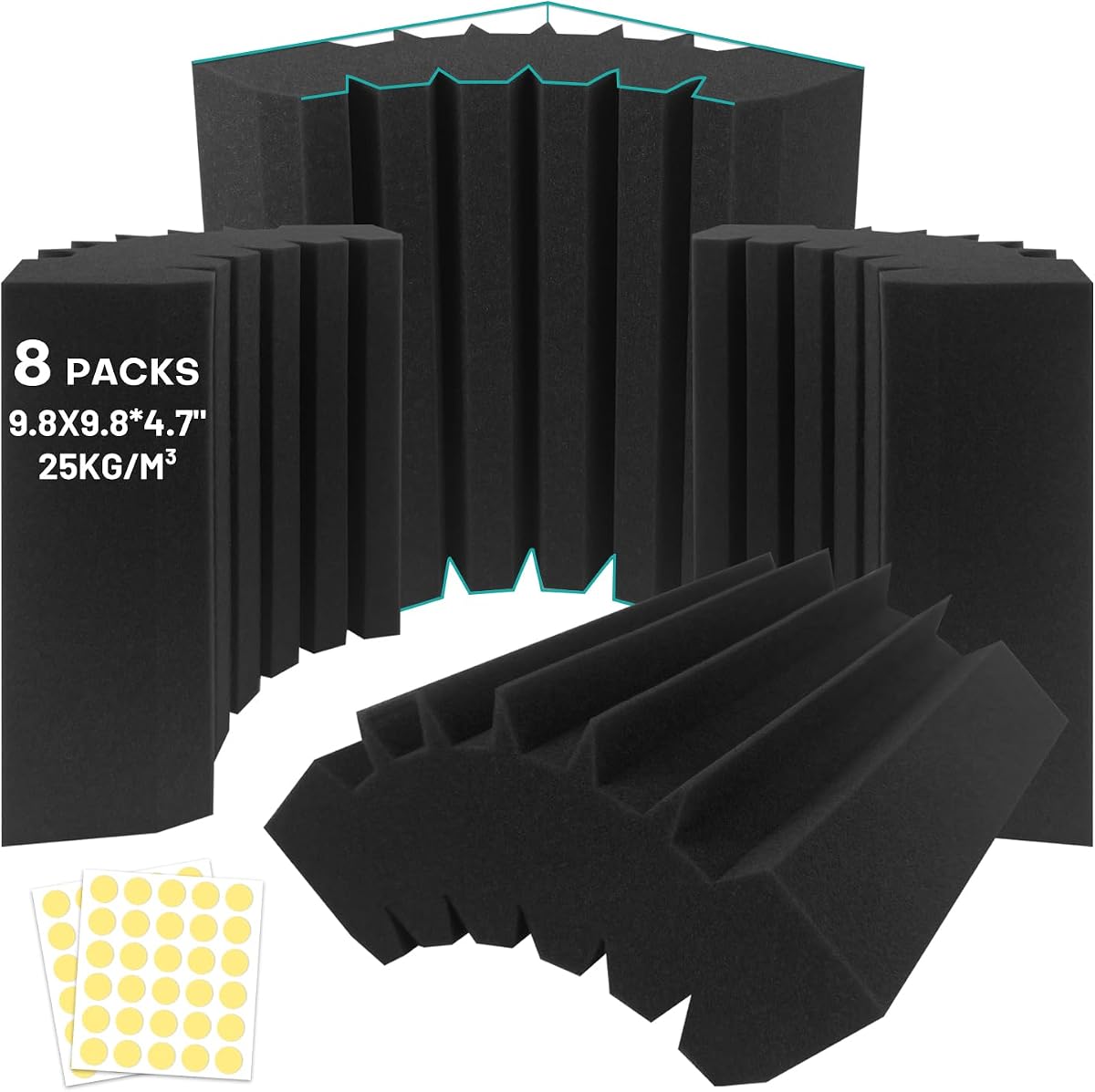
This option stands out with wider dimensions of 9.8 by 9.8 inches, providing a large surface area for absorption. The traps are designed to tackle specific low-frequency standing waves strategically placed in corners. They help improve low-frequency response and result in significantly clearer audio.
We may earn a commission when you buy through this link, at no additional cost to you.
The foam is crafted from high-density acoustic material that complies with CA117 testing standards. It offers robust sound absorption capabilities and is environmentally friendly. However, users note there may be a strong smell initially due to the flame-retardant technology.
It is recommended to air the traps for 24 hours after opening to remove the odor. Once expanded, they provide top-notch quality for home theaters and recording studios. The package includes eight pieces to treat a full room's corners effectively.
For those needing a wide footprint treatment, these are a viable choice. They help eradicate standing waves and upgrade your sound system quality. Just ensure you plan for the airing time before installation to avoid any initial smell in your studio.
The package contains 8 pieces of 9.8 by 9.8 by 4.7 inch corner foam bass traps, typically installed from the floor to the ceiling for excellent acoustic results.
Crafted from high-density acoustic foam, our Bass Traps comply with the CA117 testing standard and achieve B1-class fire-retardant performance.
We may earn a commission when you buy through this link, at no additional cost to you.
These large traps are designed with high-quality acoustic foam that effectively absorbs low-frequency sounds and eliminates unwanted echoes. The super chunk design is targeted specifically for corner treatment where waves build up. Users appreciate the significant improvement in the clarity and depth of recordings.
We may earn a commission when you buy through this link, at no additional cost to you.
The traps are lightweight and compact, making them easy to use and move around. They are also designed to reduce noise pollution in any room. Whether for concentration or relaxation, these bass traps help achieve a more serene space by dampening excess reverberation.
While the two-pack may cover fewer corners than larger sets, each unit is substantial in size. This allows you to treat key corners with fewer pieces. Pairing them with soundproof panels creates a fully optimized listening environment for professional results.
For those needing flexible placement or moving units between rooms, these traps are a great option. They offer deep absorption for bass frequencies and a clean look for your studio. The quality ensures you get a reliable treatment tool for your audio setup.
Our sound dampening panels are perfect for reducing noise pollution in any room. Whether you are trying to concentrate at home or just want to relax in a peaceful environment, our bass trap will help you achieve a more serene space.
Use our acoustic panels alongside our high-density bass traps to create a fully optimized listening environment. You'll be amazed at the results when you combine these treatments.
We may earn a commission when you buy through this link, at no additional cost to you.
Selecting the right bass traps involves understanding your room's specific acoustic problems and the physical constraints of your studio. Below are key factors to consider when making your purchase.
The physical dimensions of your recording room dictate how many bass traps you need. Small rooms often require treatment on all four corners plus the ceiling corners to prevent standing waves from forming, whereas larger rooms might need fewer traps but larger units to cover the same proportional volume. Count your corners carefully to determine the total surface area needed for effective absorption.
Always estimate the number of traps required based on your room dimensions before buying to ensure you have enough material for a complete setup.
Higher density foam is more effective at absorbing low frequencies than thin panels. Look for products that specify high density polyurethane or similar materials, as they penetrate deeper into the sound waves. Thicker traps generally provide better absorption of lower frequencies compared to standard 2 inch panels.
Prioritize thickness and density in your selection to ensure the traps can effectively handle the bass frequencies common in recording environments.
Consider how you plan to attach the traps to your walls. Some products come with adhesive strips or dots included, while others require you to buy spray adhesive or mounting tape separately. If you rent your space, look for options that minimize wall damage like light adhesives or pins.
Verify the mounting method required for each product to ensure you have all the necessary accessories before starting your installation.
Since foam is used in enclosed spaces with electrical equipment, fire safety is a major consideration. Look for traps that meet standards like CA117 which certify the material is fire-retardant. This ensures that if there is an electrical spark, the foam will not contribute to a fire hazard.
Choose certified fire-retardant foam to maintain a safe environment for your studio equipment and personal safety.
You will be spending long hours in your recording room, so the material should be non-toxic and odorless. High-quality acoustic foam does not off-gas harmful chemicals and maintains a neutral smell. Check product descriptions for mentions of eco-friendly or non-toxic materials to ensure a healthy workspace.
Select odorless and non-toxic foam to prevent irritation or headaches during long recording sessions.
Bass traps come in various shapes such as flat blocks, wedges, or pyramids. Flat blocks offer a clean, professional look that blends well with studio walls, while wedges can add visual interest. Choose a design that matches your studio style without compromising acoustic performance.
Opt for a design that provides a clean look to maintain a professional appearance in your workspace.
Prices vary significantly between single packs and bulk sets. Buying in larger packs often reduces the cost per unit, making it a better value for full room treatment. Determine your budget early to decide whether you need premium deep traps or standard density options.
Balance the total cost against the quantity provided to find the best value for your specific project needs.
Many traps are compressed for shipping to reduce volume. When they arrive, they need time to expand to their full size before installation. Plan for 24 to 48 hours of expansion time to ensure the foam reaches its optimal density and dimensions.
Allow sufficient time for foam expansion after unboxing to ensure proper installation and performance.
After unpacking your bass traps, place them in a ventilated area to allow them to expand to their full shape. This process usually takes 24 to 48 hours. Ensure they are fully expanded before mounting to avoid gaps or misalignment.
Install the traps in the corners of your room where sound waves naturally accumulate. Use the recommended adhesive or mounting method to secure them firmly. For larger rooms, consider treating ceiling corners as well for better low-frequency control.
Regularly dust the traps with a soft brush to prevent dirt buildup which can reduce their absorption capability. Avoid direct sunlight as prolonged UV exposure may degrade the foam over time. Proper care ensures your acoustic treatment remains effective for years.
Yes, bass traps effectively reduce low-frequency standing waves that cause muddiness in recordings. They are essential for improving the clarity and accuracy of your mixes. By absorbing excess energy in corners, they create a more neutral listening environment.
The best location for bass traps is in the corners of your room where sound waves reflect and build up. You should also consider ceiling corners for comprehensive treatment. Avoid placing them on flat walls where reflection panels might be more effective.
Regular acoustic foam is usually too thin to absorb low frequencies effectively. Bass traps are specifically designed with greater thickness and density to handle bass waves. Using regular foam alone may not solve low-end acoustic problems.
For a small room, you typically need at least four traps to cover all vertical corners. If your budget allows, adding ceiling corner traps can further improve low-frequency response. Aim to treat every corner for the best results.
Yes, most bass traps are made from non-toxic and fire-retardant materials safe for use in bedrooms. Ensure the product meets safety standards like CA117. They also help reduce noise pollution making the space more peaceful.
Some packages include adhesive dots or strips while others require you to purchase them separately. Always check the product description to confirm what is included. Spray adhesive is often recommended for a secure bond.
High-quality bass traps can last for many years if kept dry and out of direct sunlight. The foam material is durable and resilient to normal wear and tear. Proper maintenance like occasional dusting helps extend their lifespan.
Triangular traps are designed to fit into corners more efficiently than flat wedges. Wedges often have a visual texture while triangles focus on corner absorption. The choice depends on your specific room geometry and aesthetic preference.
We have reviewed ten top options for bass traps that cater to different budgets and room sizes. The TroyStudio Bass Traps stand out as the editor's choice for their density and safety ratings. For those on a tight budget, the JBER 4Pack offers a great entry point.
When choosing, prioritize density and thickness to ensure effective low-frequency absorption. Also consider fire safety certifications and ease of installation for a smooth setup. Matching the trap dimensions to your room corners will maximize the benefit of your investment.
Always check current availability and shipping details before finalizing your purchase. Acoustic treatments can vary in stock so confirming these details helps avoid delays. Selecting the right traps now will significantly improve your future recording quality.